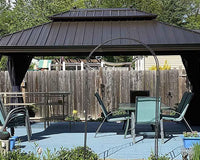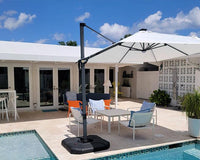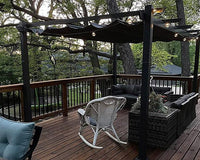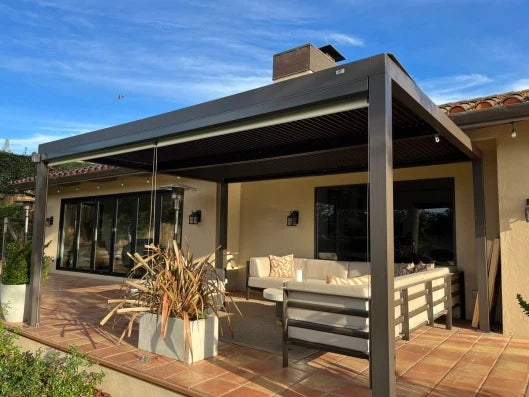
Low winter sun can make a patio feel bright: it lands directly in your eyes, washes across a dining table, and reaches through glass patio doors. Identify the light direction before choosing a fix. The most useful pergola ideas separate overhead sun from side glare, then match the problem to louvers, a side roller blind, a seating move, or a combination.
Map When Low Winter Sun Hits Your Patio and Windows
The best pergola ideas for winter sun begin with an observation. On a clear winter day, low sun travels below the higher summer sun. A south facing patio can receive welcome midday light, while a west facing glass door can become difficult in late afternoon. Nearby buildings, fences, evergreens, and pergola posts change the pattern.
Bring a chair to the seating spot and sit at the table. Notice the source of light and the surface it reaches. A reflection from a glass door, pale pavers, or a tabletop can matter as much as the direct beam.
| Time on a Clear Winter Day | What to Record | What the Result May Indicate |
|---|---|---|
| Morning | Which patio edge brightens first, and if light crosses the glass door | An east facing opening may need a temporary seating move or an east side screen |
| Midday | If light comes through the roof opening or enters under a beam | Louver adjustment may be the first control to test |
| Late afternoon | Where the low beam crosses faces, the table, and interior flooring | A west side blind, a changed chair angle, or both may be useful |
Repeat the notes on a second clear day if practical. Winter patio light control changes with cloud cover, foliage, and time of year. Draw the patio footprint, doors, windows, and proposed posts on a simple plan. Mark each beam and its time. This record makes later pergola ideas specific to your patio.

Distinguish Overhead Shade From Side Glare
Overhead shade and side glare need different tools. Adjustable roof louvers interrupt light from above, while a low beam passing under the roof edge can still reach your eyes or a patio door. That distinction is central to solving low winter sun patio glare.
Try a quick separation test before you add any accessory. During the uncomfortable moment, hold a flat piece of cardboard overhead while seated. If the light improves, the roof is the first place to focus. Then hold the same piece upright on the bright side of your chair. If that makes the difference, lateral light needs a vertical treatment or a new seat direction.
The test also shows why closing louvers fully is not always the best answer. A lightly angled setting may soften overhead light while preserving sky view and airflow. If the beam enters from the open side near eye height, the roof setting alone may not resolve the line of sight. For louvered pergola side glare, identify the open side that faces the beam and decide if it needs an adjustable screen.
The U.S. Department of Energy notes that winter sun is low while summer sun is high in the sky. Its passive solar design overview can help you interpret the path you record, though surrounding obstructions determine the light you receive.

Confirm Pergola Size, Anchoring, and Roller Blind Compatibility
Confirm the structure first. Your pergola needs a footprint that protects the seating or dining zone at the recorded glare time and an installation surface that supports the selected model's anchoring method. A roof that stops short of the chair or posts that interfere with a door can limit later choices.
Measure the proposed footprint, walking routes, door swing, and gaps by windows. Include room to pull chairs from a table. Then inspect the supporting structure below the finished surface. A sound concrete slab may accept model specified base anchors after its condition is confirmed. On a deck, an attachment needs verified framing, not deck boards alone. Pavers and gravel are finish layers and may need structural support below. Soil sites can require footings or post bases designed for local frost and soil conditions.
Compatibility needs a model-specific check. Our Athena Adjustable Louvered Pergola uses an adjustable louvered roof for changing sun and shade. Before adding a screen, confirm the Athena model, size, side location, and accessory option. Our roller blinds are suitable only for specific pergola models and are sold without a pergola frame. For pergola roller blinds for low sun, width alone does not confirm attachment to your configuration.
Ask your local authority about the footprint, anchoring, and permit process before ordering or digging. Sketch post locations, check property line and utility constraints, and contact the applicable 811 service before excavation. A qualified installer or structural professional can assess an unclear support path.
Choose Louvers and Roller Blinds for the Direction of Light
Choose the control that meets the beam where it enters. A side treatment cannot resolve a roof problem, and a roof setting cannot resolve light already entering horizontally. Use these pergola ideas at the time you recorded, not as a fixed prescription.
| Light Pattern | First Move | Add a Second Measure If Needed |
|---|---|---|
| Light falls through the roof onto the table | Rotate the louvers to reduce the opening above the table | Shift the table within the covered zone if its edge stays bright |
| A low beam enters from one open side | Keep the roof at a useful light setting and block the exposed side | Add a roller blind on the confirmed compatible side |
| Sun crosses a glass patio door | Angle louvers for the roof contribution and review the door's side exposure | Use a side blind where compatible, or relocate the closest seating |
| A bright surface reflects light upward | Move the chair or turn the table away from the reflection | Use side shade only if a direct beam remains |
For a west facing patio, test louver positions before the late afternoon beam. As the sun moves lower, lower the compatible blind on the exposed side only as far as needed. This keeps the patio open during comfortable, brighter moments. It is a precise form of pergola shade for patio doors because it addresses the side that sends light through the glass.
Our pergola roller blinds are an option after size and model compatibility are confirmed. The accessory creates a vertical, adjustable plane in the beam's path. Results vary with orientation, nearby structures, tree cover, blind position, and the open side's width.

Set a Seating Layout That Avoids the Brightest Glare
Your seating layout can reduce glare before you buy an accessory. Move the chair that catches the beam and test the view at seated eye height. A chair aimed toward low winter sun can feel uncomfortable despite a shaded tabletop. Turn it toward the protected side.
Place the dining table within the roof's coverage, with room to adjust chairs. Keep a clear route between the patio door and seats. In a lounge area, put the most used seat on the side that stays shaded longest in your notes. A side table or movable chair can occupy the brighter zone for short tasks.
Check the layout at the specific time you expect to use it. Sit down, pour a drink, look toward the door, and look toward the conversation seats. If a face or tabletop stays bright after a small turn, the issue is probably the side opening, not the furniture. This sequence turns pergola ideas into a practical order of operations: adjust the layout first, test the louvers, then add a compatible blind only where the remaining beam proves it is needed.
Use These Pergola Ideas to Make Winter Light More Comfortable
A low winter sun problem rarely has one permanent setting. Build your plan around the spot and hour you use: map the beam, confirm a suitable pergola footprint, and select roof or side control from that evidence. If your measurements point to adjustable overhead shade plus a compatible side treatment, compare our Athena size and roller blind configuration with your patio plan. The goal is usable winter light that responds to your site, not a promise that one accessory will remove every glare condition.

FAQs about Managing Winter Sun Glare on a Pergola
Do I Need to Cover Every Open Side?
No. Cover the side that your winter observation record identifies as the glare path. Leaving other sides open can preserve views and circulation. Check that the lowered blind will not interfere with a gate, a step, or the route from the patio door to the yard.
How Should I Plan Furniture Near a Roller Blind?
Leave enough room for chairs to move and for the blind to travel without contacting furniture. Test the intended chair position with the blind lowered before fixing the layout. If the edge of a table lies in the blind path, move the table inward or choose a different side.
What if Glare Appears Only on Clear Days?
Use clear winter days to establish the main pattern, then keep the response adjustable. A louver position, movable chair, or compatible blind can respond to changing light without redesigning the entire patio. Review the plan after nearby trees lose leaves or a new structure changes the exposure.
Can I Test the Pergola Footprint Before Ordering?
Yes. Mark the post corners and roof edge on the patio, then repeat your winter observations at the chair and table. This temporary layout can reveal a door conflict or bright seating edge before you select the pergola size.
Can a Reflective Tabletop Create Extra Glare?
Yes. Glass, metal, or pale surfaces can reflect low sun toward seated eyes even when the beam misses your face. Test the table at mealtime, then turn it, shift the chair, or use a matte surface layer.