A pergola can turn an underused patch of lawn, a pool deck, or a plain patio into a comfortable outdoor room. The best backyard pergola ideas start with one practical question: what will people do there most often? Once you know whether the space is for swimming breaks, dinner, a hot tub, or a quiet garden seat, you can choose a location, footprint, roof style, and accessories that make sense.
Start With the Job Your Pergola Needs to Do
Use the main activity to guide every early decision. A dining pergola needs room for chairs to slide back. A poolside pergola needs a clear, slip-resistant route to the house. A garden pergola needs to go where it will not block the beds you tend. Before you shop, mark the footprint with tape or a hose and walk around it at the time of day you expect to use it.
Leave a clear walkway around a freestanding structure so it feels intentional rather than crowded.
Watch afternoon sun for a few days. The best-looking spot at breakfast can be the least comfortable spot later in the day.
Keep the layout clear of known utility lines, drainage paths, and roots that a local professional says should not be disturbed.
PURPLE LEAF has both freestanding and wall-mounted options. That same layout test can help you decide between an attached and freestanding pergola. An attached design keeps seating close to the house, while a freestanding design can create a separate destination farther into the yard.
Poolside Pergola Ideas
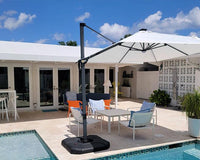
A poolside pergola works best when it gives swimmers a dry place to sit without blocking the safest route around the water. Put lounge chairs, towels, and a small side table under the shade, but leave enough open deck space for people to move past each other.
1. Create a Shaded Landing Zone
Place the pergola beside, rather than directly over, the busiest edge of the pool. That gives adults a place to supervise and gives swimmers a break from direct sun. Choose furniture that can handle splashes, and keep electrical cords and loose rugs away from wet traffic.
2. Build a Second Hangout at the Far End
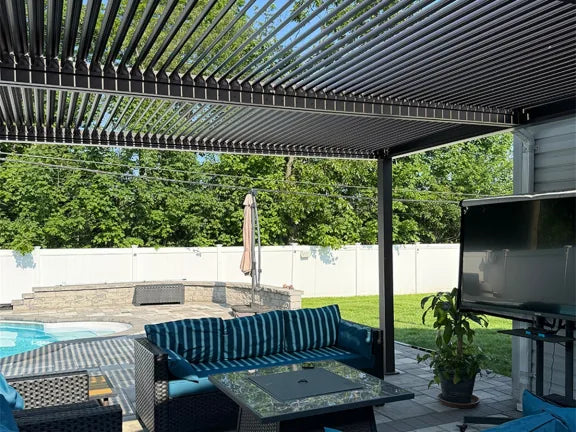
A pergola at the far end of the yard gives guests a destination beyond the pool. It can hold a conversation set or dining table while keeping food, drinks, and phones outside the splash zone. A poolside louvered pergola can create shade near the water or establish a separate seating zone, depending on how guests move through the yard.
Fire Pit Safety Near a Pergola
Use the pergola to shelter the seating area, not the fire pit itself. A safer layout places the fire pit in open air just beyond the roof edge, with chairs under or beside the pergola, facing the flame. This gives you a comfortable gathering area while keeping rising heat, sparks, and smoke away from the roof, louvers, curtains, screens, and other accessories.
Do not place a wood-burning fire pit, gas fire table, or liquid-fuel fire feature under a pergola unless both the fire-pit manufacturer and the pergola manufacturer specifically approve that arrangement. Keep the route from the chairs to the house clear, avoid hanging fabric near the fire area, and follow all local fire rules. For any fuel-burning fire feature, follow CPSC fire-pit safety guidance, keep a hose or fire extinguisher nearby, and never add liquid fuel to a fire that may still be lit.
Hot Tub Pergola Ideas
A hot tub pergola should solve privacy and weather concerns without trapping heat or blocking access for service. Leave room for the cover to open, make sure a technician can reach the equipment, and choose a side treatment that fits the view from neighboring windows.
3. Add Privacy Where You Need It
Use roller blinds, curtains rated for outdoor use, or a shutter wall on the side that faces a close neighbor. PURPLE LEAF offers louvered pergola options with roller blinds and shutter walls, so you can add privacy without closing every side.

4. Plan for the Weight Before You Plan the Decor
A filled hot tub is a substantial load. Ask the hot tub manufacturer and a qualified local installer whether the existing deck or pad is suitable before you place the tub or install a pergola nearby. Local building and electrical requirements may also apply.
Backyard Dining and Party Pergola Ideas
For dining, the goal is circulation. Guests need room to pull out chairs, walk to the serving area, and pass each other without squeezing behind seated people. Measure the table and chairs first, then add extra space for movement.
5. Make It a Real Outdoor Dining Room
Center the table under the roof and put a serving cart, grill, or drink station along the edge of the patio instead of behind the chairs. A 10 × 13 ft footprint can suit a compact table setup, while a 12 × 16 ft footprint gives a larger group more flexibility. These are starting points, not a substitute for measuring your own furniture.

6. Use Lighting for a Longer Evening
Add weather-rated lighting that suits your pergola and meets local electrical requirements. Soft overhead lighting can define the dining zone, while a separate pathway light makes steps and changes in level easier to see.

Garden Pergola Ideas
In a garden, a pergola can mark the change from lawn to planting area or create a destination at the end of a path. Keep the structure far enough from beds that you can weed, water, and prune without working around the posts.
7. Use It as a Garden Threshold
Set a pergola where a path enters the garden, then repeat a color or material from the house to make the transition feel connected. A bench or pair of chairs makes the threshold useful, not just decorative.
8. Choose Vines That Fit Your Region and Structure
Choose vines based on your USDA Hardiness Zone, sun exposure, soil moisture, and the strength of the pergola. For many Eastern and Mid-Atlantic gardens, coral honeysuckle and virgin's-bower clematis offer flowering coverage without the heavy, trunk-like growth of Chinese and Japanese wisteria. In warmer Southern areas, crossvine can add seasonal color and keep some foliage through winter.
American wisteria can work on a strong freestanding pergola when you want a larger, woody vine, but it still needs regular pruning and room to mature. Avoid Chinese and Japanese wisteria, which can spread beyond the garden in many parts of the United States. In dry Western climates, ask a local native-plant nursery or Extension office for vines suited to your ZIP code before planting.
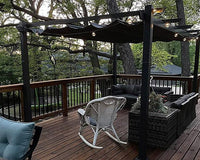
Train young vines onto the structure while stems are flexible, and keep them away from louvers, gutters, and moving roof parts. Plants add character over time, but use the pergola roof or shade accessory for dependable coverage from the first season.
Shade Ideas That Work Beyond Noon
An open-slat roof can create attractive patterned shade, but it will not block every angle of the afternoon sun. If you want more control, consider adjustable louvers, a retractable canopy, or removable outdoor shades. The right choice depends on how much sun, rain, wind, and maintenance you expect.
Our louvered pergola collection includes adjustable-roof options in a range of footprints and finishes. Review the specifications before assuming the selected model includes features such as drainage, lighting, or a privacy accessory.
Pergola vs. Gazebo: Choose the Feeling You Want
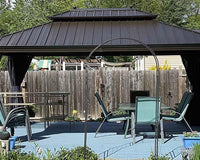
A pergola usually keeps the space open to the yard while adding a defined roofline and shade options. A hardtop gazebo generally creates a more enclosed shelter. Choose a pergola when you want an airy outdoor room; choose a gazebo when your priority is a more sheltered structure. Either way, check the model details and local requirements before installation.
Anchoring a Freestanding Pergola
Match the anchoring method to the surface beneath each post.
On a sound concrete patio, base plates are typically secured with the anchors specified for the pergola. Confirm the slab condition, thickness, and installation requirements before drilling.
On a wood deck, the connection should run through the decking into verified structural framing, such as joists, beams, or approved blocking. Deck boards alone are not a structural anchor point.
On grass or bare soil, the project may need concrete footings or post bases. Footing depth should account for local frost conditions, soil, and the selected pergola model.
On pavers or gravel, treat the surface as a finish layer. Posts may need support below the pavers, such as footings or another approved structural base.
Use ballast, ground screws, or weighted planters only when the exact model instructions allow them and specify how they should be placed.
Mark every post location and test the full footprint before digging or drilling. For a freestanding pergola, the anchoring method should follow the product manual, especially on exposed or uneven sites.
Weather Planning: Wind, Rain, and Snow
Plan for weather before choosing the pergola location and roof style. Check how wind moves through the yard, where water collects after heavy rain, and how much snow your area receives in a typical winter.
For wind, avoid placing a freestanding pergola in an exposed corner where gusts can hit the open sides without interruption. Confirm the approved anchoring method for the selected surface, keep movable furniture secured, and check the manual before adding curtains, screens, or other side accessories. Retract a fabric canopy and raise or remove compatible roller blinds when the product instructions call for it.
For rain, consider where water will run once it leaves the roof. Keep the pergola drainage path away from doors, walkways, the house foundation, and seating areas. A louvered roof may direct water through built-in channels when closed, but drainage design and rain-use instructions vary by model. A fabric canopy is not automatically suitable for heavy rain.
For snow, choose a model whose instructions fit local winter conditions. Follow the required louver position or canopy-storage instructions before snow accumulates, and do not assume a roof can carry snow simply because it is made of metal. Keep the area below clear when snow or ice may slide from the roof, and inspect anchors, fasteners, gutters, and roof components after severe weather.
FAQs About Backyard Pergolas
How Big Should a Backyard Pergola Be?
Size the pergola around the furniture and the paths people need to use. Measure the table or seating group, allow space for chairs to move, and mark the footprint outdoors before ordering. A small lounge may fit in a 10 × 10 ft space, while a dining-and-lounge setup often needs more room.
Can You Put a Pergola Near a Fire Pit?
Yes — provided the layout follows the fire-pit manual, local rules, and the pergola instructions. Do not place a fire pit under a roof or close to materials that could ignite unless the applicable manufacturers explicitly allow the arrangement.
Can You Put a Pergola Over a Hot Tub?
Yes, if the hot tub sits on a properly evaluated base and the design leaves room for the cover, maintenance access, and ventilation, and meets local code requirements. Confirm the plan with the hot tub manufacturer and a qualified installer before building.
What Is the Best Pergola Color for a Backyard?
Choose a color that works with your home, hardscape, and maintenance preferences. A light finish can make a compact patio feel visually open, while a dark or bronze finish can add contrast. View a sample outdoors before making a final choice.