Useful pergola ideas begin with the job your outdoor space needs to do. A dining area needs chair clearance, a lounge needs a comfortable view and shade, and a poolside spot needs a clear path around wet surfaces. Pick the everyday activity first, then choose a location, roof style, and size that support it. That order keeps a pergola from becoming an attractive structure with no comfortable place to sit.
Choose the Job Before the Style
A pergola works best when it has one main purpose. The furniture, walking paths, and shade needs follow from that purpose, so your layout feels intentional from the first sketch.
Dining Near the House
Place a dining pergola close to the kitchen door if you carry food outside often. Leave room to pull each chair back, open the door fully, and walk around the table without brushing a post. Patio pergola ideas for dining often work best on an existing level patio, provided the surface and anchoring plan are suitable for the structure.
A Lounge With a Clear View
Set a lounge where you will look toward a garden, pool, or open yard. Keep the longest side of the seating group open to that view. A side screen can add privacy on the exposed edge without closing every side. These backyard pergola ideas suit a reading corner, a morning coffee spot, or an evening conversation area.
A Flexible Hosting Zone
For meals, games, and relaxed seating in the same area, give each activity a defined zone. Put the table under the strongest shade, then keep the lounge at one end with a clear aisle between them. A larger footprint may be useful here, but only after you measure the furniture you already own.

Place the Pergola Around Sun and Access
There is no single best direction for every yard. Watch the site at the hours you expect to use it, then note where late-day sun, prevailing wind, doors, utilities, and neighbor sightlines affect comfort. This quick site check makes pergola ideas far easier to compare.
An attached design can keep dining or lounging close to the house, but the connection, flashing, drainage, and load path need a qualified review. A freestanding design gives you more freedom to frame a view or create a destination farther into the yard. In either case, keep doors, gates, grill access, and pool routes clear. Do not place posts where they turn a familiar path into an obstacle.
Use a simple sun check before ordering. Mark the edge of shade in the morning, midafternoon, and late afternoon on a clear day. If low-angle sun reaches the seating area from one side, plan a movable screen, curtain, or shade accessory on that side. This is usually more useful than choosing a roof from a product photo alone.
Think about privacy and drainage at the same time. A screen on one boundary can block a direct view from a neighboring window while leaving another side open for breeze. Keep the planned drainage route away from doors, walkways, and low spots where water already gathers. If your yard slopes, include that condition in the discussion with the installer before the structure is anchored.

Match the Roof to Shade and Rain Needs
Pergola shade ideas should match the weather protection you actually need. An open top can define a room and support climbing plants, while a roof system can add shade control. Treat rain management, wind limits, and snow loads as product-specific matters, not promises shared by every pergola.
| Roof Option | Best Use | Main Benefit | Planning Limit |
|---|---|---|---|
| Open slats | Visual definition and filtered light | Airflow and an open feel | Sun angle still changes through the day |
| Retractable canopy | Seasonal shade | Can open for light | Follow the product instructions for wind and rain |
| Adjustable louvers | Shade control across the day | Angle can change with the sun | Confirm drainage, wind, and snow guidance for the exact model |
| Fixed hardtop | Consistent overhead cover | Predictable shade | Light and airflow are less adjustable |
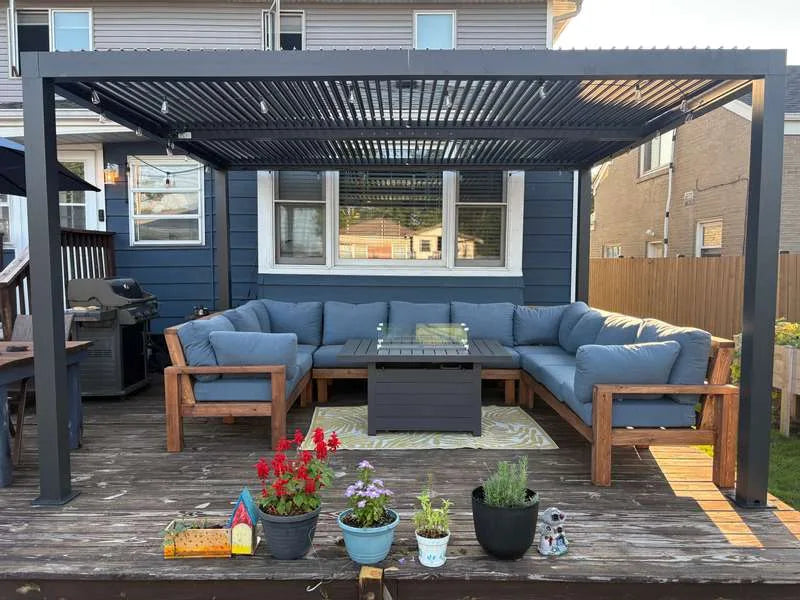
Our Athena louvered pergola uses an aluminum frame, independently adjustable louvers that move from 0 to 90 degrees, and an integrated drainage system. Review the exact size, accessory choice, installation instructions, and weather guidance on the product page before purchase.
Size the Footprint Around Furniture
Pergola sizes should come from a measured furniture plan, not a label such as small or large. Draw the table, chairs, sofa, and circulation area to scale. Then add the post locations. If a post lands where a chair needs to move or where a door opens, change the layout before selecting a pergola.
| Use | Planning Starting Point | Measure Before You Buy |
|---|---|---|
| Two chairs and a small table | A compact corner layout | Seat depth, side table width, and a clear entry path |
| Dining for four | A footprint that surrounds the table | Chair pullout space on every occupied side |
| Dining for six | A larger rectangle with an aisle | Table length, chair pullout space, and serving path |
| Dining plus lounge | Two separate zones | Aisle width between zones and post clearance |
For a table, allow enough room for chairs to move and for someone to pass behind them. 36 inches is a useful planning target where the layout allows it, but check the actual chair depth and your local accessibility needs. For a lounge, measure reclined seat depth and the clear path to the house. These details turn broad pergola ideas into a layout you can use every week.
Also measure around fixed features before settling on a size. Downspouts, hose connections, steps, pool equipment, outdoor kitchen doors, and gate swings can change the usable footprint. Leave enough space to clean the surface and service the house. A smaller structure with clear circulation can feel more comfortable than a larger one that crowds every edge of the patio.
Plan Anchoring Safety and Utilities Early
Anchoring, electrical work, drainage, and fire features need decisions before delivery day. Your local building department, HOA, utility marking service, and a qualified installer can clarify rules that vary by address and structure. Do not assume an attached or freestanding pergola is automatically exempt from permits.
Anchor the structure only to a surface and framing system that the product instructions and a qualified professional approve. On a deck, that can mean checking beams, joists, and connection points. On concrete, it can mean confirming slab condition and fastener requirements. For lighting, a ceiling fan, or an outlet, use a licensed electrician where local rules require one.
Keep a fire pit or other open flame outside the use conditions set by both manufacturers. Review fire pit safety guidance and the instructions for the exact fire feature before placing it near a pergola, screen, furniture, or roof. A clear outdoor layout is safer than treating overhead clearance as a universal number.

Build a Backyard Layout You Will Keep Using
The strongest pergola ideas make daily use easier: a table close to the kitchen, shade where you sit at the warmest hour, a clear route through the yard, and a roof choice that fits your weather needs. Put those decisions on paper, confirm local requirements, and compare the exact model details before buying. Purple Leaf offers louvered pergolas in several sizes and configurations so you can match the structure to the way you use your outdoor space.
FAQs About Pergola Ideas and Backyard Planning
Which Direction Should a Pergola Face?
No direction is best for every yard. Track sun and wind at the hours you plan to sit outside, then use that record to position seating and any side shade. A west-facing space may need added late-day screening, while another yard may have a different problem caused by walls, trees, or nearby buildings.
Can a Pergola Have a Ceiling Fan?
Yes, if the structure, electrical supply, fan rating, and local code support the installation. Select an outdoor-rated fan, keep wiring protected, and have a qualified electrician confirm the connection and mounting plan.
What Can You Add Later?
You can often add lighting, curtains, roller shades, or planters later, subject to the product design and load limits. Our louvered pergola collection shows current models and accessory options. Confirm compatibility for your exact series, size, and color before ordering an add-on.
How Do You Maintain an Aluminum Pergola?
Rinse the frame and louvers with clean water to remove pollen, dust, and leaf debris. Check drainage channels, fasteners, and moving parts during seasonal cleaning. Avoid abrasive tools that may damage the finish, and follow the care instructions for your exact Purple Leaf model and accessories.
What Should You Check Before a Pergola Is Delivered?
Confirm the delivery route from the street to the installation area, including gates, steps, narrow side yards, and overhead branches. Measure the final footprint again, clear the surface, and schedule any required site preparation before the boxes arrive. This helps prevent last-minute layout changes or blocked access.