Practical patio pergola ideas begin with the sun path across your own yard. A patio that feels comfortable at breakfast can become bright and exposed late in the day if the roof axis, seating layout, and louver settings do not match your routine. Observe the patio at the hours you use it, note its compass direction, and consider seasonal sun angles before fixing the pergola layout. This approach helps you create useful shade while retaining daylight and airflow.
When Does Direct Sun Reach Your Patio?
Direct sun reaches each patio at different times, based on its orientation and nearby obstructions. Check the space on a clear day in the morning, around solar noon, and late afternoon. Mark where light falls on the table, lounge area, cooking zone, and door threshold. Repeat the observation in a second season if possible, since one summer afternoon cannot represent the whole year.
For useful patio pergola ideas, draw a simple site sketch with north at the top. Add the house wall, fences, mature trees, neighboring structures, and the areas where you sit. A tall wall can block low morning sun, while an open west edge can admit intense light later in the day.
|
Patio Exposure |
Typical Direct Sun Pattern |
Shade Planning Priority |
|
North facing patio pergola |
Often indirect light, with low angle sun from the sides |
Preserve daylight and manage side sun |
|
South facing patio shade |
Long periods of sun around midday |
Control overhead sun while retaining winter light |
|
West facing patio pergola |
Strong direct sun from midafternoon into evening |
Block low angle sun from the west side |
|
East facing patio |
Sun early in the day, then increasing shade later |
Manage breakfast glare and maintain afternoon openness |
A phone compass can support an initial reading, though a property survey or site plan offers a stronger reference for a permanent structure. Check the sun path with the NOAA Solar Calculator for your location before finalizing the roof orientation.
Which Louver Axis Suits a North, South, or West Facing Patio?
The best louver axis blocks the sunlight that affects your patio during its main use hours. Louvered pergola orientation is not a universal north to south rule. Your decision depends on the sun’s angle, the patio footprint, roof dimensions, and the direction from which glare enters the seating area.
For a south facing patio shade plan, arrange the roof so closed blades can create a continuous barrier against high midday sun. Open the louvers when indirect light and sky views matter most. During cooler months, lower southern sun reaches farther under the roof, so adjustable blades can bring in light when it is welcome.
A north facing patio pergola often receives less overhead sun but can still receive bright side light from the east or west. Identify the first side from which glare enters. A shutter panel, screen, planting, or furniture adjustment may solve that issue without keeping the roof closed all day.
A west facing patio pergola deserves special attention. Late day sun can enter beneath an overhead roof as it drops lower in the sky, leaving a bright strip across chairs or a dining table. Plan a vertical shade layer on the west edge, such as a compatible screen or shutter wall, and position the primary seating deeper within the covered zone.
Use these louvered pergola ideas as a decision check:
- Place the long roof dimension where it covers the activity zone, not simply where it follows the house.
- Test closed and partly open louver positions against the expected afternoon sun direction.
- Account for drainage exits, operating access, and potential side screening before committing to the final axis.
- Keep clear access around posts, doors, grills, and maintenance areas.

How Do Seasonal Sun Angles Change Your Shade Plan?
Seasonal sun angles change the length and direction of shade, so a comfortable summer layout benefits from flexibility in spring, fall, and winter. In summer, the midday sun sits higher and a roof can cast a shorter, denser shadow. During cooler months, the sun stays lower and reaches farther across the patio from the south.
Build patio pergola ideas around the season that creates the greatest comfort issue. If late summer dinners matter most, check the west side between about 4 p.m. and 7 p.m. If you use the patio at midday during spring and fall, focus more closely on southern exposure. Local terrain, latitude, and daylight saving time can change the clock time, so observe the sun position instead of relying on a generic schedule.
Adjustable louvers offer practical control throughout the year. Open blades can bring in daylight and support airflow on mild days. Angled blades can soften direct light while retaining a view of the sky. Closed blades can shade the area below, subject to the product’s operating instructions and weather guidance. Surface temperature and comfort also depend on pavement color, reflected light, humidity, wind, and surrounding vegetation.
Arrange Seating Around the Hours You Use the Patio
Your seating plan should influence the pergola layout as much as the property line. Place the dining table, lounge chairs, outdoor kitchen, or conversation set where shade is needed during the hours that matter most. A 10 foot by 12 foot roof can cover a dining table effectively while leaving circulation, a grill, or chair backs exposed if furnishings sit too close to an edge.
For patio pergola ideas centered on dinner, position the primary seats away from the west edge and keep the most protected area for the table. For morning coffee, maintain an opening toward the east and give the brightest seat a movable shade option. Allow room to pull chairs back, walk around the table, and open doors without stepping into a low sunbeam.
Measure the full activity zone before selecting a pergola footprint. Include seating, circulation, cooking access, and storage needs. The resulting plan makes it easier to choose a roof size that supports how you actually use the patio.

Confirm Drainage, Anchoring, and Local Installation Requirements
Confirm drainage, anchoring, and local requirements before treating any layout as final. A louvered roof directs water only through its intended system, so the pergola needs a suitable, level base and a clear drainage path away from the patio, foundation, doorways, and walking areas. Mark downspouts, irrigation lines, electrical runs, and existing slab joints before choosing post locations.
A site plan turns patio pergola ideas into an installation plan. Review the selected model’s manual for footing, fastener, and base requirements, then consult a qualified installer or structural professional if site conditions are unclear. Your local building department or HOA may require permits, plans, setbacks, or approval for a freestanding structure. Follow local requirements and all product instructions for louvers, screens, and accessories during high wind, snow, or severe weather.
Turn Patio Pergola Ideas Into a Site Specific Shade Plan
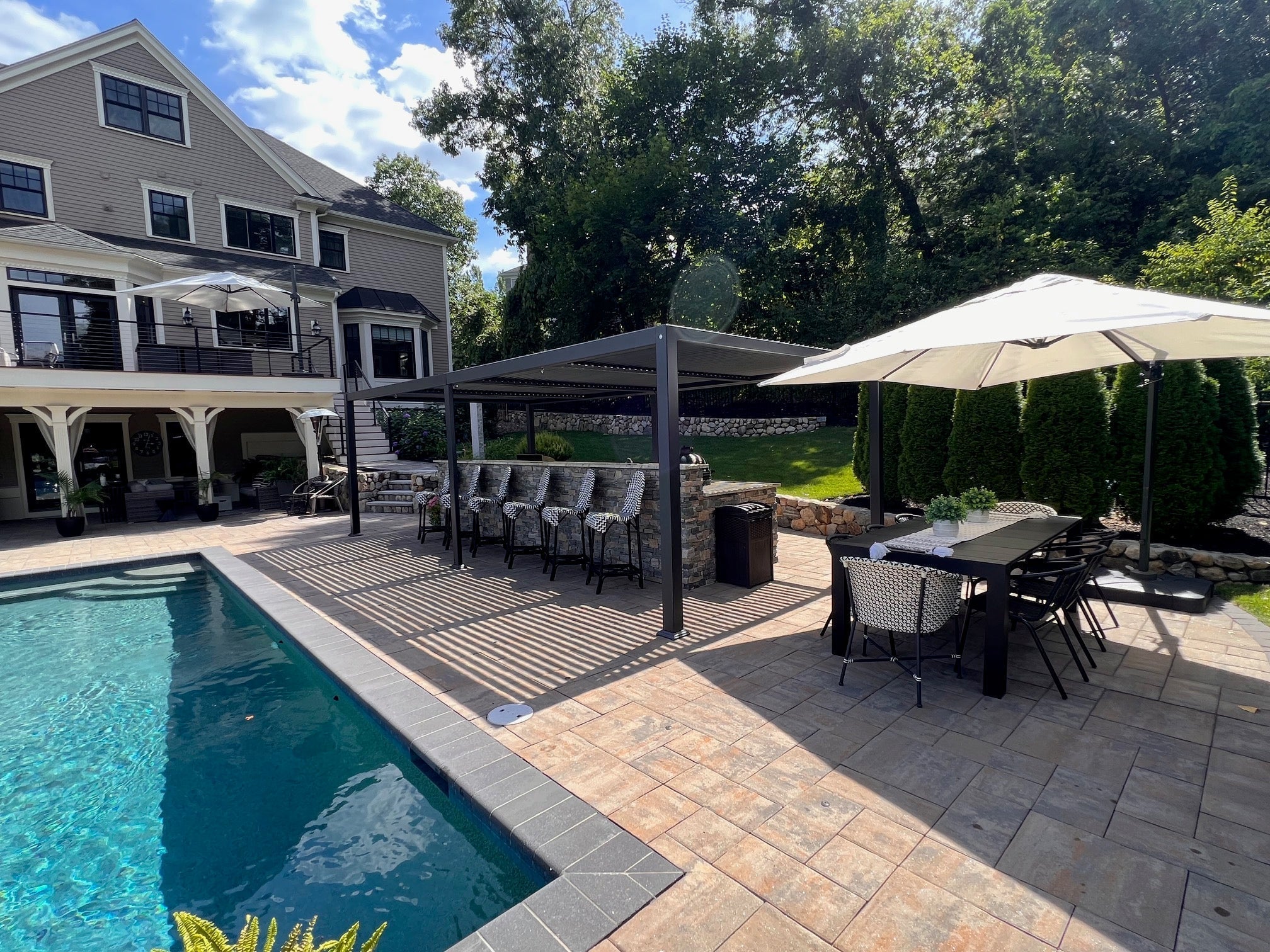
The strongest patio pergola ideas connect the roof to your actual sun, schedule, and space. Measure the activity area, observe the troublesome sun hour, mark drainage and post locations, then select a louver axis that addresses the incoming light. Our Caesar Louvered Pergola with String Lights uses two independently controlled rows of louvers, helping you adjust roof coverage across separate patio areas. Confirm the selected size, roof controls, and installation requirements against your measured layout before purchase.

FAQs
Can a Pergola Louver Axis Be Changed After Installation?
Usually, no. Changing the axis can require moving posts, revising anchors, and changing drainage placement. Confirm the roof orientation before the base is prepared, and ask a qualified installer to assess any change after installation.
Does Louver Direction Decide Where Rainwater Drains?
No. Louver direction manages sunlight, while the pergola’s designed gutter and post system manages water flow. Review the selected model’s drainage layout, then keep every outlet clear of doors, foundations, and walking paths.
Should I Use Solar Noon or Clock Time for My Shade Check?
Use both. Solar noon identifies the day’s highest sun position, while clock time shows the conditions during your actual meals or gatherings. Record observations at the exact outdoor hours you want the pergola to support.
Does Louver Direction Affect Privacy?
Yes. The louver axis and blade angle can limit overhead sightlines from an elevated deck or second story window, but an open pergola side remains visible from adjacent yards. Add a compatible side panel or screen where privacy from a particular direction is important.
Can Reflected Light Still Cause Glare Under a Pergola?
Yes. Glass doors, pale paving, pool water, and nearby metal surfaces can reflect sunlight into the covered area. Check the patio during the problem hour and note reflected light separately from direct sun. A seating adjustment or side shade can address glare that roof louvers do not block.