A brighter patio on a winter evening comes from lighting the activities you actually do outside: unlocking the door, walking to the table, serving dinner, checking the grill, and settling into a chair. Thoughtful patio pergola ideas create a clear route and useful task light without flooding the entire yard with glare. The right plan gives the dining area, seating zone, and walking path separate jobs, so your patio feels practical after sunset and still looks calm from indoors.
Map How You Use the Patio on Winter Evenings
Map your usual evening route before selecting a fixture. Walk from the house to the pergola at dusk, carrying the items you normally bring outside. Notice each step, narrow turn, planter edge, paving change, and door threshold. These are the places that need clear light first.
A winter patio lighting layout should follow how you move through the space. Mark the center of the dining table, the grill prep area, the path to storage, and the chairs used most often. Then stand inside and look through the glass door. A fixture that feels comfortable outdoors can create a distracting reflection when viewed from the kitchen or living room.
Use a quick site sketch to record:
- The direction the door opens and the location of glass panels
- Steps, low edges, uneven paving, and path turns
- Table, grill, lounge seating, and storage access
- Existing outlets, switches, and proposed post locations
This simple drawing separates essential lighting from decorative lighting. It also shows where a bright lamp could sit directly in your line of sight. The patio pergola ideas that work best for your space will support a real routine, not an imaginary layout.

Layer Ambient, Dining, and Walkway Light
Layered lighting gives every patio zone a clear purpose. Ambient light supports conversation and seating, dining light helps you see food and faces, and pathway light makes each transition easier to read. Patio pergola ideas with lights become more useful when each layer is controlled separately.
| Lighting Layer | Best Location | Main Job |
| Ambient light | Pergola beams or upper perimeter | Soft visibility for seating and conversation |
| Dining light | Above or beside the dining table | Serving food and seeing the table clearly |
| Walkway light | Path edges, steps, or planting borders | Showing the route from door to destination |
| Task light | Grill shelf, prep surface, or storage area | Supporting a focused activity |
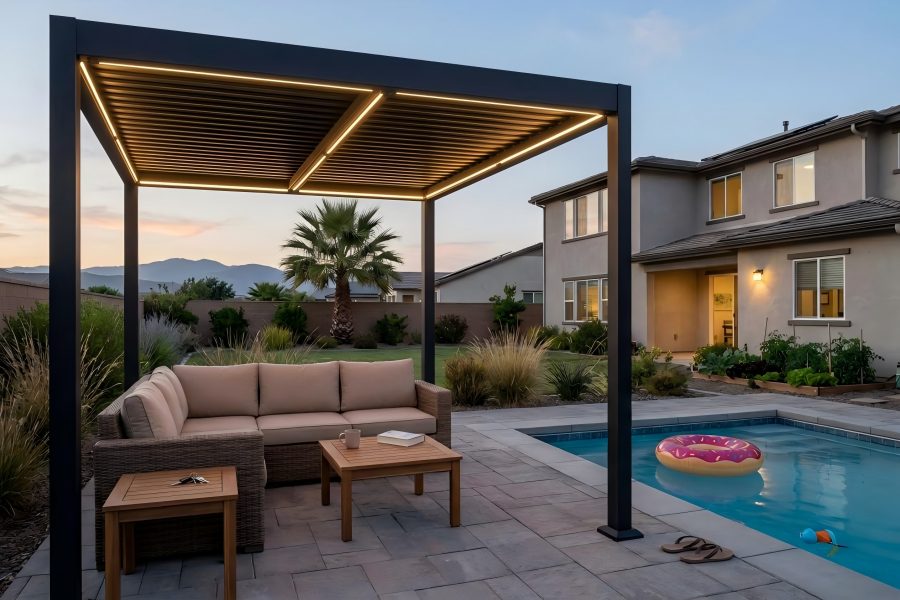
For ambient light, aim for a soft glow beneath the beam line. A concealed fixture or shielded source lets you see the patio without staring into a bulb. This approach supports pergola lighting for winter evenings, when darkness arrives before dinner and outdoor use may happen in shorter intervals.
Keep outdoor pergola task lighting limited to areas that need it. A grill shelf or prep counter can benefit from focused illumination, while a lounge chair usually needs lower light. Position the source so your body does not cast a shadow across the work surface.
Use patio walkway lighting ideas to highlight decision points in the route. Put light near the first step, a turn in the path, and the entrance to the pergola. You do not need a fixture at every paver joint. A few well placed markers can make the route legible while keeping the surrounding patio visually quiet.
Position Fixtures to Limit Glare on Steps and Glass Doors
Glare control matters as much as fixture brightness. A bare lamp near eye level can make steps harder to see, and a bright point reflected in a glass door can pull attention away from the patio. Test proposed positions after dark before permanently fastening hardware.
Aim step lights down across the tread and edge, not outward toward the seating area. Shielded or recessed fixtures can show the change in level while keeping the light source out of direct view. Check the first step from both directions, since you may leave the patio carrying dishes or a drink.
For glass doors, look at the patio from inside and outside. If a lamp appears as a sharp reflection in the glass, shift it farther to one side, lower its position, or add shielding. Light bounced from a nearby wall, beam, or planting bed can provide usable illumination with a gentler visual effect.
Also test every regular chair. A fixture hidden from standing height may become visible once you sit down. Adjust the aim until the table, route, and conversation area remain clear without a bright source sitting directly behind a seat.

Choose Lighting Options Compatible With Your Pergola Model
Your pergola’s construction determines where lighting can go. An open wood pergola may allow an outdoor rated surface fixture on an appropriate beam. A louvered aluminum pergola can include moving roof parts, drainage channels, and model specific attachment limits that change the installation plan.
For louvered pergola LED strip lights, keep strips, connectors, and mounting hardware away from adjustable louvers, drainage routes, and access points. Do not drill through a beam or column until the manual for your exact model permits that location. Wiring also needs enough protection and slack to avoid interference through the roof’s full range of motion.
If you prefer a preconfigured lighting option, our Athena Louvered Pergola with Strip Lights combines adjustable louvers with strip lights. Measure the dining and lounge zones before choosing a size, so the covered area and lighting layout match the parts of the patio you use most.
For a fabric canopy or curtain system, keep lights clear of moving fabric and use only approved attachment points. Follow the selected model’s instructions for seasonal storage and severe weather conditions.
Check Outdoor Electrical Needs and Local Requirements
Outdoor electrical work needs local, site specific confirmation. A licensed electrician can assess the existing circuit, fixture rating, cable route, switch placement, required protection, and permit process before installation. Your local authority determines the code edition and installation method that apply at your address.
Keep plug connections out of standing water, and do not run temporary cords across a walking route or beneath an exterior door. A permanent arrangement may use separate controls for dining, walkway, and task layers. That setup lets you keep the path visible after dinner while lowering light around the table.
If pergola posts, footings, or an underground electrical route require excavation, contact 811 before excavation. Mark the proposed footprint, check local property line requirements, and wait for utility markings before digging. Utility locating is an important safety step, though it does not replace a qualified review of anchoring, footings, or electrical work.

Use These Patio Pergola Ideas for More Usable Winter Evenings
Use these patio pergola ideas as an evening test before final installation. Walk from the door to the table, prepare one item at the grill, sit in each chair, and return indoors. The places where you slow down, lose the path, or notice a reflection deserve attention first. By layering light, shielding bright sources, and confirming your pergola’s approved mounting locations, you can create a patio that remains clear and inviting after an early winter sunset.
FAQs
Can I Use a Portable Lantern on a Pergola Table?
Yes, if the lantern is rated for outdoor use and placed where it cannot be knocked over or block serving space. A portable lantern works best as low ambient light, not as the only source for steps, grilling, or the route back indoors.
Can I Add Lighting Near a Fire Pit?
Yes, though the fixture, wiring, furniture, and pergola structure must remain outside the fire pit manufacturer’s stated clearance area. Keep direct light low around the seating circle so the flame remains visible and does not compete with a bright overhead source.
What Should I Check After a Winter Storm?
Inspect visible fasteners, roof components, drainage exits, and lighting connections before using the patio again. Follow the pergola manual for snow, wind, canopy, and louver instructions, then ask a qualified professional to assess any damaged wiring or structural component.
What Light Color Works Best for a Winter Patio?
Choose one consistent warm white appearance for dining and lounging, then view a sample after dark beside the pergola finish and glass door. A brighter neutral tone can remain useful at a prep surface, provided it stays separate from the softer seating layer.
Can I Use a Motion Sensor for a Side Path?
Yes. A motion sensor can suit a side gate or storage route used only occasionally. Keep the main door to pergola route on its planned lighting schedule, then test the sensor from your normal approach so it activates before you reach the turning point.