A pergola canopy should match your main weather priority, not just your preferred look. Choose open rafters or fully retractable coverage when airflow matters most, retractable fabric when adjustable shade is the goal, and a purpose-designed roof with a defined drainage path when you need more overhead rain coverage. For lower upkeep, start with the simplest system that does the job. If you are modifying an existing frame, compatibility may change the answer.

Choose pergola canopy options by your top weather priority
Start by identifying the condition you most want to improve. Shade, rain shelter, airflow, and upkeep point to different pergola roof coverage options, and a retrofit may rule out a style that would work for a new structure.
- Maximum airflow: Start with open rafters or a cover that can retract fully. This preserves the most open-air feel, but it also provides less overhead shelter when the top is open.
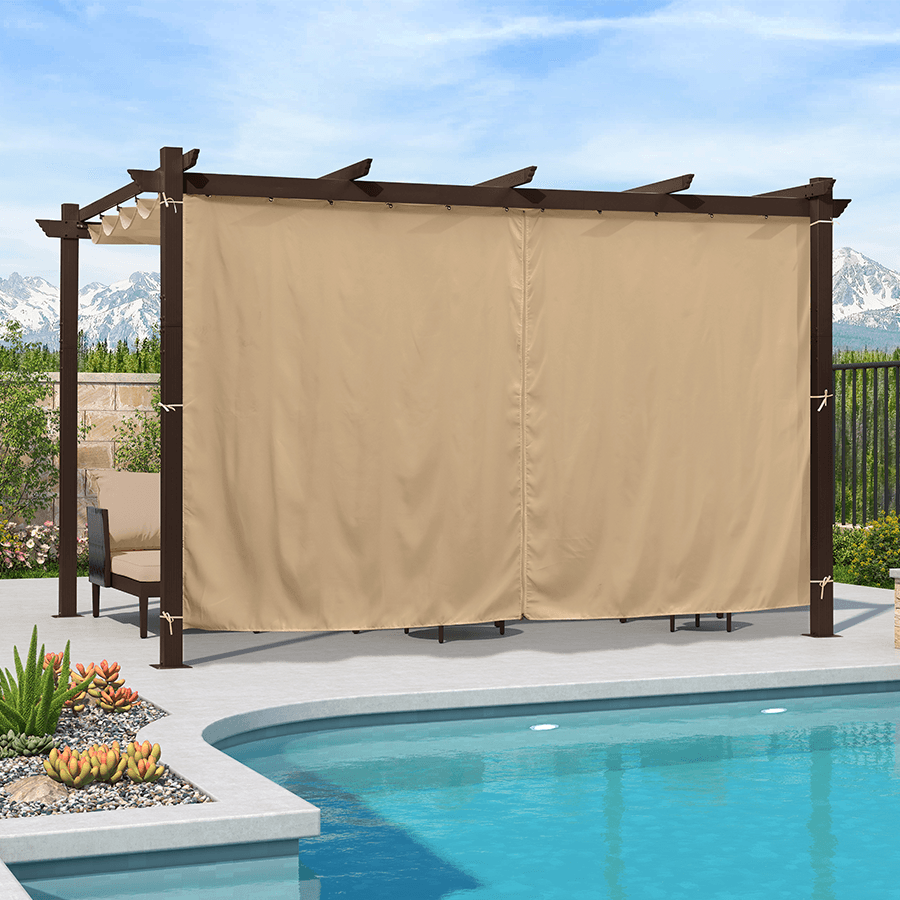
- Adjustable shade: Consider a pergola with a retractable canopy, especially retractable fabric. Confirm how the fabric opens, stores, dries, and should be positioned as the weather changes. The benefit is control—not an automatic promise of rain shelter.
- More rain-oriented coverage: Compare a purpose-designed roof with a defined drainage approach, including louvered coverage. A roof designed to manage water still requires product-specific drainage and weather-position guidance, so do not treat any category as universally rainproof.
- Lower upkeep: Choose the simplest system that meets your weather goal. Fewer moving or fabric components may mean fewer care decisions, but open coverage may not provide the shade or rain handling you need.
For a new pergola, you can select the frame and roof together. For an existing pergola, identify your priority and record the frame's dimensions before comparing systems. A cover that looks suitable in a listing may still fail the attachment, clearance, or drainage check.

Compare open, fabric, retractable, and louvered pergola coverage
The four main coverage styles differ in how much overhead shade they provide, how they handle rain, how easily the top can open, and what maintenance they require. These are conditional category comparisons, not universal performance rankings.
| Coverage style | Likely fit for sun, rain, and airflow | Trade-offs and checks |
|---|---|---|
| Open rafters | Best when an open-air feel and airflow take priority. They provide limited built-in shade and do not create continuous rain shelter. | A simple overhead structure, but the least coverage of the four. Add shade elements only after checking that the frame can support them. |
| Fixed fabric | Can provide broad shade when installed across the intended area. Rain behavior depends on the fabric, slope, tension, drainage, and how the system is used. | Check how the fabric dries, whether water can pool or cause sagging, how it is cleaned, and whether seasonal removal is expected. |
| Retractable fabric | Useful when you want to adjust shade as the sun moves or reopen the top for airflow. It may suit flexible use better than permanent coverage. | Moving parts add maintenance and operating decisions. Check storage, cleaning, drainage, and the instructions for retracting or positioning the fabric as the weather changes. |
| Louvered coverage | Adjustable overhead coverage lets you change the balance between shade and open sky. Rain handling depends on the design you select and its drainage guidance. | Verify louver adjustment, drainage design, maintenance requirements, and weather instructions. A named example such as the PURPLE LEAF Caesar Louvered Pergola has adjustable louvers and product-stated drainage features, but those facts do not establish performance for every louvered pergola. |
The practical distinction is between shade control and rain behavior. Fabric may make a seating area more comfortable in bright sun, while its rain performance depends on the complete system and how it is used. Retractable coverage lets you reopen the top, but that flexibility comes with moving components and storage or maintenance requirements.
If you are deciding between two adjustable systems, compare louvered and retractable coverage after identifying whether your priority is flexible shade, overhead control, airflow, or rain-oriented coverage. If louvered coverage fits your needs, you can browse louvered pergola options and compare each system's drainage and weather guidance.
Check whether an existing pergola can take the canopy you want
You can add a canopy to a pergola only when the selected system and existing frame are compatible. Treat a retrofit as a measurement and instruction check, not as a universal accessory purchase.
Before ordering a retractable pergola canopy or another cover, record:
- Inside and outside dimensions: Measure the frame where the canopy would attach, including the usable span and depth. A DIY retractable canopy project includes sizing the canopy fabric and support bars, so dimensions are part of the project rather than an automatic fit. Sizing canopy fabric and support bars provides bounded DIY context, not approval for your structure.
- Attachment points: Identify where rails, brackets, support bars, or other components could connect. Do not assume that a similar-looking pergola has the same attachment geometry.
- Moving clearances: Allow space for fabric, bars, louvers, or hardware to open and close without striking posts, beams, walls, lights, curtains, or furniture.
- Drainage path: Determine where water would go if the selected cover sheds it. A new drainage requirement can turn a simple cover addition into a larger modification.
- Selected system instructions: Compare your measurements and frame arrangement with the actual system instructions. Defined DIY canopy construction steps reinforce that a retractable canopy is a defined project, not a universally compatible add-on.
A retrofit is worth investigating when the existing frame has usable attachment locations, the dimensions match the selected system, the moving parts have adequate clearance, and the drainage approach is understood. If the desired coverage requires integrated louvers, a drainage design the frame cannot support, stronger connections, or dimensions that are unavailable, compare a purpose-built covered structure instead.
Do not use a generic product description to approve a retrofit. Before spending money, write down the frame footprint, attachment locations, clearances, and weather priority, then compare only systems whose instructions address those conditions. When structural changes, anchoring, or local requirements are uncertain, get qualified local help rather than guessing.
For accessory planning, you can check pergola add-on considerations. If retractable fabric remains under consideration, review retractable awning rain care before treating it as a rain solution.
The best pergola canopy is the one that meets your dominant weather need and passes the frame or new-build compatibility check. Measure first, separate shade from rain shelter, and then compare only coverage systems whose instructions fit your pergola.
Pergola Canopy FAQs
These answers address common purchase questions that can change the choice between an add-on cover and a purpose-designed roof.
Can you add a canopy to an existing pergola?
Sometimes, but retrofit fit is not universal. Compare the existing frame's dimensions, attachment points, moving clearances, drainage path, and the selected system's instructions before ordering. If those details do not align, compare a purpose-built covered structure instead.
Does a pergola canopy provide rain protection?
Not automatically. Shade coverage and rain shelter are different outcomes. Check the selected system's coverage design, drainage approach, fabric-handling requirements, and weather-position guidance before expecting an outdoor area to remain usable during rain.
Which pergola canopy option allows the most airflow?
Open rafters generally preserve the most open-air feel. Retractable coverage can reopen the top when shade is not needed, while more closed configurations may reduce the open-air effect. Choose based on how often you want the roof open, not on a universal airflow rating.
What is the difference between a pergola and a canopy?
A pergola is typically the supporting outdoor frame, while a canopy is added overhead coverage. A covered pergola is designed around an integrated roof rather than relying on an unspecified add-on. The distinction matters because a retrofit must fit the existing frame, whereas a new covered structure can be designed around its roof system from the start.