Cantilever umbrella anchoring depends on the surface first, not the umbrella last. Concrete can support the most rigid options, wood decks need framing-aware attachment, and pavers usually call for load spreading rather than direct point pressure. Matching the surface before you buy the base or hardware lowers the risk of wobble, tipping, and unnecessary damage.

Start With the Surface
The surface determines the safest path. A concrete patio can handle a more permanent mount, a wood deck requires fasteners that work with the structure underneath, and pavers are less forgiving because they can shift or settle. Cantilever umbrella anchoring isn't a one-size-fits-all setup.
Decide first if you want a reversible install or a fixed one. If you want a clean, long-term hold and your slab allows it, concrete is the best candidate for a drilled anchor. If you need the flexibility to move the umbrella later, a weighted base might fit better on concrete or a deck, provided the setup remains stable.

For pavers, the focus should be on spreading the load rather than concentrating it. Keep that distinction in mind before you compare products or hardware.
How Concrete Anchoring Works
Concrete is the most straightforward hard surface for a rigid anchor. A permanent mount can use a base plate fastened to the slab with masonry hardware, which is the most effective way to reduce movement. On concrete, the anchor style matters more than simply adding weight.
Weighted Bases on Concrete
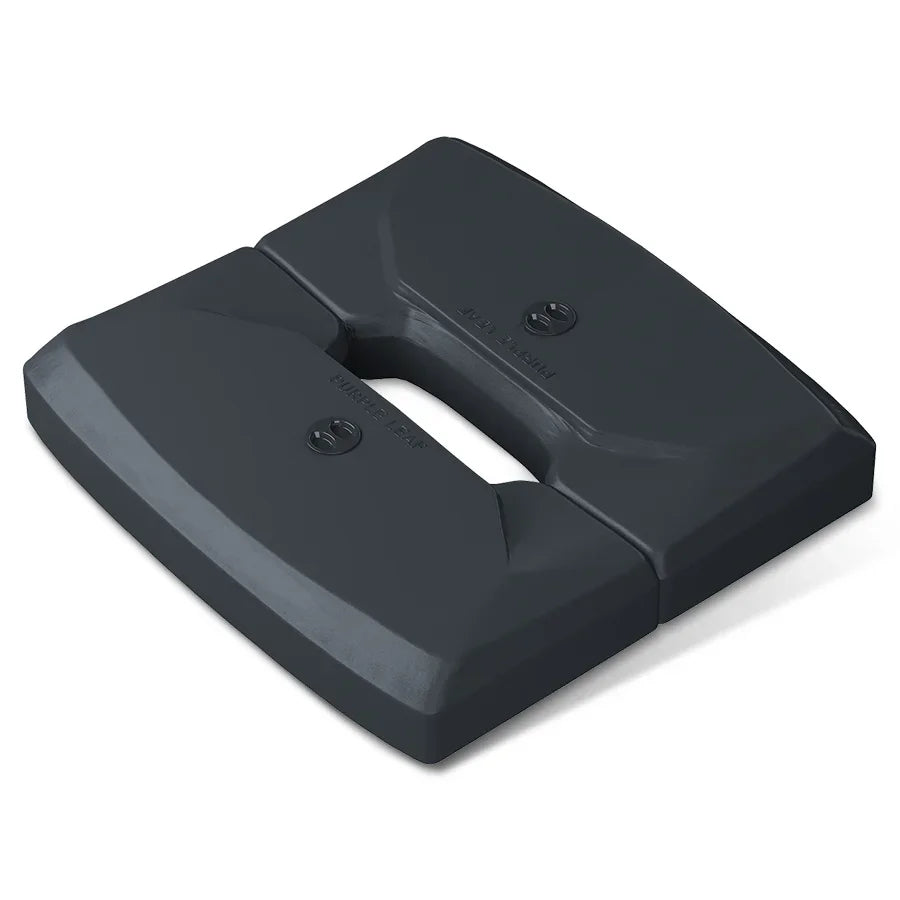
A weighted base is the best non-permanent choice if you don’t want to drill. It works well when the slab is level and the umbrella isn't oversized for the space. Think of the ballast as part of the stability system, not the entire solution. A lower, wider base is also less of a trip hazard on an open patio.
Bolt-Down or Plate Mounts
If permanence matters more than convenience, drilled concrete anchoring is the stronger path. Concrete expansion or wedge anchors are commonly used for this, and ACI guidance on post-installed anchors explains why drilling, hole cleaning, and installation details are critical. The trade-off is simple: you get a much stronger hold, but you sacrifice reversibility and accept the need for potential concrete repair later.
If you are shopping for a concrete install, compare in-ground umbrella base and steel plate umbrella base options only after you determine if your slab requires a fixed mount or a heavy ballast approach.
Decks Need a Different Strategy
A wood deck isn't just a flat surface; it’s a structure. You need to know what the deck framing can support, as a fastener that misses the joists or relies only on thin deck boards can lead to a false sense of security. Always prioritize structural attachment over surface aesthetics.
What a Deck Can Support
On a deck, the support point should align with the framing, not just the top boards. If the deck layout or limited underside access makes this difficult, a reversible weighted setup is a safer choice, especially for seasonal use.
Mounted Bases vs. No-Drill Options
Mounted options look cleaner, but a no-drill setup is better if you want to avoid visible deck damage or water intrusion. Weighted or reversible options are easier to remove, while framed mounts provide a firmer hold. If the umbrella stays up often or is exposed to high wind, the more conservative path is usually the one with better structural engagement.
Avoiding Damage
The biggest mistakes are drilling into the wrong spot, ignoring the condition of the boards, or failing to account for railing and traffic clearance. Surface damage on a deck is hard to hide, so double-check your layout before you commit. A small error can lead to a split board or a loose, wobbling base.
If you want to address movement and rotation, reduce umbrella spinning is a useful follow-up once you confirm the deck can support your chosen mount.
Pavers Work Best With Load Spreading
Pavers are the least forgiving of the three surfaces because they aren't a single, solid slab. They can settle, shift, or flex under weight. Direct point pressure is the weakest way to anchor a cantilever umbrella here; instead, aim to spread the load.
Why Pavers Move
The issue isn't just the initial fit. Over time, small shifts can cause the umbrella to wobble, tilt, or the base to "walk" out of position. Judge a paver installation by how well it handles long-term movement, not just how level it looks on day one.
Base Options That Reduce Stress
A purpose-built base system is the best non-excavation option because it distributes pressure. If you prefer a permanent install, a footer or pier-style foundation is the most stable long-term path. The more rigid the foundation, the less the pavers have to do on their own.
For those comparing support styles, a heavy umbrella base is a good starting point, but on pavers, you must prioritize a setup that minimizes movement rather than just adding mass.
Match Weight and Hardware to Real Conditions
The right support depends on your surface, umbrella size, wind exposure, and how permanent you want the install to be. A good rule of thumb for standard umbrellas is roughly 10 pounds of base weight per foot of canopy diameter, but cantilever models need significantly more because the load is offset. Lowes' buying guide is a helpful baseline, but not a universal rule.
Ballast and structural anchoring are related but not interchangeable. Ballast resists movement, while structural fastening resists pullout and tipping. If your patio is exposed or your umbrella has a long offset arm, choose heavier support or a more rigid mount.
| Surface | Support Path | Permanence | Damage Risk | Best Fit |
|---|---|---|---|---|
| Concrete | Drilled plate/anchor | High | Medium | Long-term, low-movement |
| Concrete | Weighted base | Medium | Low | Reversible, level slabs |
| Deck | Framing-aware mount | High | Medium | Frequent use, joist alignment |
| Deck | Weighted/reversible | Medium | Low | Seasonal, damage-sensitive |
| Pavers | Load-spreading base | Medium | Medium | Non-permanent, steady footing |
| Pavers | Footer/pier foundation | High | Low | Permanent, excavation-friendly |
Final Anchoring Checklist
- Confirm the surface: Concrete, wood deck, or pavers.
- Match the base style: Choose based on the surface, not just the umbrella category.
- Decide on permanence: Do you need a fixed or reversible install?
- Check the structure: Verify joist layout on decks and slab condition on concrete before drilling.
- Avoid loose stones: Never rely on a paver install that rests on loose stones alone.
- Review instructions: Check the manufacturer’s guidelines for approved base styles.
- Plan for weather: Recheck clearance and stability before the first windy day.
If the surface and support path don't match, choose a different base rather than forcing the install. Compare patio umbrella options with compatible base styles, and for more movement control, stop umbrella spinning before you finalize your setup.
FAQs
How Much Base Weight Does a Cantilever Umbrella Need?
There is no single number. Larger canopies, longer arms, and high wind exposure all require heavier support. Use canopy size and surface type as your primary filter, then treat retailer weight guidance as a minimum starting point.
Can You Anchor a Cantilever Umbrella to Concrete?
Yes, it is usually the easiest surface for a secure, fixed install. The method depends on your base design and slab condition, so verify whether your hardware is meant for a drilled mount or a weighted setup before you buy.
How Do You Secure a Patio Umbrella on a Deck?
The safest choice respects the framing underneath. If joists and clearances align, a mounted base works well; if not, a weighted option is safer. The most important check is whether the deck can support the anchor without relying solely on the surface boards.
What Is the Safest Way to Anchor an Offset Umbrella on Pavers?
The safest setup reduces point pressure and avoids treating pavers like a solid slab. A load-spreading base system is the best non-permanent option, while a footer or pier-style foundation is the most stable permanent path.
Can a Cantilever Umbrella Stay Up in Windy Conditions?
Proper anchoring helps, but it doesn't make wind a non-issue. The safest routine is to close the umbrella during gusty weather and follow the manufacturer’s specific safety guidance. If wind is a regular problem, choose the most conservative support path and never rely on ballast alone.