A structural imbalance in your outdoor furniture setup poses safety risks and causes frustration. If a gust of wind easily tips your shade structure, you likely have a top-heavy patio umbrella. Understanding the physical mechanics of weight distribution allows you to secure your equipment properly.
This guide explains how to identify an imbalanced umbrella, the structural reasons behind the instability, and the exact steps required to keep your outdoor setup firmly on the ground.
What Does A "Top-Heavy" Patio Umbrella Mean?
A top-heavy patio umbrella occurs when the combined weight of the canopy and the upper pole exceeds the stabilizing weight at the bottom. This creates a high center of gravity that makes the entire structure prone to tipping.
Patio umbrellas consist of a large fabric canopy, metal or wooden ribs, and a tall pole. The materials used at the top of the umbrella add significant physical weight. If the base sitting on the ground does not weigh significantly more than the upper half of the structure, the center of gravity shifts upward. This poor weight distribution means that even a minor physical bump or a slight breeze can disrupt the equilibrium and push the umbrella to the ground.
The physical shape of an open umbrella canopy catches moving air. When wind hits the fabric, it pushes against the material, creating horizontal force. If the umbrella is already top-heavy, the base cannot provide enough counter-leverage to resist this horizontal push. The wide surface area of the canopy captures the wind, and without sufficient grounding weight, the top-heavy patio umbrella will immediately tip over in the direction of the airflow.
Signs Your Patio Umbrella Is Too Top-Heavy
You can identify an unstable umbrella through physical observation before an accident occurs. Monitoring how the structure reacts to daily use helps you prevent property damage.
An umbrella pole should sit completely straight inside its base tube. If you notice the pole leaning to one side, the structure lacks proper foundational support. A top-heavy patio umbrella will naturally lean toward the side with the most fabric or the side where the wind blows. This continuous leaning stresses the metal or wooden pole, which can cause permanent bending or snapping over time.
When a breeze occurs, watch the base of your umbrella. If one side of the base physically lifts off the patio surface, the base is too light to anchor the canopy. The lifting action indicates that the upward and horizontal forces acting on the canopy are stronger than the downward gravitational force of the base. This is the final warning sign before the entire structure tips over.
Why Does A Patio Umbrella Keep Falling Over?
Understanding the external factors and setup mistakes that contribute to instability helps you apply the correct structural fixes.
Using An Undersized Base
The most common reason for a patio umbrella falling over is pairing a large canopy with a lightweight base. Many consumers purchase basic plastic or thin metal bases designed for small, 6-foot umbrellas and attempt to use them with 9-foot or 11-foot canopies. A base weighing 20 pounds cannot physically counteract the leverage generated by a 10-foot wide canopy, resulting in immediate instability.
Incorrect Placement On Uneven Surfaces
Placing the umbrella on grass, dirt, or uneven paving stones reduces the surface contact between the base and the ground. If the base wobbles, the umbrella's center of gravity shifts constantly. A patio umbrella falling over is often the direct result of placing the base on a slope or a bumpy surface where it cannot establish a flat, solid foundation to resist external forces.
Leaving The Canopy Open Unattended
Human error plays a significant role in outdoor furniture damage. Leaving the canopy fully open when you are not actively using the patio exposes the umbrella to sudden changes in weather. Even a properly weighted umbrella can tip if subjected to severe, unexpected wind gusts while left completely open and unattended.
How To Fix A Top-Heavy Patio Umbrella
Correcting an imbalanced umbrella requires increasing the downward force at the base. You must apply functional hardware upgrades to stabilize the structure.
Upgrade To A Heavy Duty Umbrella Base
The primary solution to a top-heavy structure is replacing the inadequate stand with a heavy duty umbrella base. These bases are constructed from solid cast iron, steel, or dense concrete. A heavy duty umbrella base provides a massive concentration of weight at the lowest possible point, drastically lowering the center of gravity. This added mass prevents the pole from leaning and keeps the structure grounded during standard weather conditions.

Add Base Weights Or Sandbags
If you do not want to replace your current base, you can add external weight directly on top of it. Manufacturers sell specifically designed sandbags or water-fillable weight bags that wrap securely around the umbrella pole and sit flat on the existing base. Adding 50 to 100 pounds of sand directly over the base tube is a highly effective, cost-efficient method to anchor a top-heavy patio umbrella and prevent it from tipping.
Utilize A Patio Table For Extra Support
Inserting your umbrella through the center hole of a heavy outdoor dining table provides secondary stabilization. The table acts as a structural brace midway up the pole. When the wind pushes the canopy, the pole presses against the sturdy table hole rather than transferring all the stress directly to the base. However, you must still use a base underneath the table to prevent the pole from kicking out.
Choosing The Right Base Weight For Your Umbrella Size
Selecting the exact minimum base weight is a mathematical requirement for safety. The required weight depends on the canopy diameter and whether you use a table for support. For a full breakdown of how to match your umbrella base to your specific canopy size and setup, the base matching guide covers all standard configurations in detail.
Guidelines For Table-Supported Umbrellas
When an umbrella goes through a patio table, the table provides structural leverage, so the base requires slightly less weight. The standard rule is 5 pounds of base weight for every 1 foot of canopy diameter.
- A 6-foot umbrella requires a minimum 30-pound base.
- A 7.5-foot umbrella requires a minimum 40-pound base.
- A 9-foot umbrella requires a minimum 50-pound base.
- An 11-foot umbrella requires a minimum 60-pound base.
Guidelines For Freestanding Umbrellas
Freestanding umbrellas do not have the structural support of a table. Therefore, all the stabilizing force must come from the bottom. The rule for freestanding placement is 10 pounds of base weight for every 1 foot of canopy diameter.
- A 6-foot freestanding umbrella requires a 60-pound base.
- A 7.5-foot freestanding umbrella requires a 75-pound base.
- A 9-foot freestanding umbrella requires a minimum 90-pound base.
- An 11-foot freestanding umbrella requires a 110-pound or heavier base.
Safety Tips To Prevent Wind Damage
Even with perfect weight distribution, practicing routine safety habits protects your outdoor equipment from sudden, severe weather changes. For a complete overview of patio umbrella wind safety, including when to close your canopy and how to anchor it during storms, the wind safety guide covers all key precautions.
Close And Tie The Canopy When Not In Use
The most effective way to stop a patio umbrella falling over is to close the canopy the moment you leave the seating area. Once closed, wrap the attached fabric tie or a bungee cord tightly around the fabric. Tying the canopy prevents sudden wind gusts from catching loose fabric, forcing the umbrella open, and pulling the structure down.

Buy Umbrellas With Wind Vents
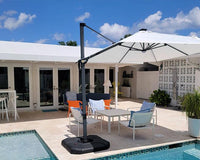
When purchasing a new umbrella, always select a model that features a wind vent at the top of the canopy. A wind vent is a secondary flap of fabric that allows air trapped underneath the canopy to escape upward. By allowing air pressure to release through the top, the vent significantly reduces the horizontal force acting on the pole, helping the heavy duty umbrella base maintain stability during breezy conditions. Most cantilever umbrellas from the PURPLE LEAF feature a double-top ventilation design to enhance overall canopy stability. Browse the full range of patio umbrellas with wind vents to find the right model for your outdoor setup.

Conclusion: Balance Your Umbrella Before the Wind Does It for You
A top-heavy umbrella creates safety hazards and damages outdoor furniture. By understanding weight distribution and observing warning signs like leaning poles, you can correct the imbalance before an accident happens. Upgrading to a heavier base, adhering to proper weight-to-size ratios, and consistently closing the canopy when not in use ensures your patio umbrella remains securely anchored and fully functional for years.
FAQs
How do I know if my umbrella base is heavy enough?
Your base is heavy enough if the umbrella pole stands completely straight and the base remains flat on the ground when a breeze hits the open canopy. If the pole leans or the base lifts, you need more weight.
Can I use a patio umbrella without a base if it is in a table?
No. An umbrella placed through a table hole always requires a base underneath. Without a base, the bottom of the pole will swing freely, which can damage the table, bend the pole, and cause the umbrella to fall.
Are water-filled or sand-filled bases better?
Sand-filled bases are generally heavier and more stable because sand is denser than water. Water-filled bases are easier to empty and move, but water can freeze and crack the plastic base during winter if not drained. PURPLE LEAF umbrellas typically recommend filling the base with both sand and water to achieve maximum weight and ensure stability.
At what wind speed should I close my patio umbrella?
You should close your patio umbrella when wind speeds exceed 15 miles per hour. If the wind is strong enough to visibly bend the umbrella pole or continuously sway the canopy, it is unsafe to leave it open.