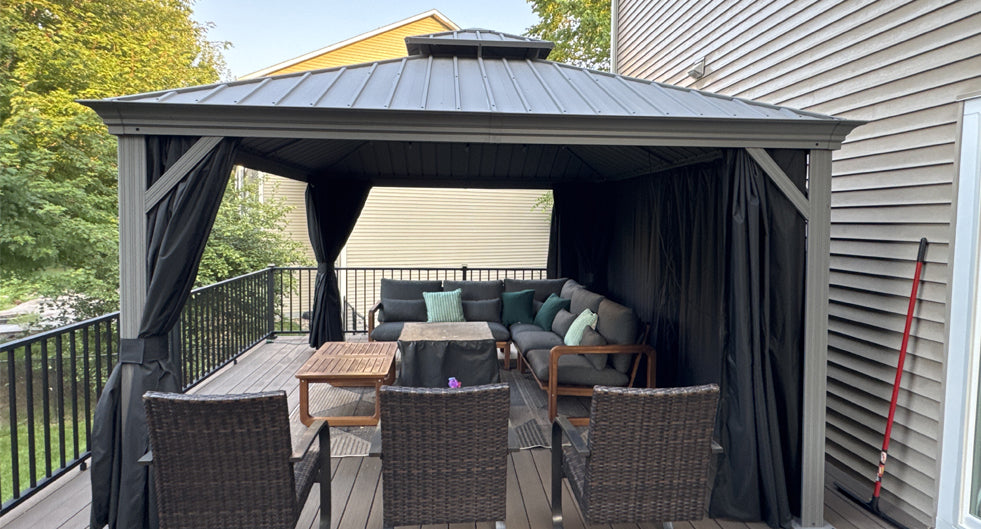
Outdoor curtains can make a Gazebo feel cooler, softer, and more private, but sunlight can fade weak fabrics quickly. Some curtains still look rich after one season, while others turn dull, streaky, or uneven by late summer.
The key is knowing what to check before buying and how to test what you already own. This guide explains how to check fabric, color, labels, stitching, and care details before buying, plus simple at-home tests that help you predict whether your curtains will hold up outdoors.
Why Do Gazebo Curtains Fade So Quickly?
Outdoor curtains fade because sunlight, heat, moisture, and repeated cleaning gradually break down dyes and surface finishes. UV exposure is the main cause, but it is not the only factor. A curtain facing full afternoon sun will age faster than one under deep shade, even if both are made from the same fabric.
Humidity can also make fading look worse. Damp fabric may collect dust, pollen, mildew, or mineral marks from rain and sprinklers. When the curtain is washed or wiped often, weak dyes may lose color faster. That is why fade resistance depends on both material quality and real outdoor conditions.
Sun Exposure Is Not Even
A west-facing patio usually receives stronger afternoon sun than a north-facing one. Curtains on the outside corners may fade faster than panels tucked under the roof. If only one side fades, the problem may be exposure pattern rather than poor quality alone.
Before judging the curtain, think about where it will hang. The most exposed side of your Gazebo needs the most fade-resistant fabric.
Dark Colors Show Change Faster
Black, navy, dark gray, deep green, and burgundy often show fading more clearly than beige, ivory, taupe, or light gray. This does not mean light colors never fade. It means the visible difference is usually easier to notice on darker shades. If you want dark outdoor curtains, material and dye method matter even more.
Check The Fabric Type Before Buying
The first clue is the fabric content. Outdoor curtains are commonly made from polyester, acrylic, olefin, or blends. Natural fabrics like cotton and linen may look beautiful, but they usually need more protection outdoors because they can fade, absorb moisture, and wear faster in direct sun.
Polyester is common because it is affordable, lightweight, and can be treated for outdoor use. Acrylic and solution-dyed acrylic are often used in higher-performance outdoor fabrics because the color can be built into the fiber instead of sitting mainly on the surface.
Look For Outdoor-Rated Fabric
Do not assume any curtain can work outside just because it is thick. Check whether the product is described as outdoor-rated, UV-resistant, fade-resistant, weather-resistant, or suitable for patio use.
These terms are not all equal, but they are better than buying indoor drapes and hoping they survive the season. If the product page gives no outdoor use information, treat that as a warning sign.

Understand Solution-Dyed Fabric
Solution-dyed fabric usually resists fading better because pigment is added before the fiber is formed. In simpler terms, the color runs deeper through the fiber instead of only coating the finished surface. According to fabric specialists, solution-dyed acrylic is highly resistant to fading and degradation from sunlight exposure, making it one of the most reliable choices for permanent outdoor installations.
For curtains exposed to strong sun, this is one of the most useful material clues. It does not make fabric impossible to fade, but it usually improves color stability compared with surface-dyed materials.
Read The Product Label Like A Buyer, Not A Browser
A good product page should tell you more than color and size. It should explain fabric type, outdoor suitability, cleaning instructions, and whether the curtain has UV or fade-resistance claims.
When comparing curtains, save screenshots of the label details. If the curtains fade unusually fast, those details help you understand whether the product failed expectations or was never meant for high-sun outdoor use.
What To Look For
Useful product information includes fabric content, UV resistance, colorfastness claims, water resistance, mildew resistance, and washing instructions. If the curtain has certifications or test references, read what they actually mean. The AATCC (American Association of Textile Chemists and Colorists) maintains standardized outdoor lightfastness test methods, including TM16.2 for outdoor colorfastness to light, which is the benchmark used by reputable fabric manufacturers.
Be careful with vague words like "durable," "premium," or "weather-ready" when no material or test details are provided. Those words sound reassuring but do not prove fade resistance.
What To Avoid
Avoid curtains that only mention style and privacy but say nothing about outdoor performance. Also be cautious with very cheap dark curtains that claim strong UV resistance without explaining fabric type, coating, or care limits.
Low price does not always mean poor performance, but fade-resistant outdoor textiles usually require better materials or better dyeing.
Use A Simple Sun Patch Test At Home
If you already bought the curtains, test a small hidden area before hanging every panel for the full season. This will not replace a lab test, but it can reveal obvious color weakness.
Choose a spare tieback, fabric swatch, bottom hem area, or hidden edge. Cover half of the fabric with opaque tape or cardboard and leave the other half exposed to direct sun for several days to two weeks. Then compare the covered and uncovered sections.

How To Read The Result
If the exposed half looks noticeably lighter after a short test, the curtain may fade quickly in summer. If the difference is minor, the fabric may perform better, though long-term weather exposure can still change the color.
Take a photo at the start and another at the end in the same lighting. Your eyes may adjust to gradual fading, but side-by-side photos make changes easier to see.
Test More Than One Color
If your curtain has stripes, patterns, or color blocking, test the darkest section and the brightest section. Different dyes can fade at different speeds on the same curtain. This matters for decorative panels because uneven fading can look worse than gentle overall fading.
Check Stitching, Lining, And Back-Side Color
Fading does not only happen on the front surface. The curtain's construction can affect how color changes over time. Thin panels may let sunlight pass through more easily, while tighter weaves and lined designs may reduce some exposure.
Look at the back side of the curtain. If the front and back colors are very different, the surface color may be more vulnerable. If the color appears more consistent through the fabric, that can be a better sign.
Why Weave Density Matters
A loose weave may feel airy, but it can also allow more light through. A denser weave may block more sunlight and give the dye more protection. However, very heavy curtains may trap heat and moisture if airflow is poor.
The best outdoor curtain balances shade, airflow, and fabric stability. For a Gazebo, you usually want enough weight to hang neatly without choosing a fabric that stays damp for too long.
Why Hardware Can Affect Wear
Grommets, tabs, and hanging loops also matter. If metal hardware rusts or rough edges rub the fabric, faded areas may appear around the top faster. Strong stitching helps the curtain move in wind without pulling threads loose.
Fading is often the first visible issue, but poor construction can make the whole curtain look old even sooner.
Compare Customer Photos, Not Just Product Images
Product images are usually taken in controlled lighting. They show style, but they do not always show how the curtain looks after rain, sun, dust, and washing.
Customer photos can be more useful because they reveal drape, thickness, color accuracy, and real outdoor use. Look for reviews posted after several months, not just first impressions after delivery.

Search For Long-Term Review Clues
Useful review phrases include "after one summer," "still the same color," "faded on one side," "washed well," "sun exposure," "west-facing patio," and "under a covered pergola."
A review from someone using curtains in a shaded porch may not predict performance in full sun. Try to match the reviewer's conditions to your own.
Watch For Patterned Fading
If multiple buyers mention fading along fold lines, edges, or sun-facing panels, that may signal a real issue. One isolated review can be caused by unusual exposure, but repeated complaints are more meaningful.
Also compare reviews by color. A beige curtain and a navy curtain from the same product line may age differently.
Verify Care Instructions Before The First Wash
Wrong cleaning can make curtains look faded even if sun exposure is not the main problem. Harsh detergent, bleach, hot water, strong scrubbing, or high dryer heat can weaken color and coating.
Read the care label before the first wash. Outdoor curtains often need gentle cleaning, cold water, mild detergent, and air drying. If the product says spot clean only, machine washing may shorten its life.
Remove Dirt Before It Sets
Dust, pollen, bird droppings, sunscreen, grill smoke, and tree sap can stain or dull fabric. Rinse or wipe small marks before they bake into the surface under sun. Do not wait until the whole curtain looks dirty. Light routine care is usually safer than aggressive deep cleaning once the fabric is heavily soiled.
Avoid Overwashing
Outdoor curtains do not need to be washed every week unless they are exposed to heavy dirt or mildew. Too much washing can wear finishes and stress seams. Shake them out, vacuum gently, or rinse lightly when possible. Save machine washing for deeper cleaning when the label allows it.
Reduce Fading With Smarter Placement
Even good curtains last longer when they are installed thoughtfully. The most exposed panels should get the best protection, while shaded panels face less risk.
If your Gazebo has one side that takes intense afternoon sun, consider using lighter colors on that side or rotating panels during the season. Rotation can help fading appear more even.
Use Tiebacks Carefully
When curtains stay tied tightly in one position, the exposed folds may fade faster than hidden folds. This can create vertical streaks. If you tie curtains back often, loosen and adjust the folds occasionally. Let the panels hang flat sometimes so light exposure spreads more evenly.
Add Shade When Possible
Roof overhangs, shade screens, trees, or outdoor blinds can reduce direct UV exposure. Even partial shade during peak afternoon hours can help extend color life. Curtains are part of the shade system, but they should not always be the only barrier.

Know When Fading Is Normal And When It Is A Red Flag
Some fading is normal for outdoor textiles. Sun, heat, rain, and cleaning will gradually change most fabrics. The real question is how fast and how evenly the color changes.
A slight softening of color after a full season can be normal, especially in high-sun climates. Heavy fading, blotchy patches, color transfer, or a washed-out look after only a few weeks may indicate poor outdoor suitability.
Normal Signs
Normal aging may include slight color mellowing, minor edge lightening, or small differences between heavily exposed and shaded sides. These changes are usually gradual and do not make the curtain look damaged from a distance.
Warning Signs
Red flags include strong fading in one month, streaky discoloration, powdery fabric, brittle texture, or color bleeding during gentle cleaning. If this happens, review the product's outdoor claims, warranty, and care instructions. You may have grounds to contact the seller if the product was clearly advertised for outdoor sun exposure.
Conclusion: Check First, Hang With Confidence
To verify whether Gazebo curtains will fade after one summer, check fabric type, dye method, outdoor claims, customer photos, care instructions, and real sun exposure. A quick covered-versus-exposed sun test can reveal early color weakness before you commit to full-season use. Choose outdoor curtains that are outdoor-rated, clean gently, rotate panels when possible, and remember that fade resistance depends on both product quality and placement.
FAQs
Do All Gazebo Curtains Fade In The Sun?
Most outdoor curtains will change slightly over time, but quality outdoor-rated fabrics should fade more slowly. Direct afternoon sun, dark colors, harsh cleaning, and low-grade dyes increase fading risk. For tips on securing and maintaining gazebo curtains, choose UV-resistant or solution-dyed materials if the curtains will face strong sunlight daily.
What Fabric Is Best For Fade-Resistant Outdoor Curtains?
Solution-dyed acrylic, outdoor-rated polyester, and olefin are common options for fade-resistant outdoor use. Solution-dyed fabrics are especially valued because the pigment is built deeper into the fiber. Natural cotton or linen curtains usually need more protection outdoors.
How Can I Test Curtain Fading At Home?
Cover half of a small fabric area with opaque tape or cardboard and expose the other half to direct sun for several days or weeks. Then compare both sections in the same lighting. A strong difference suggests the curtain may fade quickly outdoors.
Are Dark Gazebo Curtains A Bad Idea?
Dark curtains are not automatically a bad choice, but fading is easier to notice on dark colors. If you want navy, black, charcoal, or deep green curtains, prioritize outdoor-rated fabrics with strong UV resistance and review long-term customer feedback from sunny climates.

How Do I Keep Outdoor Curtains From Fading?
Install curtains where they get partial shade, rotate panels during the season, avoid harsh cleaning, and follow the care label. Shake off dust and spot clean early. For full-sun areas, choose lighter colors or higher-performance outdoor fabric with clear fade-resistance claims.