Chaise lounge durability comes down to four things: the frame, the finish, the cushion build, and how much sun, moisture, and movement the chair will handle. Near a pool, a great-looking lounge can still wear out quickly if the materials trap water, the hardware loosens, or the fabric isn't suited for splash-heavy use. For most buyers, the safest approach is to evaluate the entire setup, not just the style.

What Makes a Chaise Lounge Hold Up Outdoors
Outdoor furniture durability is easier to judge when you think in systems rather than individual materials. UL's outdoor furniture testing and certification is a helpful reminder that structure, stability, and construction all matter—not just the first impression in the showroom.
In plain terms, chaise lounge durability usually comes down to four wear drivers:

- Sun: Can fade finishes and degrade fabrics over time.
- Moisture: Can leave cushions damp or stress hardware.
- Movement: Adds wear and tear to feet, joints, and handles.
- Cleaning: Some materials are easy to maintain, while others are higher maintenance.
This is why a specific chaise lounge might be a great buy for one patio but a poor fit for another. A covered patio allows for more comfort-first choices. A pool deck usually requires materials that dry quickly, are easy to clean, and feature a frame that’s simple to move. If you are still sorting out your style, budget, and use case, these chaise lounge buying basics can help.
Frame Materials Compared
If you are shopping for an aluminum chaise lounge for a pool deck, you are likely weighing ease of movement against heavier, more decorative builds. Aluminum is often a strong candidate when you want a lighter frame that resists rust, but finish quality and hardware will ultimately determine how well it holds up.
| Material | Likely Strengths | Likely Drawbacks | Best-Fit Use Case | What to Verify |
|---|---|---|---|---|
| Aluminum | Lightweight, easy to reposition, practical for pool decks. | Performance depends on finish and hardware quality. | Low-fuss, weather-resistant needs. | Check the coating, fasteners, and stability when lifted. |
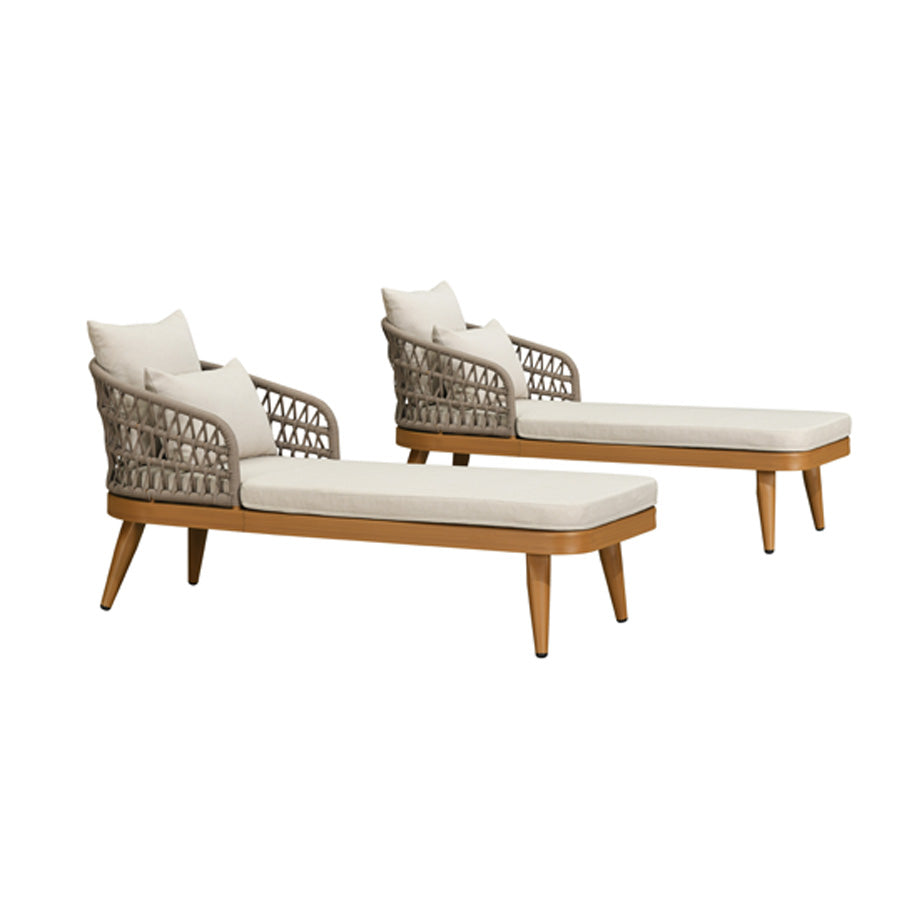
| Wicker-style | Warm, residential look; great for covered patios. | Durability depends on construction; avoid heavy exposure. | Style-focused patios away from constant splashes. | Confirm if it's purely decorative or built for outdoor use. |
| Textilene-style | Breathable, dries quickly. | Usually less plush than thick cushions. | High-traffic areas needing easy upkeep. | Check frame stability and sling tension. |
The practical split is simple: If you move chairs often, aluminum is usually the easiest to live with. If the lounge will stay under a covered area, a wicker-style look works well as long as the construction is truly outdoor-ready. If you prioritize easy drying over a plush cushion feel, textilene-style seating is worth a look.
Cushion Materials and Comfort Life
Poolside cushions aren't just about comfort—they also dictate how often you need to clean, dry, and store your furniture. Phifer's poolside fabric guidance is a good reminder that outdoor fabric should be chosen specifically for moisture and UV exposure, rather than assuming "outdoor" implies it's invincible.
Sunbrella and Outdoor Fabrics
Outdoor-rated or solution-dyed fabrics are worth the investment because they are engineered for tougher conditions than indoor textiles. While they aren't indestructible, they are much better suited for splash-prone settings than generic covers. If a product page doesn't specify the fabric type, treat that as a red flag.
Quick-Dry and Breathable Builds
Quick-dry or breathable construction is vital for pool decks, humid climates, and any setting where you move cushions after use. The trade-off is comfort: thicker cushions offer more relaxation for long lounging sessions, while quick-dry builds are significantly easier to manage after a rainstorm or pool splash.
What to Check in Cushion Construction
Look for removable covers, reinforced seams, and zippers that operate smoothly without snagging. A cushion might look premium at first, but it will quickly become a headache if it’s difficult to wash or slow to dry. When comparing durability, cushion construction is often the difference between occasional maintenance and a weekly chore.
Real-World Wear Near Pools
Pool decks are harder on furniture than dry patios because the chairs face more sun, more water, and more frequent handling. This extra exposure won't automatically ruin a lounge, but it will highlight weak points sooner.
Sun and Fade Pressure
Direct sun can dull colors and wear down surface finishes. Darker pieces often show this faster, but any lounge left in direct sun will age more quickly than one kept in the shade. If your chair will sit exposed all season, consider placement and the use of furniture covers as part of your purchase plan.
Water, Chemicals, and Drying Time
Splash zones, humidity, and routine cleaning affect how a lounge ages. Cushions that stay damp become fussy to maintain, and fasteners that get wet repeatedly may loosen prematurely. Always verify drying expectations and care instructions before assuming a lounge will be low-maintenance.
Movement, Stacking, and Hardware Wear
Frequent moving and stacking create extra wear on feet, joints, and hardware. A stackable chaise lounge is convenient, but stackability doesn't guarantee durability. Check that the feet, finish, and connection points are robust enough for repeated handling.
Choosing for Weight, Mobility, and Parts
A lounge can be durable but still a poor purchase if it’s too heavy, bulky, or impossible to service. Focus on ownership value:
- Weight Capacity: If buying plastic or resin, check for ASTM F1988 compliance, which sets a 400-pound static-load requirement.
- Mobility: Handles, wheels, and lighter frames are essential if you rearrange your layout often.
- Stackability: Treat this as a storage feature, not a durability guarantee.
- Serviceability: Check if the manufacturer offers replacement parts like feet, cushions, or fasteners.
- Browsing: If you're ready to shop, browse outdoor chaise lounge options and filter by frame, fabric, and service details.
Ultimately, buy for how you will move, store, and clean the chaise, not just how it looks on day one.
Care Moves That Extend Usable Life
The best maintenance routine is one you'll actually stick to:
- Rinse off dirt, sunscreen, and pool chemicals before they settle.
- Let cushions dry completely before stacking or covering.
- Tighten hardware as soon as the chair starts to wobble.
- Store cushions or cover the chair during long, wet stretches.
- Inspect feet, joints, and fabric at the start and end of the season.
If the frame looks tired but is structurally sound, these outdoor furniture refinishing tips can help refresh your setup.
Final Takeaway
For chaise lounge durability, the best choice fits your specific exposure level and upkeep habits. Aluminum is usually the easiest pool-deck fit, thicker cushions require more care, and stackable lounges should be checked for wear points before purchase. Compare model details, verify materials, and browse the collection when you're ready to narrow the field.
FAQs
How Long Do Outdoor Chaise Lounges Usually Last?
There is no fixed lifespan. Frame material, cushion construction, sun exposure, and how often you move or store the chair all change the result. Focus on choosing a model that matches your lifestyle rather than looking for a specific year-count guarantee.
What Frame Material Holds Up Best Near a Pool?
Aluminum is often the gold standard for pool decks because it is easy to move and resists rust better than heavier, decorative alternatives. Always compare the coating and fastener quality before deciding.
Can Chaise Lounge Cushions Stay Outdoors All Season?
Some can handle more exposure than others, but all cushions benefit from drying time. If a cushion stays damp, gets heavy with debris, or lacks a removable cover, it’s not ideal for all-season outdoor storage. Check the manufacturer's care instructions first.
Why Do Stackable Chaise Lounges Need Extra Checking?
Stacking adds contact points that can wear down feet, joints, and finishes. If you move your lounges weekly, prioritize models with high-quality wheels and reinforced connection points.
What Should I Verify Before Buying a Replacement Chaise Lounge?
Start with frame material, fabric durability, weight capacity, and ease of cleaning. Then, confirm if the model has readily available replacement parts. A replacement should solve the issues you had with your previous chair, not repeat them.