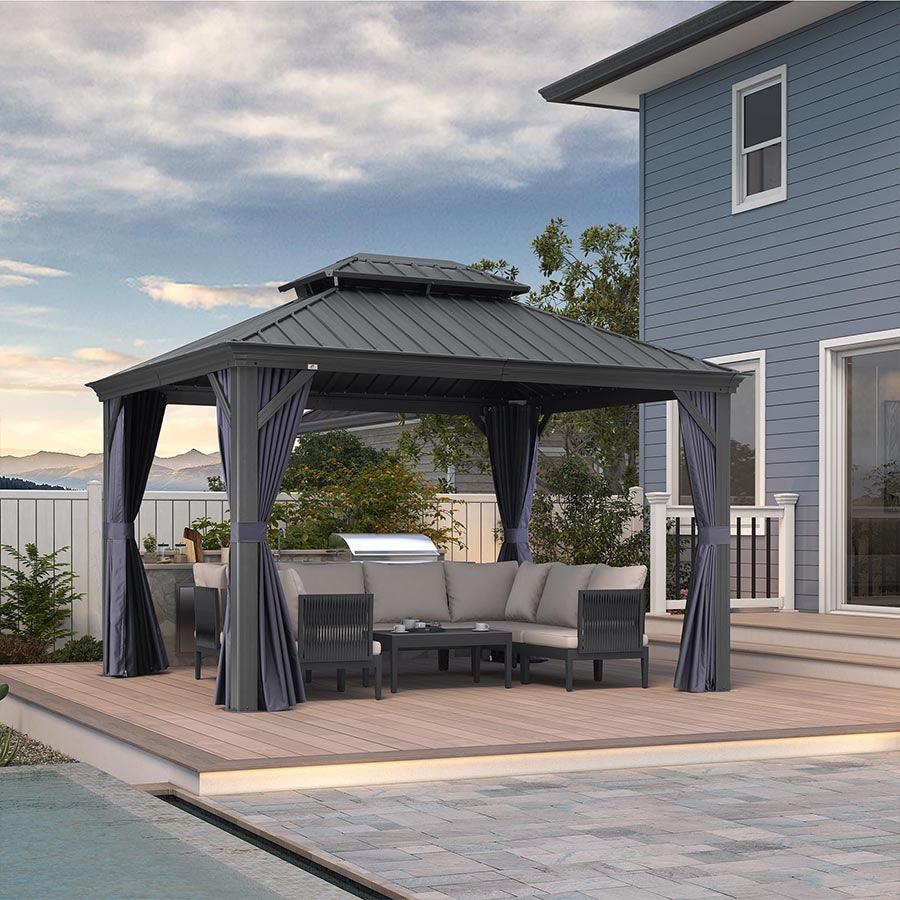
A hardtop gazebo can stay dry in heavy rain, but only when the roof system, seams, drainage, and installation work together. The core keyword here is hardtop gazebo, and the honest answer is simple: a rigid roof usually sheds rain well, while open sides, wind-driven rain, or a poor setup can still wet the space you use.

What Heavy Rain Performance Usually Means
For buyers, waterproof should not mean “dry in every storm.” In technical terms, waterproofing means resistance to water entry, while water-resistant or weather-resistant usually describes better protection without promising total dryness. A useful rule of thumb is this: if the roof is doing its job, the seating area may stay dry in steady rain, but the edges of the space can still see splash, spray, or runoff.
That distinction matters because a waterproof outdoor gazebo is often marketed more confidently than the real setup performs in a windy yard. In practice, hardtop gazebo rain protection is strongest when the roof sheds water cleanly and the site does not invite sideways rain into the open sides.

If you want dry seating in normal heavy rain, a hardtop roof is the right starting point. If you expect full enclosure-level dryness in exposed storms, be more cautious. The first case is common. The second needs stronger site control than many backyards provide.
Why Some Gazebos Stay Drier Than Others
Rigid roofs generally handle rain better than fabric roofs because they do not sag, pool water, or stretch under load the way softer tops can. That is why a rigid hardtop roof is usually the better choice when rain shedding matters more than easy fold-up convenience.
Roof Panels and Overlap
Panel layout affects how cleanly water moves off the roof. More overlap and better panel fit usually mean fewer places for water to linger. If a roof panel edge sits awkwardly, water can follow the seam instead of shedding away from it. That does not automatically create a leak, but it raises the odds of nuisance dripping when rain is heavy or prolonged.
Seams, Fasteners, and Drainage
The common weak points are seams, screw holes, and places where fasteners were not tightened evenly. If the roof uses drainage paths or gutters, those channels need a clean route off the frame. When the parts are misaligned, water can collect where it should be moving out. In other words, the roof may be sound in theory, but a poor assembly can still create a leaky hardtop gazebo experience.
Wind Direction and Exposure
Straight-down rain is easier to manage than wind-driven rain. If your yard is open, or if storms usually come from one side, the roof may keep the middle area dry while the outer seats or curtains get damp. That is a normal exposure issue, not necessarily a failure of the roof itself. For that reason, the question is not only “is the gazebo waterproof,” but “how exposed is this site during sideways rain?”
Installation and Site Slope
A level frame, solid anchoring, and basic runoff planning matter as much as the roof material. The hardtop-versus-fabric comparison explains why roof structure matters, and the same logic applies to drainage: if water has nowhere to go, it will collect around posts or near the base. A slight grade away from the gazebo can help the area feel drier after a storm, even when the roof is performing normally.
What Most Affects Dryness In Heavy Rain
A hardtop roof helps most, but seams, drainage, wind exposure, and installation often decide whether the space feels dry.
Show details
| Factor | Dryness influence |
|---|---|
| Rigid hardtop roof | Strongest help |
| Seam and edge exposure | Common leak-risk area |
| Drainage and gutter routing | Strong help when routed well |
| Roof pitch and runoff | Important for shedding water |
| Wind exposure | Can wet open sides |
| Level installation | Helps keep water moving correctly |
What Owner Reports Usually Reveal
Owner feedback is useful because it shows the difference between a dry roof and a fully dry outdoor zone. The most common pattern is that the main seating area stays usable, but small frustrations still appear at the corners, around curtain edges, or where debris blocks drainage. A few wet spots after a storm do not automatically mean the structure failed; they can also point to wind direction, clogged runoff, or a setup that needs tightening.
| Scenario | What People Usually Notice | What It Suggests | What To Verify Before Buying |
|---|---|---|---|
| Steady heavy rain | The middle area often stays dry enough for seating | The roof is shedding vertically, which is the main job | Check roof overlap, drainage, and assembly quality |
| Wind-driven rain | Edge drips or damp furniture near the sides | Exposure is pushing water past the roofline | Check side openness, curtains, and yard exposure |
| Long rain exposure | Nuisance dripping can show up at corners or seams | Small assembly or drainage issues become easier to notice | Inspect seals, fasteners, and runoff routing |
A review is most useful when it describes the weather, the yard exposure, and the setup quality, not just whether the reviewer liked the product. The hardtop gazebo rain and snow test is a better follow-up than a generic star rating because it helps you compare actual weather use, not marketing language.
Is a Hardtop Gazebo Worth It for Heavy Rain?
A hardtop gazebo is a strong fit if you want a more dependable rain-shedding roof for a patio, outdoor dining area, or backyard lounge that sees frequent showers. It is usually the better choice than a fabric model when your main goal is to keep the center of the space usable after rain.
It is a weaker fit if your yard is highly exposed to sideways rain, if the site drains poorly, or if you do not want to spend time on anchoring and assembly checks. In those cases, the roof may still help, but the space may not feel fully dry after every storm.
If you are comparing sizes and layouts, browse hardtop gazebo options by footprint first, then compare roof shape, drainage, and side coverage. That order matters more than color or decor.
Buyer Checks Before You Commit
Before you buy a hardtop gazebo, check the roof pitch and runoff path. A roof that sheds water cleanly is better than one that only looks sturdy. The gutter and pitch guide recommends verifying pitch and drainage before you rely on the structure in heavy rain.
Also confirm where the water exits. If the system channels runoff toward the posts or the walking area, puddles may form even when the roof itself is fine. Review the assembly hardware too. Seams, washers, and screw points should line up cleanly so you do not create avoidable drip points during installation.
Plan for the site, not just the gazebo. A level base and a surface that drains away from the seating area can make the whole setup feel drier. If your patio faces open fields or a storm path, the space may need more side protection than a roof alone can provide.
Use the product page as a fit check, not a promise. If you want to compare a specific model, browse hardtop gazebo models and verify the drainage, roof construction, and installation requirements that matter for your yard. For a larger layout, the heavy-duty double-roof model is worth a closer look only if the listed roof and drainage details match your rain exposure and you are comfortable with the setup it requires.
If heavy rain is a regular part of your yard, focus on drainage, anchoring, and side exposure before you choose a style. That is the fastest way to decide whether a hardtop gazebo fits your space.
FAQs
Are Hardtop Gazebos Waterproof in Heavy Rain?
They are often built to shed heavy rain well, but “waterproof” is too absolute for most real yards. The better check is whether the roof, seams, drainage, and site exposure together keep the seating area dry in the kind of storms you actually get.
Why Do Some Hardtop Gazebos Leak in the Rain?
The usual causes are seam gaps, loose fasteners, poor alignment, or wind pushing rain through open sides. If the roof is fine but the corners still drip, check drainage, level installation, and whether debris is blocking the runoff path.
Can You Leave a Hardtop Gazebo Open During a Storm?
Sometimes, but only if the anchoring, exposure, and accessory setup are all appropriate for that weather. In an open, windy yard, furniture and curtains may still get wet even when the roof itself is performing as expected.
What Should I Look for in a Rain-Resistant Gazebo?
Prioritize roof structure, drainage routing, roof pitch, and side exposure before cosmetic features. If the product page does not clearly explain how water leaves the roof, that is a sign to verify specs before you commit.
How Can I Reduce Water Pooling Around a Gazebo?
Give the structure a level base and make sure the surrounding surface slopes away from the posts or seating area. A small drainage fix can matter as much as the roof itself, especially on patios where runoff tends to gather after a long storm.