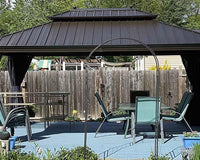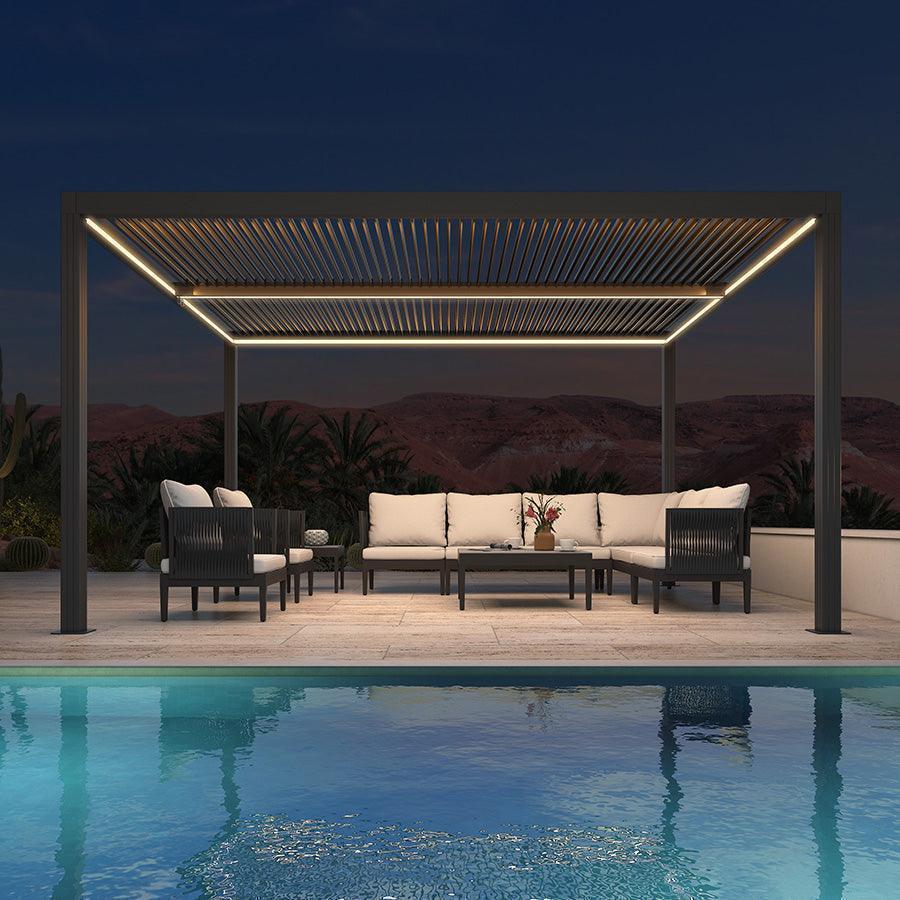
A louvered pergola vs hardtop gazebo choice usually comes down to one question: do you want adjustable shade, or do you want fixed overhead shelter that feels more consistently covered? For hot, sunny patios, louvered pergola options are often the better starting point. For wetter or more exposed yards, hardtop gazebo options usually make the simpler shelter-first case.

At a Glance: How the Two Structures Differ
| Decision Factor | Louvered Pergola | Hardtop Gazebo |
|---|---|---|
| Climate fit | Often better when you want flexible shade in hot, changing conditions | Often better when you want steadier overhead shelter |
| Rain handling | Can manage rain better when the louvers, gutters, and drainage are designed for it, but protection depends on the product | Fixed roof gives a more consistent shelter feel, especially for frequent drizzle or surprise rain |
| Shade control | Adjustable, so you can open or close light as the day changes | More consistent shade, with less day-to-day control |
| Wind exposure | Open or partially open layouts can feel less sheltered and need careful anchoring | More enclosed roofed structures can feel steadier, but they still need proper site planning |
| Installation burden | Often easier to place in an open patio plan, but still needs anchoring and clearance | Usually asks for more planning because the roofed structure is more permanent in feel |
| Seasonal use | Good when you want a flexible outdoor room that can adapt to sun and airflow | Good when you want a more sheltered gathering spot that feels ready for longer shoulder seasons |
| Best-use scenario | A patio you use often in sun, with a need to tune comfort through the day | A backyard space where weather protection matters more than openness |
That quick split matches how each family is built: adjustable shade and drainage on one side, fixed overhead shelter on the other. The rain question is not just which one is better, but which design matches how often your yard sees weather and how much coverage you actually need. adjustable shade and drainage fixed overhead shelter

Why Climate Changes the Best Choice
Climate matters because a backyard shelter is only useful if it matches the conditions you live with most of the year. A structure that feels right in a dry, breezy yard can feel awkward in a rainy, exposed lot, and the reverse is true too. The structural baseline also matters: the ASCE 7-22 load standard is the reference point behind how outdoor structures are expected to handle wind, snow, and rain loads in the US.
That is why the first filter should be exposure, not style. If your patio gets strong sun for hours, comfort often comes from controllable shade. If the space sees frequent rain, a fixed roof strategy may feel like a better fit. If the yard is open and windy, anchoring and layout become part of the buying decision, not an afterthought.
Weather Protection Trade-Offs
Rain and Drainage
The rain question is where shoppers often overreach. A louvered pergola can be a strong choice when its roof system is designed for water management, but it should not be treated as universally waterproof. In practice, the difference is not just louvered versus hardtop, but how the roof, gutters, and drainage are built into the design. The ASCE 7-22 framework is the right backdrop here, because roof loads and water exposure are part of the real planning picture.
A hardtop gazebo gives you a more fixed shelter feel. That usually makes it the easier choice when your main worry is unexpected rain over seating, dining, or a grill area. The trade-off is that you give up the same level of day-to-day openness you get from adjustable louvers.
If your main goal is dependable overhead cover during frequent rain, a hardtop gazebo is usually the safer starting point; if you want water handling plus more control over light, a well-designed louvered pergola can still make sense, but only when the product's drainage design supports that use.
Sun Control and Shade
For hot patios, shade control often matters more than maximum shelter. A louvered pergola lets you tune light through the day, which is useful when the space gets used at different times or when you want partial sun without full exposure. That flexibility is one reason many buyers ask whether a louvered pergola is worth it.
A hardtop gazebo usually gives you steadier shade with less adjustment. That can feel better in very bright climates or in spots where you do not want to keep changing the roof position. The downside is that the light level is fixed, so you lose the ability to open the space up when the weather is pleasant.
Wind Exposure and Seasonal Use
Wind changes the decision because open and enclosed roof styles do not behave the same way on an exposed lot. The wind-load assumptions behind outdoor structures depend on how open or enclosed the structure is, which affects anchoring and planning. That is why a breezy yard is not just a comfort issue; it changes the install and stability conversation.
A hardtop gazebo can feel more sheltered for shoulder-season use, especially when you want a defined outdoor room. A louvered pergola often feels better when airflow matters and you want the space to stay visually lighter. If your yard is exposed and windy, do not buy on appearance alone, because anchoring and enclosure matter as much as shade.
Maintenance, Cleaning, and Everyday Convenience
Convenience is part of climate fit too. A simpler fixed-roof structure may feel easier if you want a set-it-and-forget-it shelter. A louvered pergola gives you more control, but any added moving parts or drainage features mean there is more to keep clean and check over time.
That does not make one option better in every case. It means busy homeowners should weigh how often they want to interact with the structure. If you want the least daily adjustment, a hardtop gazebo usually wins; if you want more control and are willing to manage the system, a louvered pergola is often the better fit.
Which Climate Type Favors Each Option
- Hot and humid climates: A louvered pergola is often the better starting point if you want shade you can open and close as the day changes. The caveat is that you should still check whether the patio gets enough breeze, because a covered space can feel warmer if airflow is limited.
- Hot and dry climates: A louvered pergola can work well when you want to balance sun and shade without closing off the backyard. If the main concern is all-day glare or harsh afternoon sun, a hardtop gazebo may be the more comfortable choice.
- Rainier and mild climates: A hardtop gazebo usually makes the easier rain-protection case because the roof is fixed overhead. The caveat is that you still need to confirm the water-management details of the specific design, especially if the space sits under trees or slopes toward the patio.
- Windy or exposed lots: A hardtop gazebo is often the more shelter-like option, but the real decision is how the structure is anchored and how the site is prepared. If the yard is very open, neither choice should be treated as plug-and-play.
- Mixed four-season regions: Start with the option that matches your worst-season use, not your best-weather fantasy. If you want more light control and use the space mostly in warm months, a louvered pergola can be a good fit. If you want a more enclosed feel for cooler shoulder seasons, a hardtop gazebo often wins.
Hot-climate buyers often focus on heat buildup and anchoring, not just looks. That matches the kind of friction people describe in Arizona-style backyard discussions, where aluminum can feel hot in direct sun and wind exposure makes secure footing a real concern. Those comments are anecdotal, but they are a useful reminder to treat heat and anchoring as part of the decision, not edge cases.
Installation and Space Constraints
Footprint, Clearance, and Layout
Your yard can rule out one option before weather does. A patio with tight edges, overhead obstructions, or awkward furniture spacing may fit one structure better simply because the usable layout is cleaner. Hardtop gazebo options tend to feel more enclosed, while louvered pergola options can feel more open depending on how you place them.
The practical check is simple: measure the space you actually use for seating or dining, then leave room for walking paths and any overhang. If the structure eats into the furniture zone, the better climate fit may still be the wrong purchase.
Installation Complexity and Timeline
Installation burden often changes the final choice. A structure that looks great online can become a hassle if it needs more hands, more time, or more planning than you expected. That is especially true when the roofed option feels closer to a permanent backyard addition.
If you are comfortable with a larger project, either family can work. If you want the cleaner path from order to use, keep the install scope in mind before you compare finishes or extras.
Permits, Surface, and Site Prep
This is where the structural-planning side matters. The ASCE 7-22 load baseline and the way wind loads change with enclosure explain why surface type, anchoring, and local planning can matter as much as the roof style itself. A solid-looking backyard structure still needs a site that can support it.
The safest check is to evaluate the surface first, then the anchoring plan, then any local permit questions. In many yards, that step matters more than the color or finish.
How to Choose for Your Backyard
Start with climate exposure. If your space sees more sun than rain, adjustable shade is usually more valuable. If it sees frequent weather and you want steadier cover, fixed shelter becomes the stronger priority.
Then check your yard reality. If the surface, clearance, or anchoring plan is complicated, that may matter more than the weather category. For buyers comparing a louvered pergola with hardtop gazebo options, the best choice is the one that fits your climate and your site without forcing compromises you will notice every week.
FAQs
Which Is Better for Rain Protection: A Louvered Pergola or a Hardtop Gazebo?
A hardtop gazebo usually gives you the simpler rain-protection answer because the roof is fixed overhead. A louvered pergola can still handle rain well when the design includes the right drainage features, but the better choice depends on how often you expect wet weather and how exposed the patio is.
Is a Louvered Pergola Worth It in a Hot Climate?
Often, yes, if you want adjustable shade and better control over how much light reaches the patio. It makes the most sense when you use the space at different times of day and want airflow with partial cover. If you need the most constant shade possible, a hardtop gazebo may feel more comfortable.
What Climate Is Best for a Hardtop Gazebo?
Hardtop gazebos are often the better starting point in wetter, more exposed, or rain-prone yards where fixed overhead shelter matters more than roof adjustability. They also work well when you want a more enclosed outdoor-room feel. If your climate is hot but dry, though, a louvered pergola may be the better comfort fit.
Do Hardtop Gazebos Need More Installation Planning Than Pergolas?
Usually they do, because the roofed structure tends to feel more permanent and the site prep matters more. The deciding signal is not just the product type, but the surface, anchoring plan, and clearance around the footprint. If those are tight, plan the install before you plan the purchase.
Can I Leave Either Structure Up Year-Round?
Sometimes, but year-round use depends on climate, anchoring, and maintenance more than on the category label. In mild or protected yards, either can work well with the right setup. In windy or weather-exposed spaces, the site conditions and local load demands should drive the final decision.