Creating a functional outdoor retreat involves more than just selecting a comfortable chair. The relationship between your seating and surrounding surfaces determines the overall comfort and usability of the space. When incorporating low-profile loungers, the standard rules for indoor end tables rarely apply. This guide examines how to achieve the perfect height and scale for your accompanying surfaces, ensuring your beverages, books, and devices remain within easy reach while maintaining a cohesive aesthetic.
Understand the Low-Profile Design Trend
The shift toward minimalist and sleek aesthetics has made low-profile loungers a staple in contemporary outdoor patio furniture. These pieces typically feature a seat height ranging from 20 to 30 centimetres from the ground, creating a grounded, relaxed atmosphere reminiscent of luxury resorts. However, this architectural choice necessitates a specific type of support furniture.
Standard side tables often stand between 45 and 55 centimetres tall. When placed next to a low-profile lounger, these standard tables feel disproportionately high, forcing the user to reach upward in an awkward motion. The synergy between these two pieces depends on the table reflecting the "horizon line" established by the seating. Using the correct patio set side tables ensures that the visual weight of the arrangement remains balanced and that the furniture does not appear cluttered or mismatched.
Determine the Ideal Low Profile Lounger Table Height
Finding the correct low profile lounger table height is primarily an exercise in ergonomics. The goal is to allow a person to reach for an item without sitting up or straining their shoulder. Because low-profile furniture sits so close to the ground, the margin for error is smaller than with traditional upright seating.
The Equal-to-Seat Rule
For the most ergonomic experience, the top of the side table should be roughly equal to the height of the lounger’s seat or the top of the cushion. If your lounger has a seat height of 25 centimetres, a table between 20 and 30 centimetres is ideal. This allows your arm to extend naturally horizontally or slightly downward to retrieve items. If the table is significantly higher than the seat, you risk knocking over drinks with your elbow when moving in the chair.
Accounting for Cushion Compression
It is a common mistake to measure the height of a lounger without considering the "sink" factor. A high-density foam cushion might compress by 3 to 5 centimetres when a person sits down. To find the most accurate outdoor side table dimensions for your specific setup, measure the seat height while it is occupied. Your ideal table height should align with this compressed height to prevent the surface from feeling too tall during actual use.
The Armrest Variable
If your low-profile lounger features armrests, the table height should ideally be 2 to 5 centimetres below the top of the armrest. This positioning prevents the table from interfering with your arm’s movement while keeping the surface accessible. If the lounger is armless, you have more flexibility, though staying within 5 centimetres of the seat height remains the safest choice for both accessibility and visual flow.
Visual Proportions and the Horizon Line
Low-profile furniture is designed to emphasize open space and clear sightlines. A table that is too tall breaks the "horizon line" of the furniture set, making the area feel smaller and more enclosed. By matching the table height to the lounger, you maintain a continuous, low-slung aesthetic that enhances the feeling of relaxation and modern design.
Key Considerations for Outdoor Side Table Dimensions
Height is the most discussed factor, but the width and depth of the table are equally important for stability and utility. Outdoor side table dimensions must be scaled to the footprint of the lounger to ensure the set looks intentional rather than accidental.
Surface Area Requirements
A side table next to a lounger generally needs to accommodate a drink, a smartphone, and perhaps a book or a pair of sunglasses. A surface area of 40x40 centimetres is usually sufficient for a single person. If the table is shared between two loungers, a larger rectangular or circular surface—approximately 50 to 60 centimetres wide—is necessary to prevent the area from becoming overcrowded.

Base Stability on Outdoor Surfaces
Because these tables are often placed on decks, patios, or even grass, the base design is a critical part of its dimensions. A low-profile table with a wide base is less likely to tip over if bumped. When browsing patio set side tables, look for designs where the base width is at least 60% of the tabletop width. This is especially important for low-profile sets where the centre of gravity is closer to the ground.
Weight and Portability
The dimensions also affect the weight of the piece. In outdoor settings, you may want to move the table to follow the shade or accommodate more guests. A table that is too large or made of solid stone may be difficult to reposition. Opt for dimensions that provide enough surface area for your needs without making the furniture immobile, particularly if you enjoy rearranging your patio layout frequently.
Materials and Durability in Contemporary Outdoor Patio Furniture
When selecting accessories for contemporary outdoor patio furniture, material choice impacts both the longevity of the piece and how well it integrates with your loungers. Modern materials allow for slimmer profiles without sacrificing the strength needed to withstand environmental stressors.
Aluminium and Powder-Coated Metals
Aluminium is a preferred material for modern outdoor sets because it is rust-resistant, lightweight, and can be moulded into sleek, low-profile shapes. Powder-coated finishes allow for a wide range of colours, from matte charcoal to sandy beiges, ensuring the side table matches the frame of your lounger perfectly. These tables are easy to clean and maintain, requiring only a simple wipe-down with water and mild soap.
Performance Plastics and Resin

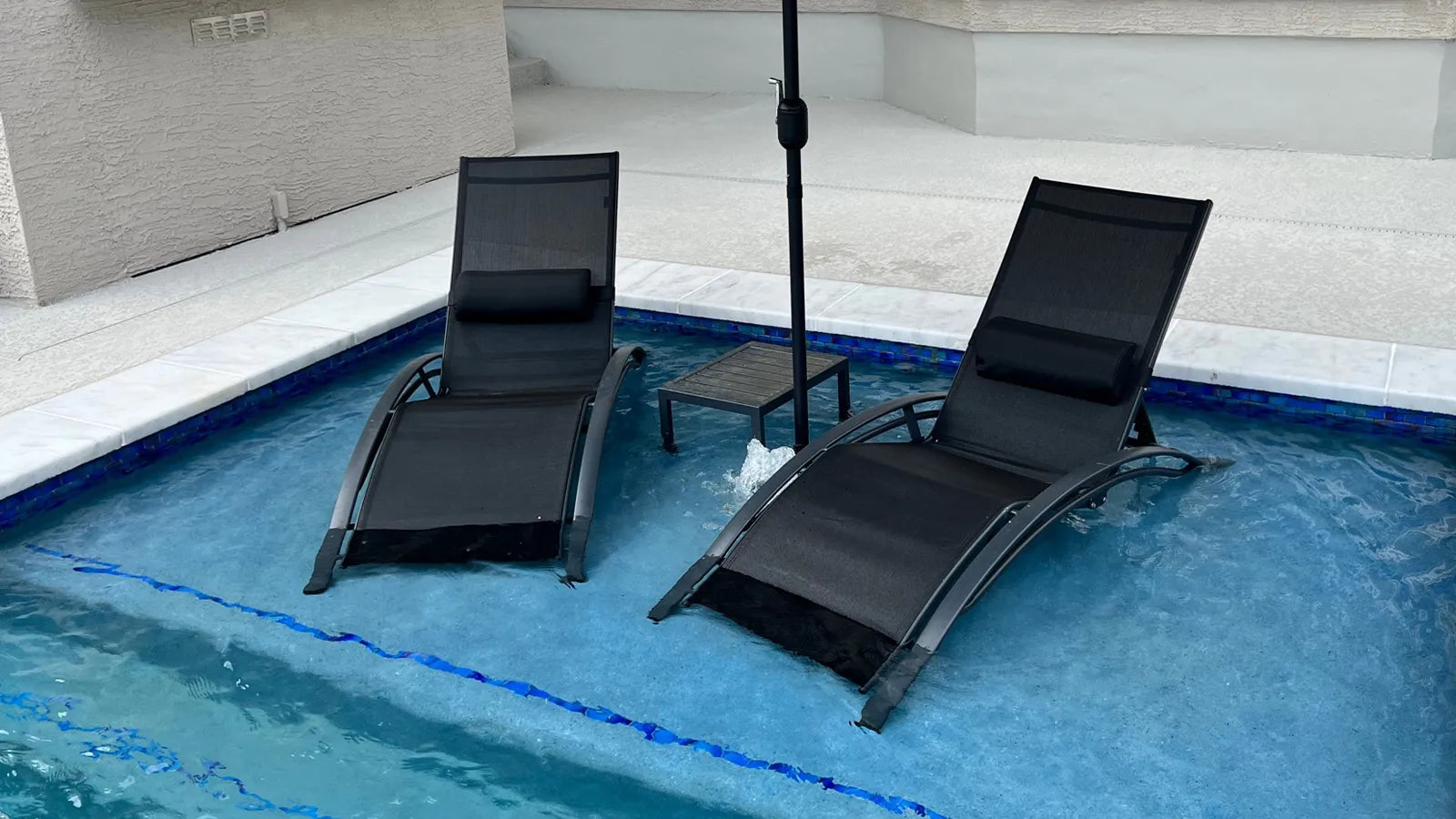
High-quality resins and performance plastics are excellent for low-profile tables because they are entirely waterproof and UV-resistant. These materials are often used to create "C-shaped" tables that can slide over the base of a lounger, bringing the surface even closer to the user. This is a practical solution for very low seating where traditional four-legged tables might feel too far away.
Sustainable Woods and Teak
For a warmer, more organic look, teak or acacia wood is often used. Teak is naturally oily, making it resistant to rot and insects. In a contemporary setting, wood tables often feature clean lines and slatted tops to facilitate drainage. If you choose wood, ensure it is treated for outdoor use, and be prepared for the natural silvering or greying process that occurs as the wood is exposed to sunlight.
Pair Side Tables with Patio Set Reclining Chairs
Not all loungers remain at a fixed angle. When your arrangement includes patio set reclining chairs, the "ideal" table height becomes a moving target. As the backrest lowers, your hand position changes, which can impact how you interact with the side table.
When a chair is in its most upright position, your hand naturally rests higher. When fully reclined, your hand is much closer to the ground. To accommodate both positions, choose a table that leans toward the shorter side of the spectrum. A lower table remains accessible when you are lying flat, whereas a tall table becomes nearly impossible to reach comfortably from a fully reclined position. Maintaining a consistent low profile lounger table height across all pieces in the set ensures that the furniture remains functional regardless of the reclining angle.
Patio set reclining chairs often require more "swing room" for the backrest and the footrest. Ensure the side table is placed far enough forward so that it does not interfere with the reclining mechanism. A common mistake is placing the table directly next to the hinge of the chair, which can lead to pinched fingers or scratched furniture. Position the table adjacent to the front half of the seat for the best combination of accessibility and clearance.
Practical Tips for Arranging Patio Set Side Tables
The final step in achieving synergy is the physical arrangement of the pieces. Proper placement ensures that the furniture functions as a cohesive unit rather than a collection of separate items.
Spacing for Comfort
Place the side table within 15 to 20 centimetres of the lounger. This distance is close enough to reach without leaning but far enough to allow you to stand up or sit down without hitting your knees on the edge of the table. If you are using a shared table between two loungers, leave at least 40 centimetres of space between the chairs to accommodate the table and allow for easy movement.
Leveling on Uneven Ground
Outdoor surfaces are rarely perfectly flat. A wobbly table is frustrating and leads to spills. Look for patio set side tables with adjustable leveling feet. If your contemporary set features a sled base or a flat pedestal, you may need to use discreet furniture shims to ensure the surface is perfectly horizontal. A stable surface is essential when the table height is low, as any tilt is more noticeable relative to the ground.
Utilizing Layered Lighting
Because low-profile furniture is closer to the ground, standard floor lamps or overhead lights can create harsh shadows or glare. Consider placing a small, cordless LED lantern on your side table. Because the table height is optimized for your hand, the light will be at the perfect level to illuminate a book or provide a soft ambient glow without shining directly into your eyes while you are reclining.
Conclusion: Finding the Right Side Table Height for Low-Profile Loungers

Achieving the perfect synergy between a low-profile lounger and a side table requires careful attention to height and proportion. By selecting a table that aligns with your compressed seat height and reflects the sleek lines of contemporary design, you create an outdoor space that is as functional as it is beautiful. Whether you are using reclining chairs or fixed loungers, keeping your surfaces low and accessible ensures a seamless relaxation experience that invites you to stay and enjoy the outdoors longer.
Common Questions About Ideal Side Table Height for a Low-Profile Lounger
Q1: Should the side table be higher or lower than the lounger?
It should generally be equal to or slightly lower (within 5 centimetres) than the height of the seat cushion. If the table is higher than the seat, it can feel obstructive; if it is too low, it becomes difficult to reach.
Q2: Can I use an indoor end table for my outdoor lounger?
It is not recommended. Indoor tables are typically 50 to 60 centimetres high, which is much too tall for a low-profile lounger. Additionally, indoor materials like standard wood or non-treated metal will warp, rust, or rot when exposed to humidity and sunlight.
Q3: What are the standard outdoor side table dimensions?
Most outdoor side tables are square or circular with a diameter/width of 40 to 50 centimetres. The height usually varies between 40 and 55 centimetres for standard chairs, but for low-profile loungers, you should look for "low-height" or "coffee table height" side tables ranging from 20 to 30 centimetres.
Q4: How do I maintain contemporary outdoor patio furniture?
Most modern sets made of aluminium or resin simply require rinsing with a hose and wiping with a soft cloth. For wood sets like teak, an annual application of teak oil can help maintain the original honey colour, though many people prefer to let it age to a natural silver-grey.
Q5: Is one side table enough for two patio set reclining chairs?
Yes. If the table is large enough. A table with a width of at least 50 centimetres can comfortably serve two people. However, placing a small individual table next to each chair provides a more luxurious and private experience, especially in a large patio layout.