Designing a backyard bar involves more than selecting stone and countertops; the seating defines the atmosphere. Homeowners often debate between backless and high-back stools to complete their entertainment area. Each style offers distinct functional advantages and visual impacts on the space. This guide explores the technical and aesthetic differences to help you choose the right seating for your specific social environment and spatial requirements.
Evaluate Your Backyard Bar’s Visual Aesthetic
The visual impact of your seating choice determines how the rest of your contemporary outdoor furniture is perceived. Stools are prominent vertical elements that can either blend into the counter or stand out as a design statement. Selecting a style requires an understanding of how lines and silhouettes affect the "vibe" of a patio or deck.
Backless stools are synonymous with minimalist and streamlined design. Because they lack a vertical backrest, they maintain a low profile that does not obstruct the view of the bar itself or the landscape beyond. This makes them a popular choice for contemporary patio furniture setups where the goal is to highlight a high-end stone countertop or a beautiful garden view.
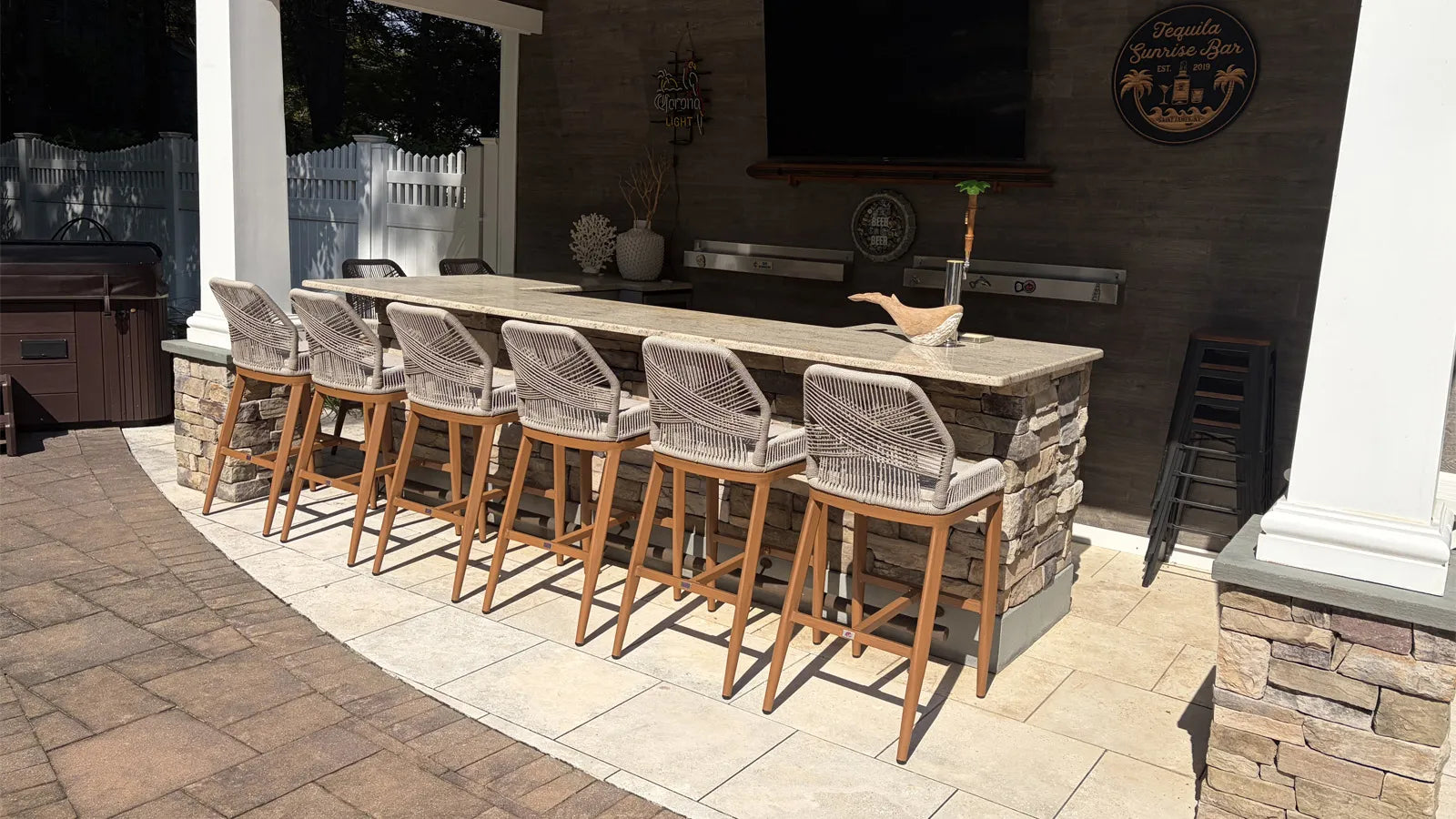
High-back stools provide a more traditional and grounded appearance. They act as a visual anchor for the bar area, defining it as a distinct "room" within the backyard. These stools often feature more intricate designs, making them ideal for homeowners who want their bar seating to serve as a focal point in their outdoor living space.
Analyze Backless Bar Stool Pros and Cons

Choosing the right seating requires balancing functionality with style. Understanding the backless bar stool pros and cons ensures that you do not prioritize aesthetics over long-term usability. These stools are highly functional in specific contexts but may lack certain features found in more substantial seating options.
Space-Saving and Versatility
One of the primary benefits of backless stools is their ability to tuck completely under the bar counter when not in use. This keeps walkways clear and prevents the patio from looking cluttered. This space-saving nature is a major "pro" for compact outdoor kitchens or narrow balcony bars where every square foot is valuable.
Maintenance and Durability
Backless designs are often easier to maintain because they have fewer surfaces where dust, pollen, or rain can collect. Many backless models are made from single-mold materials or simple metal frames, which simplifies the cleaning process. For high-traffic areas, this durability and ease of care make them a practical choice for frequent entertaining.
Limited Long-Term Comfort
The most significant "con" of backless stools is the lack of lumbar support. While they are perfect for quick snacks or short social interactions, they are generally less comfortable for multi-course meals or long evenings. Guests may find themselves leaning forward or slouching, which can detract from the relaxation of an outdoor environment.
Consider Comfort and Social Dynamics
The outdoor bar seating style you select influences how guests interact with each other and how long they remain at the bar. Comfort is not just about padding; it is about ergonomics and the physical support required for different types of social gatherings. You must decide if your bar is a place for quick transitions or a destination for long-range relaxation.
Encouraging Movement in Social Settings
Backless stools encourage a more active and fluid social environment. Without a backrest, guests find it easier to swivel around, stand up, or turn to talk to someone behind them. This seating style is ideal for "party vibes" where guests are moving between the grill, the pool, and the bar frequently throughout the afternoon.
Support for Extended Outdoor Dining
If your outdoor bar doubles as your primary dining area, high-back stools are often the better choice. The backrest provides essential support for the spine, allowing guests to sit back and relax during a long dinner. This style mimics the comfort of an indoor dining chair, making the outdoor space feel like a true extension of the home’s interior.
Armrests and Ergonomic Features

Some high-back stools also include armrests, which further enhance the comfort level. Armrests provide a place to rest the elbows, reducing strain on the shoulders. However, they also make the stool wider, which may limit the number of people you can fit around the bar counter. You must weigh the individual comfort of each guest against the total seating capacity.
Space Constraints and Functional Layouts
The physical dimensions of your patio significantly dictate which contemporary patio furniture will work. High-back stools require more "swing room" for guests to get in and out, while backless stools offer more flexibility in tight corners. Measuring your counter length and the clearance behind the bar is a critical step in the selection process.
Tucking Under the Counter
Backless stools are superior for maintaining a clean architectural line. When they are tucked away, they essentially disappear into the bar island. This is particularly useful if your bar is located in a high-traffic transition zone, such as between the back door and the pool, where protruding chair backs could become tripping hazards.
Defining the Perimeter with High Backs
In larger backyards, high-back stools serve a functional purpose by creating a physical boundary. They act as a decorative "wall" that separates the cooking area from the lounging area. If your bar is floating in the middle of a large deck, the high backs provide a sense of enclosure and security for those sitting at the counter.
Clearance and Walkway Requirements
For high-back stools, you should ideally have at least 30 to 36 inches of clearance behind the stool to allow people to walk past while someone is seated. For backless stools, this requirement is slightly less stringent because they take up less visual and physical volume. Always measure the distance from the bar to the nearest obstacle before finalizing your purchase.
Material Selection for Contemporary Outdoor Furniture

The longevity of your stools depends on their construction and their ability to withstand the elements. Contemporary outdoor furniture utilizes a variety of high-performance materials designed for rain, sun, and temperature fluctuations. Your choice of material should complement the style of the stool and the overall durability of the set.
Aluminum and Metal Finishes
Powder-coated aluminum is a leading material for modern outdoor furniture because it is lightweight, rust-resistant, and available in many colors. It is frequently used for both backless and high-back designs. Metal stools often feature sleek, thin lines that embody the contemporary aesthetic while remaining strong enough for outdoor use.
Synthetic Rattan and Woven Textures
Woven materials provide a softer, more organic look that fits well with "boho-modern" or coastal themes. High-density polyethylene (HDPE) wicker is a durable synthetic that mimics the look of natural rattan but does not fade or crack in the sun. This material is excellent for high-back stools as the weaving can provide a natural "give" for the backrest.
Sustainable Wood and Teak Options
Grade A teak is a premium choice for high-end outdoor bars. Teak contains natural oils that protect it from rot and insects, making it one of the most durable woods available. Wooden bar stools offer a warm, natural contrast to stone or concrete countertops. Teak works well in backless designs for a clean, Scandinavian look or in high-back designs for a more substantial, classic feel.
Match Seating Styles to Specific Outdoor Vibe
The final decision often comes down to the specific mood you want to create. Your modern outdoor furniture should reflect your personality and how you intend to use the space. Whether you want a high-energy lounge or a quiet, private nook, the stools play a pivotal role in setting that tone.
To achieve a resort-style feel, backless stools are often the preferred choice. They mimic the look of swim-up bars found at luxury hotels. Using stools with a pedestal base or a simple four-leg design in a neutral color creates a relaxed, breezy atmosphere that prioritizes the view of the water.
For a bar that feels like a professional outdoor kitchen, high-back stools with upholstered cushions or ergonomic contours are more appropriate. This style suggests that the bar is a place for serious dining and long conversations. Mixing materials, such as a metal frame with a teak backrest, adds layers of texture to the contemporary design.
Conclusion: Choosing the Right Bar Stools for Your Outdoor Space
Choosing between backless and high-back stools requires an assessment of your space, comfort needs, and design goals. Backless stools offer a minimalist, space-saving solution perfect for social, high-energy areas. High-back stools provide the ergonomic support and formal presence needed for long dinners and structured layouts. By selecting materials that match your contemporary outdoor furniture and measuring your patio accurately, you can create a backyard bar that is both functional and visually stunning.
Common Questions About Backless vs. High-Back Bar Stools
Q1: Is it better to choose backless stools for small patios?
Yes, backless stools are generally the better choice for smaller spaces. Their ability to tuck completely under the counter prevents them from obstructing walkways. They also have a lower visual profile, which makes a small patio feel more open and less cluttered compared to stools with tall backrests.
Q2: Are high-back stools more expensive?
Usually, high-back stools carry a higher price tag than backless models. This is because they require more materials for construction, including the backrest, lumbar support, and often additional padding or cushions. The manufacturing process for high-back designs is also more complex, which contributes to the increased cost.
Q3: Can I mix and match stool styles?
Yes, mixing styles can create a unique and personalized look. For example, you might use high-back stools at the main dining portion of a bar and backless stools at a secondary ledge or corner. However, to maintain a cohesive look, it is important to ensure the stools share a similar material, color palette, or design language.
Q4: How many stools can I fit at my bar?
How many stools can I fit depends on your counter length. For comfortable seating, you should allow about 24 to 30 inches of width for each stool. This ensures that guests have enough elbow room and can get in and out of their seats without bumping into their neighbors. If the stools have armrests, you should lean toward 30 inches per seat to accommodate the extra width.
Q5: Do backless stools ever have cushions?
Yes, many backless stools are available with built-in or removable cushions. While they still lack back support, a high-quality cushion can significantly improve the comfort of the seat itself. Look for weather-resistant fabrics like Sunbrella to ensure they do not mold or fade over time.