
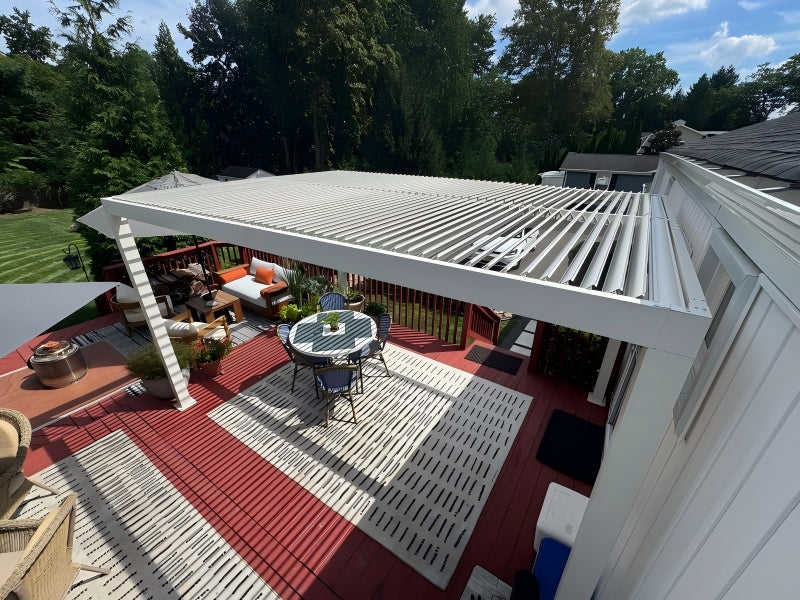
A winter container garden can stay orderly, easy to work in, and visually appealing around a pergola if you first assess light, wind, and roof runoff. The most useful backyard pergola ideas treat the structure as part of the garden’s microclimate. Map the conditions around it, then position containers, plants, and supplies to suit those conditions. This approach keeps your garden practical through winter while giving it enough structure to look intentional from the house and across the yard.
Map Winter Sun, Wind, and Roof Drip Lines
Before selecting pots or plants, spend a few days watching how the area behaves. Backyard pergola ideas work better when you plan around the light and water patterns already present in the space. A quick site map can save you from moving heavy, planted containers later.

Track Morning and Afternoon Exposure
Winter sun sits lower in the sky, so your house, fence, and pergola may cast longer shadows than they do in summer. Check the garden in the morning and again in the afternoon. Notice where direct light reaches the ground, where it becomes filtered, and where shade remains for most of the day.
Match each container to the light requirement on its plant label. For perennial choices, the USDA Plant Hardiness Zone Map can identify your local zone by ZIP code. The map reflects average annual extreme minimum temperatures, so pair it with plant labels and advice from a local nursery.
Mark Wind and Drip Zones Before Placing Plants
Walk through the pergola area during rain or shortly afterward. Look for roof edges, gutters, drain outlets, and places where water collects. Keep planted containers away from a constant drip line, since repeated splashing can compact potting mix and leave foliage looking untidy.
Roof coverage and drainage differ by pergola model. Review the instructions for your exact structure before placing containers below a roof edge or near a water outlet. Put delicate foliage where it gets suitable light without taking the full force of concentrated runoff.
Lay Out a Potting and Display Zone With Clear Access
The best backyard pergola ideas make routine garden tasks easier. Divide the area into a work zone, a display zone, and an access route before filling a single pot. This keeps your winter container garden under pergola attractive from indoors and practical when you need to water, prune, or move a plant.
Separate Potting, Display, and Access Areas
Place your potting area near storage or an outdoor water source. A compact bench or stable work surface can hold a hand trowel, labels, and a small amount of potting mix while you refresh containers. Reserve the most visible area for the finished display, such as the view from a kitchen window or the path into the yard.
For simple pergola potting station ideas, keep active work in one defined location and return bulk supplies to storage after each session. That routine keeps soil bags, empty nursery pots, and tools from spreading into the planted display.
Keep Planters Clear of Posts, Doors, and Moving Parts
Identify each post, door swing, drainage outlet, screen track, and roof control before committing to a layout. Follow product instructions for access around those features. A planter can look appealing next to a post yet become inconvenient if it blocks maintenance or catches runoff.
Test your walking route with empty pots before planting. You should be able to carry a watering can, reach the back row, and move through the area without brushing branches or shifting containers. Clear access makes the garden easier to enjoy throughout the season.
Choose Containers and Potting Mix for Your Local Frost Pattern
Thoughtful backyard pergola ideas account for local frost patterns, drainage, and exposure instead of relying on one nationwide planting calendar. Your container setup should let excess water escape and give you flexibility to protect or move plants as local conditions change.

Check Drainage Holes and Raised Feet
Choose containers with open drainage holes, then lift each pot slightly from the surface with pot feet, bricks, or a purpose made riser. This helps excess water leave the base. Avoid blocking outdoor drainage holes with saucers during winter, since retained water can keep roots too wet.
Use potting mix intended for containers, and check moisture below the surface before watering. Materials respond differently to cold conditions, so follow the manufacturer’s care guidance for terracotta, ceramic, resin, metal, or composite pots before leaving them outdoors through repeated freezes.
Use Local Frost Dates Instead of a Universal Calendar
Check local first frost dates, last frost dates, and the usual pattern of freeze and thaw cycles. These details affect when you plant, repot, protect, or move a container. A sheltered pergola corner can still receive cold air, especially if wind moves through the space.
Use plant labels and local horticultural advice to decide what can remain outdoors. Do not assume every plant or container will handle a hard freeze. A seasonal plan based on your garden’s own exposure will be more dependable than a calendar designed for another region.
Build Plant Groupings Around Light, Height, and Seasonal Color
Winter backyard pergola ideas feel more complete when the display has structure even on days with fewer flowers. Let plant form, foliage, branches, and container color carry the visual interest. Layers create depth while leaving the pergola’s posts and garden paths easy to see.
Place Taller Plants Behind Lower Containers
Arrange tall evergreens, upright branches, or narrow shrubs toward the rear of the display. Step down through medium containers and finish with lower plantings at the front. Keep the tallest shapes between posts or slightly to one side, so the pergola still has a clean visual rhythm.
A tall container can anchor a corner, while smaller pots add texture near it. This arrangement guides the eye from the pergola into the garden without narrowing your access route or covering the post lines.
Repeat One Color Palette Across the Display
Choose one main color and one supporting color before shopping. Deep green with warm white creates a calm, classic look. Burgundy with natural wood tones gives the display a richer seasonal feel. Neutral containers can tie the arrangement together when foliage, branches, and flowers bring different textures.
Winter planters for pergola spaces often look more polished when a color or material repeats across several pots. Vary plant shapes while carrying one pot finish, branch color, or accent material through the display. The result feels layered without becoming visually busy.
Keep Supplies and Temporary Plant Protection Within Reach
Your backyard pergola ideas should support the small tasks that keep containers healthy through winter. Keep daily tools close enough to use, then store bulk materials neatly and off the ground. This protects the display from clutter and leaves key pergola features accessible.
Store Hand Tools and Soil Off the Ground
Keep a hand trowel, pruners, watering can, plant labels, and spare potting mix in a lidded storage box or on a covered shelf. Raising supplies from the ground helps keep them dry and easier to handle.
Return tools after each gardening session. Keep storage outside the main walkway and away from posts, drainage routes, roof controls, and screen tracks. You will have more room to work and fewer loose items around the pergola.
Use Removable Covers Only as Plant Specific Protection
Frost cloth, mulch, temporary covers, and moving pots closer to a protected wall can help in the right setting. Match the method to the plant, container material, and forecast. Check that a cover does not trap excess moisture or press down on tender foliage.
Avoid using one protection method for every container. Review the plant label and local gardening advice, then adjust temporary materials as weather changes. Keep covers and spare supplies clear of drainage openings, walkways, and moving roof components.
Match a Louvered or Fabric Top Pergola to Your Garden Routine
Backyard pergola ideas can also reflect the role you want the roof to play in your garden’s appearance. Choose between a louvered roof and a fabric top based on your light preferences, seasonal color palette, and regular garden routine. Each option can support a winter container display in a different way.

Use a Louvered Roof When Adjustable Light Is the Goal
A louvered roof can suit you if you want to adjust the amount of overhead light during the day. Adjustable hard slats can create a brighter or more shaded garden setting as the winter sun angle changes. A Purple Leaf Athena louvered pergola is a relevant option to compare if adjustable overhead light fits your gardening routine.
Use a Fabric Top When a Softer Seasonal Canopy Is the Goal
A fabric top can suit a garden where canopy color and softer texture are important parts of the design. Consider how the fabric tone will work with your containers, foliage, and branch accents. A retractable pergola garden layout can feel cohesive when the canopy, pots, and one accent color all support the same winter palette.
Build a More Useful Winter Garden With a Purple Leaf Pergola
A useful winter garden follows a clear order: observe sun, wind, and runoff; define work, display, and access areas; then select containers, plants, and storage around those findings. Once you know your preferred roof style and daily garden routine, compare Purple Leaf Pergola Kits by footprint, roof design, and the access you need around posts and drainage.
FAQs
Can I Use Pergola Roller Blinds Around a Winter Container Garden?
Yes, if roller blinds are available for and compatible with your exact pergola model. Keep containers clear of the blind tracks, operating area, and drainage paths. Review the product instructions before adding accessories, since compatible parts and required clearances vary by model.
How Do I Water Containers When a Pergola Changes Rainfall Exposure?
Check the potting mix and plant condition instead of watering on a fixed schedule. A roof can reduce natural rainfall reaching containers, while wind and direct sun can dry some pots quickly. Water when the mix needs it, then confirm that excess water drains freely.
Can I Use Outdoor Grow Lights or Heat Mats Around a Pergola?
Yes, if the equipment is rated for outdoor use and installed according to its instructions. For outlets, fixed wiring, extension planning, or long term electrical use, follow local requirements and consult a qualified electrician before connecting equipment.
How Much Space Should Containers Leave Around Pergola Posts?
For a practical planting layout, leave at least 12 inches between the outside edge of a container and a fixed pergola post. Increase that space to 18 to 24 inches where you need access to drainage, roller blind tracks, curtains, or maintenance points. Treat these measurements as garden-planning references, then confirm the required clearance in your exact pergola’s installation instructions.
What Pergola Size Works Best for a Winter Container Garden?
Choose a pergola size by marking three areas at full scale: the container display, the potting zone, and an unobstructed work path. Purple Leaf offers pergola footprints beginning at 8' x 10', with larger options available for broader garden layouts. Compare the exact model dimensions and installation drawing before buying, since posts, roof controls, drainage, and optional accessories can reduce the usable space around the perimeter.


Comments