Winter is the most dangerous season for your outdoor fabrics. While many homeowners worry about snow load or wind damage, the silent destroyer of awnings is actually mildew. This fungal growth does not just look unsightly; it eats away at the fibers of the material, significantly shortening the lifespan of your investment.
Preventing mildew is not about luck; it is about preparation and proper storage habits. By taking specific steps before the first freeze and maintaining vigilance throughout the cold months, you can ensure your awning emerges in spring looking as vibrant as the day you bought it.
Why Mildew Forms in Winter
To fight the enemy, you must understand how it survives. Many people assume that mildew only grows in hot, humid summers. However, winter provides a unique set of conditions that can be equally destructive. Mildew does not grow on synthetic fabrics themselves; it grows on the organic matter trapped on them.
Dust, pollen, bird droppings, and leaves settle on your awning throughout the year. When winter moisture—whether from rain, melting snow, or condensation—combines with this organic debris, it creates a perfect feeding ground for mold spores.
Furthermore, winter days often have temperature fluctuations. A sunny afternoon can warm up a damp, rolled-up awning just enough to create a humid microclimate inside the fabric rolls. This trapped moisture, combined with dirt, allows mildew to thrive even when the outside air is cold.
Clean the Fabric Thoroughly Before Frost
The most effective way to prevent mildew is to remove the fuel source. You must clean the fabric deep down before the cold weather sets in. If you leave summer's grime on the fabric, you are essentially setting the table for mold.
Remove Loose Debris First
Start by fully extending the awning. Use a soft broom or a dry brush to sweep away leaves, twigs, and cobwebs. Pay special attention to the underside of the awning and the areas where the fabric meets the frame or roller tube. Debris often accumulates in these crevices.
If you have trees nearby, check for sap. Pine sap or sticky residues from aphids are magnets for dirt. You must gently scrape these off or use a specific spot remover, as simple brushing will not dislodge them.
Wash with the Right Solution
Do not use a high-pressure power washer. The force can damage the stitching and strip away the fabric's protective coating. Instead, use a garden hose to wet the material. Mix a solution of mild, varying-temperature water and a specific awning cleaning fluid or a gentle dish soap.
Use a soft-bristled brush to scrub the fabric. Work in sections, ensuring you agitate the dirt out of the weave. Rinse the fabric until there are absolutely no soap bubbles remaining. Soap residue is actually hydrophilic, meaning it attracts water, which is the last thing you want during winter.
Dry the Fabric Completely
This is the most critical rule of awning maintenance: never store wet fabric. Moisture is the primary catalyst for mildew growth. Even a small amount of dampness rolled up inside a cassette can cause massive damage over several months.
After washing, let the awning extend fully in the sun. It needs to air dry completely. This process might take a full day, depending on the humidity and temperature. Do not rely on a simple touch test. Feel the seams and the thickest parts of the hems, as these areas hold water the longest.
If you are caught by a sudden rainstorm right before you planned to store the awning, you must wait for the next dry window. It is better to leave the awning out for an extra day to dry than to roll it up wet and guarantee a mold problem in the spring.
Restore Water Repellency
Most high-quality outdoor fabrics come with a water-repellent finish. Over time, sun exposure and cleaning wear this coating down. If water soaks into the fabric rather than beading up and rolling off, your fabric is vulnerable. Saturated fabric takes longer to dry and is more prone to deep-rooted mildew.
Perform a water test with a spray bottle. If the fabric darkens immediately, it is absorbing water. Apply a fabric guard or waterproofing spray designed for outdoor textiles. This creates a chemical barrier that prevents moisture from penetrating the fibers.
Apply this treatment after the deep clean and before the final drying stage. This ensures the protective layer is fresh for the winter season. A hydrophobic surface makes it difficult for dirty water to settle, further starving potential mildew of its food source.
Store Retractable Awnings Correctly
For retractable awnings, how you close them matters just as much as how you clean them. The goal is to create a tight, dry seal that prevents winter elements from infiltrating the layers of fabric.
Retract Evenly and Tightly
When you retract the awning for the final time, watch the fabric as it rolls. Ensure it is rolling evenly and not bunching up on one side. Wrinkles creates pockets where condensation can gather. The roll should be smooth and tight.
If you have a manual crank, turn it until the front bar is flush against the cassette or housing. If it is motorized, ensure the limit switches are set correctly so it closes fully but does not strain the motor.
Use a Winter Cover
Even when retracted, the exposed edges of the fabric or the top of the roller tube can be vulnerable to driving rain and snow. This is especially true for "semi-cassette" or open-roll models.
Invest in a specific winter storage bag or a protective hood for the awning. These covers slip over the retracted unit. They provide a physical barrier against snow accumulation and prevent birds from nesting in the warm nooks of the frame, which adds biological contaminants to the fabric.
Care for Fixed Awnings and Gazebo Canopies
Not all outdoor covers can be retracted. Fixed awnings over windows or a permanent gazebo structure require a different approach because they are constantly exposed to the elements.
Remove Snow Accumulation Promptly
Snow is heavy and wet. When it piles up on a fixed awning or gazebo roof, it stretches the fabric. This stretching creates "bellies" or sagging spots in the material. When the snow melts, these low spots become pools of dirty, stagnant water—an ideal nursery for mildew.
Use a roof rake or a soft broom to gently push snow off the fabric after a storm. Push from underneath if possible to avoid scraping the top coating. Keeping the fabric taut and free of weight ensures water drains away quickly rather than sitting on the surface.
Ensure Proper Ventilation
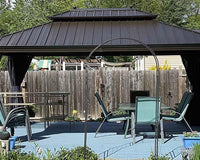
For a gazebo that stays assembled in winter, airflow is vital. If you wrap the sides of the structure in plastic or heavy tarps to protect furniture inside, you might inadvertently create a greenhouse effect.
Ground moisture rises and gets trapped against the underside of the canopy. To prevent this, ensure there are vents or gaps to allow air to circulate. Moving air evaporates condensation before it can soak into the canvas fibers.
Inspect During Winter Thaws
Winter is rarely one continuous freeze. There are often thaw periods where temperatures rise above freezing. Use these opportunities to check on your outdoor fabrics.
Walk around your home and inspect the awnings. Look for any new bird droppings or debris that may have landed during a storm. If you have a storage cover, check that it hasn't shifted or blown loose.
If you have a fixed gazebo, check the underside of the roof. If you spot small black dots forming, spot-clean them immediately with a mild fungicidal solution suitable for fabrics. Catching mildew in January or February prevents it from spreading and staining the entire roof by April.
Conclusion
In order to prevent mildew from growing on your awning fabric, you must strike a balance between cleaning and proper storage. While it may not seem like it makes much difference, the cleanliness of your fabrics and the attention you give them during the latter part of autumn translates into longer usable life for your fabrics. In essence, if you keep the fabric dry, taut, and clean, you would deny the mildew the necessary conditions for growth.
FAQs
Should I remove my gazebo canopy for the winter?
Yes, if design characteristics make it feasible. Most makers suggest that the fabric roof of the gazebo ought to be taken down before the first snow. While it’s possible to leave the metal frame standing, it’s safe to say that the fabric won’t withstand snow well and would most likely rip as well as develop mildew from constant moisture.
Can I use bleach to kill mildew on my awning?
Use caution. Although it will kill the mildew, the bleach will break down the fibers and damage the color in many fabrics. Use only a dilution of bleach if the care label states it can be used for that particular fabric, such as solution-dyed acrylic.
Why does my retractable awning smell musty when I open it in spring?
This means it was rolled up, either slightly moist, or there had been condensation inside the cassette. You would unroll it completely outdoors on a sunny and breezy day, allowing it to dry. Should the odor remain, it would be necessary to give it an extensive cleaning to rid it of ghostly mildew spores.
How do I protect a fixed awning that cannot be taken down?
This question depends on the material of the awning. Emphasize water-repellent properties. Repaint the water-repellent spray in the autumn. In the winter, do not allow any snow to accumulate on the fabric, as it can stretch and create water pools. For smaller awnings, you can install your own tarps, as long as they are well secured to avoid damage from the wind.