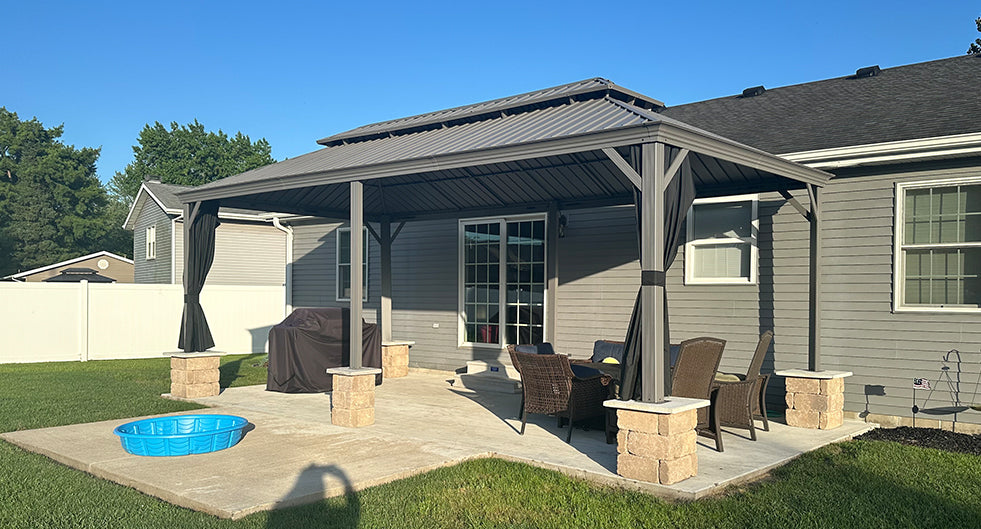
Your gazebo is the centerpiece of your backyard, a cherished retreat for relaxation and entertaining. But as an outdoor structure, it’s constantly exposed to the elements, and it doesn't take long for nature to leave its mark. Bird droppings, sticky tree sap, and unsightly mildew can quickly tarnish its beauty. This guide will provide you with a clear, step-by-step approach to safely and effectively remove these common culprits, ensuring your gazebo remains a pristine and inviting sanctuary for years to come.
How to Prepare for the Gazebo Clean-Up
Before you tackle the grime, a little preparation will make the entire process safer, faster, and more effective. Taking a few moments to gather your supplies and assess the situation is a crucial first step.
First, think about safety. Wear rubber gloves to protect your hands from cleaners and grime, and consider safety glasses to shield your eyes from any splashes. It's also best to clean on a mild, overcast day. Direct sunlight can cause cleaning solutions to evaporate too quickly, leaving behind residue and streaks before you have a chance to rinse them off.
Next, gather your tools. You don’t need anything too fancy, but having the right equipment on hand will make the job much easier. For a comprehensive overview of regular upkeep, you can review our complete guide on cleaning and maintaining your gazebo.
- A bucket for mixing cleaning solutions
- A soft-bristled brush (a long-handled car wash brush is perfect)
- Several clean cloths or sponges
- A garden hose with a spray nozzle
- A sturdy ladder for reaching the roof and upper sections
How to Remove Bird Droppings from Your Gazebo
Bird droppings are not just unsightly; their acidic nature can stain and damage the surfaces of your gazebo over time. It's best to clean them off as soon as you spot them.
The key to removing dried-on droppings is to rehydrate them first. Do not try to scrape them off while they are dry, as this can scratch the finish. Instead, spray the area with your garden hose or place a wet cloth over the spot for a few minutes to soften it.
Once softened, the droppings should come off easily. Use a soft-bristled brush with a simple solution of mild dish soap and warm water to gently scrub the area. Avoid using stiff brushes or abrasive scouring pads, which can damage the surface. After scrubbing, rinse the area thoroughly with clean water to remove all soap residue. To prevent this issue in the future, consider learning how to keep birds out of your gazebo humanely.
How to Tackle Stubborn Tree Sap from Your Gazebo
Tree sap is a sticky, stubborn mess that can be frustrating to remove. Unlike bird droppings, water alone won't do the trick. Sap hardens over time and attracts dirt, creating dark, gummy patches on your gazebo.
For this job, you'll need a solvent that can break down the sap's sticky resins. One of the safest and most effective options is isopropyl (rubbing) alcohol. Apply a generous amount of alcohol to a clean cloth and hold it on the sap spot for a minute or two to let it penetrate and dissolve the resin.
After letting it sit, you should be able to wipe the sap away. You may need to apply a bit of gentle pressure and reapply the alcohol for particularly stubborn spots. Once the sap is gone, wash the area with mild soap and water to remove any oily residue left behind, then rinse it clean with your hose. Always test the alcohol on a small, hidden area first to ensure it doesn't affect the finish.

How to Eliminate Mold and Mildew from Your Gazebo
Mold and mildew appear as black, green, or gray spots, and they thrive in damp, shady areas. Not only are they unattractive, but they can also degrade the surfaces of your gazebo over time.
For an effective and eco-friendly solution, create a mixture of equal parts white vinegar and water in a spray bottle. Vinegar is a natural disinfectant that is excellent at killing mold and mildew spores. Thoroughly spray the affected areas and let the solution sit for about an hour. This gives the vinegar time to work.
After letting it soak, use a soft-bristled brush to scrub the mildew spots away. The growth should come off with minimal effort. It is crucial to rinse the entire area thoroughly with clean water afterward. Proper rinsing ensures that all the dead spores and vinegar residue are washed away, leaving a clean surface that is less likely to see a quick return of the mildew.
A Material-Specific Cleaning Guide
Different materials require slightly different approaches to cleaning. Using the right technique will protect the finish and extend the life of your gazebo.
For Fabric Canopies (Soft Tops)
Fabric canopies are the most delicate part of a gazebo. Always use a mild soap (like dish soap) and a soft brush. Avoid harsh chemical cleaners or bleach, which can degrade the fabric and its water-resistant coating. Check the manufacturer's care instructions, as some canopies can be removed and gently machine-washed. Proper care is essential, especially for models with features like an outdoor pergola canopy cover.
For Wood Gazebos
With a wood gazebo, the goal is to clean it without stripping its protective sealant or stain. Use gentle cleaners and a soft brush. After cleaning stubborn stains, you may notice that area looks different. It's a good practice to plan on re-staining or re-sealing your wood gazebo every couple of years to maintain its beauty and weather protection.
For Metal and Vinyl Gazebos
Metal (like aluminum or steel) and vinyl are the most durable and easiest materials to clean. They can handle slightly stronger cleaners if needed, but the soap and vinegar solutions are usually sufficient. For metal gazebos, be careful not to use overly abrasive brushes that could scratch the powder coating, as this can expose the metal to rust. This durability is a key feature of our modern adjustable aluminum pergola models.

FAQ
Q1: How often should I clean my gazebo?
A: During the peak season, it is essential to perform a light cleaning once a month, which will involve rinsing with a hose and the removal of any spots. At least twice per year, usually during spring and autumn, it is important to carry out a deep cleaning process. This routine is similar to the best practices for how to clean your patio quickly and easily.
Q2: Can I use a pressure washer on my gazebo?
A: It is usually not advised. Pressure washers are often very strong and may damage wood finishes, paint or metal varnish, and fabric canopies. If you are required to use one, it is best to use the spray head with the largest spray pattern on the lowest setting.
Q3: What is the best all-purpose cleaner for a gazebo?
A: The best and most versatile cleaning solution is actually comprised of only a few drops of dishwashing liquid mixed into warm water within a pail. It is this gentle, yet strong, cleaning solution that will be able to easily dissolve most types of dirt and grime found on most surfaces.
Q4: How do I clean the inside of my gazebo canopy?
A: The most appropriate cleaning technique is to clean it from underneath. Use the long-handled brush and some mild soap solution to scrub the interior fabric of the tent. Rinse it by spraying water upwards from the hose on a low setting, without soaking any electrical components.
Q5: My gazebo has insect screens. How do I clean them?
A: Combine the solution of water and mild soap in a spray bottle. Spray the screens and then scrub any debris and pollen gently with a soft brush. Rinse well using a garden hose on low pressure to avoid damaging the sensitive screens.