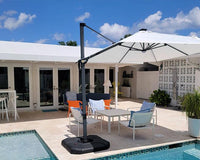
Buy an outdoor dining set if your patio's regular routine happens around a table, like meals. Buy a patio conversation set if you mostly head outside to relax and talk. That choice gives you a strong starting candidate, but it doesn't guarantee the set will fit.
Next, compare the real dimensions of the set you like with your measured, usable patio and the paths people walk every day. If the patio has to handle both jobs, let the activity you do most often win.
Choose the set around your patio's main job
The best patio furniture sets match what your household does outside on an ordinary day, not at the one big party each summer. Picture a normal week on the patio, then pick the outcome below that matches it.
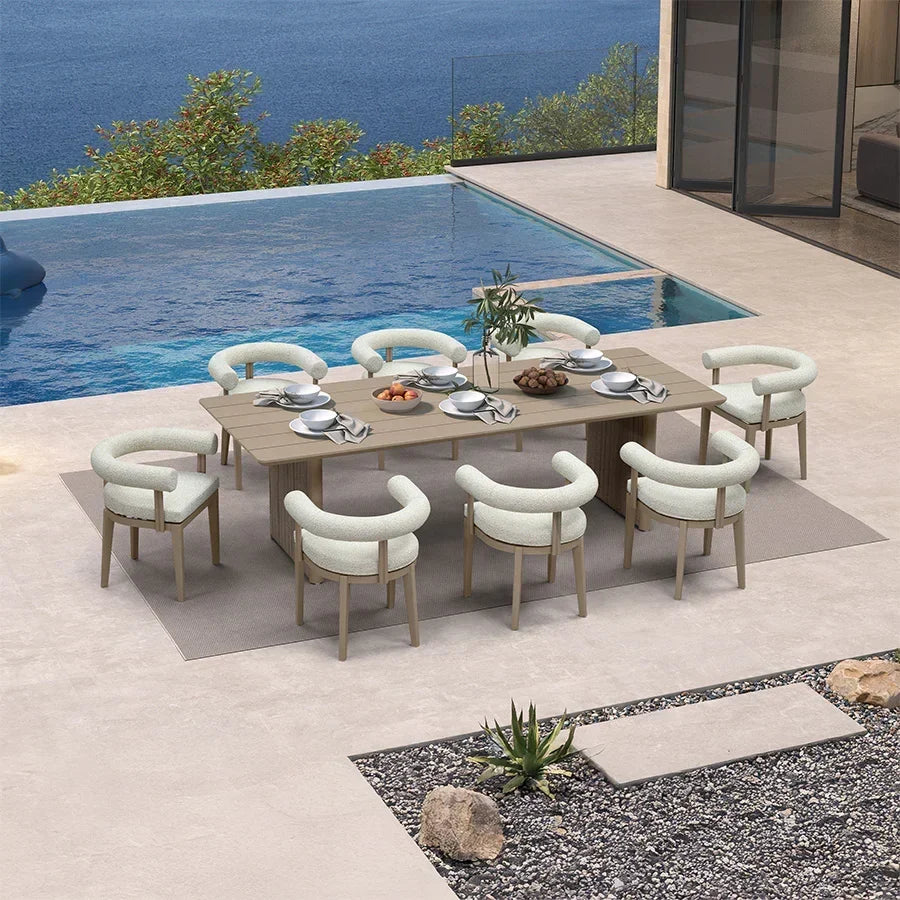
- Choose an outdoor dining set when the table does the daily work. Weeknight dinners, weekend breakfasts, board games, or kids doing crafts all need a table surface and upright chairs. If that sounds like your patio, start by comparing the listed table and chair dimensions of candidates such as our square patio dining sets. Shape, material, and style matter too, and our guide to choosing a dining set walks through those choices.
- Choose a patio conversation set when sitting back is the point. Houzz notes that outdoor sofas serve as spots for relaxing and chatting. If your patio time looks like morning coffee, a drink after work, or long talks with friends, start with lounge seating such as our L-shaped patio conversation sets.
Whichever way you lean, treat that pick as the first candidate to test, not the final answer. A category name or a seat count tells you what a set is for. It doesn't tell you how much floor it takes up or whether people can still get through your patio once it's in place.
Test each candidate against usable patio space
A candidate stays on your list only if its real dimensions, plus the room people need to actually use it, fit your usable patio without blocking a route you rely on. If it fails, try a different placement or test the other arrangement.

Start by measuring the usable area, not the whole slab or deck. Leave out spots taken by a grill, planters, steps, a door swing, or anything else that stays put. Then mark the routes people use daily, such as the path from the back door to the yard, to the grill, or to the trash cans. Use this table to match each activity to what you compare and the question you need to answer.
| Patio activity | What to compare on the measured patio | Layout question to answer |
|---|---|---|
| Regular meals or table use | Listed table and chair dimensions, plus room to pull chairs out and sit down | Can people pull out chairs and get seated without hitting a wall, rail, or walkway? |
| Relaxing and conversation | Actual dimensions of each seating piece and table you plan to buy | Do the pieces fit together in the usable area in the layout you want? |
| Everyday access routes | The paths to doors, steps, the yard, and fixed features | Does the placement leave every daily route open? |
If a candidate blocks a route you need, don't count on squeezing around it. Move it, choose a smaller version, or test the other arrangement in the same space. For a closer look at chair room and table shape, our guide to dining set fit and clearance goes into more detail.
Want to see the options side by side before you order? A free tool like the Planner 5D patio planner lets you enter your patio's real measurements, add furniture, move pieces around, and view the layout in 2D or 3D. Enter the actual dimensions of the sets you're considering so you're comparing real footprints.
When your patio needs to do both
On a mixed-use patio, pick the activity that has to stay easy on a normal day and let it decide the main arrangement. Ask yourself which one you'd miss more if it got awkward: eating outside, or kicking back with a friend. Make that the primary set.
Then run the secondary activity through the same footprint test from the section above. Say you choose a dining set first. With it placed, check whether the leftover usable area can still hold the lounge pieces you want while every daily route stays open. If you choose conversation seating first, check whether a table and chairs still fit beside it, and whether people can use them.
If the secondary activity doesn't pass, keep the primary arrangement and accept the tradeoff. Don't buy two full patio furniture sets hoping they'll fit once they arrive. A crowded patio usually ends up handling neither activity well. You can revisit the secondary setup later if your space or routine changes.

FAQs
Does a pergola kit change which set fits?
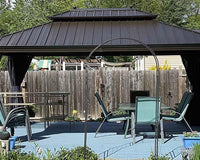
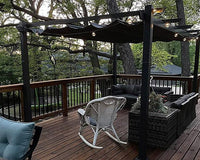
It can, because the posts become fixed obstacles inside your usable area. Before you choose a dining or conversation layout, measure the space between and around the posts, plus any curtains or railings, and treat them like walls when you map routes. Our guide to arranging seating under a pergola covers how to place a conversation set without blocking walkways or posts.
Which dimensions should I look for on a product listing?
For a dining set, find the table's length and width and each chair's width and depth. Remember the chairs need room to slide back when someone sits. For a conversation set, get the width and depth of every piece, including corner sections, ottomans, and the coffee table, and add them up in the layout you plan to use. If a listing only shows a seat count, look for the full dimensions before you compare it with your patio.
What if people in my household disagree on dining vs. lounging?
Let actual use settle it. For a couple of weeks, note what everyone really does outside: eating, working at a table, relaxing, or chatting. The activity that shows up most often, or the one your household considers essential, should get the primary arrangement. The other activity then becomes the secondary layout you test for leftover space.