If your main worry is rust stains on the deck and endless finish touch-ups, powder-coated aluminum is the better starting point. It carries a lower rust-staining risk and a lighter repair burden than wrought iron patio furniture near pool water.
Traditional wrought iron furniture can still work if you love its mass or classic look, but only if you're willing to inspect and repair its protective finish regularly. Neither material is maintenance-free, and neither is automatically safe in wind, so the right pick also depends on your exact product's construction and your deck's exposure.
Which Material Is the Better Fit for a Pool Deck?
The table below sorts the decision by what actually changes outcomes: how each material responds to splash and chemicals, how much upkeep it demands, and where the evidence runs out. Weight and heat are noted as open, product-specific questions rather than settled winners.
| Factor | Wrought Iron | Powder-Coated Aluminum |
|---|---|---|
| Rust/corrosion vulnerability | High if finish is chipped, cracked, or neglected | Low; aluminum does not rust like steel |
| Maintenance burden | Ongoing finish inspection and touch-up | Lighter, but coating and joints still need checks |
| Weight/stability evidence | Mass may help, but not proven by material alone | Same open question; needs product data |
| Heat/touch comfort | Depends on finish color, shade, exposure | Same; no material-level ranking supported |
| Best-fit pool-deck scenario | Owners who accept finish monitoring | Owners who want less rust-related upkeep |
Rust risk is the one dimension with strong, consistent evidence: ferrous metal needs an intact coating to resist chloride and moisture, while aluminum naturally resists rust. Weight and heat rows stay qualitative on purpose, because no furniture-level test data separates the two materials on those points.
How Wrought Iron Handles Pool-Splash Corrosion
Wrought iron's corrosion resistance lives entirely in its coating. Once that coating fails, the exposed iron is vulnerable, especially where salt or chlorinated moisture sits against the metal.
Why the Protective Finish Matters
A paint or powder finish physically separates iron from air, water, and dissolved salts. Cracked, flaking, or scratched coating breaks that seal and lets ferrous coating and chloride corrosion take hold faster wherever moisture and salts accumulate. Historic ironwork exposed to marine air shows the same pattern: once protection is compromised, saltwater wrought-iron corrosion sets in and worsens without prompt attention. Areas that trap water, like joints, undersides, and decorative scrollwork, are the first places damage tends to appear.

When Wrought Iron Becomes a Poor Fit
- Furniture sits where splash or spray regularly reaches a chipped or scratched finish
- Rust runoff has a clear path to light-colored pavers or stone that would show staining
- You want to avoid periodic sanding, repainting, or close finish monitoring altogether
How Powder-Coated Aluminum Handles Salt and Chlorine
Aluminum does not rust the way iron or steel does, which makes it the lower-risk choice for anyone whose main concern is visible rust stains. That advantage comes from the metal itself, not from any specific coating quality.
What Aluminum Changes
Aluminum naturally forms a protective oxide layer, and this is why it resists the kind of rust-through failure that plagues unprotected iron. Industry aluminum protective oxide layer guidance confirms that aluminum can still stain or corrode under certain surface and moisture conditions, so "won't rust" is not the same as "can't be damaged."
What Powder Coating Does Not Guarantee
Powder coating is a separate layer on top of the aluminum, and it can fail independently of the base metal. A powder-coat chloride defect study immersed coated aluminum samples in a 3.5% saltwater solution and found that corrosion concentrated at coating holes, cracks, and particle interfaces rather than across intact surfaces. That is a laboratory result, not a pool-specific lifespan figure, but it points to the same practical checks: look for coating breaks at welds, joints, and fastener points before assuming a frame is trouble-free.
Maintenance: What to Inspect and Do
Both materials need a short, repeatable maintenance path rather than a fixed cleaning schedule pulled from a general guide. The steps below apply the corrosion mechanisms above to what you actually do at the pool deck.
- Inspect the frame, joints, undersides, and any drainage or runoff points for residue, scratches, chips, rust, staining, or trapped moisture.
- Clean and rinse only as your furniture's exact care instructions allow; residue left in crevices is a common trigger for the coating failures described above.
- Let wet areas dry fully instead of storing or covering furniture while moisture is trapped against the frame.
- Repair, isolate, or replace any piece with exposed or actively deteriorating metal before it sees more pool splash.
Aluminum-industry low-maintenance aluminum guidance supports treating aluminum frames as generally lower-upkeep, but your exact model's care sheet should still set any cleaner or coating instructions. For a broader look at matching materials to sun, salt air, and humidity, our climate and usage guide walks through those exposure factors in more detail. If a piece is already past the point of a simple repair, our guide on when to replace damaged furniture can help you decide.
Weight, Wind, and Stability Are Product-Level Decisions
Heavier wrought iron patio furniture is not automatically more wind-stable than aluminum. No material-level evidence supports that assumption, so stability has to come from the specific product you're looking at.
Why Weight Is Only One Input
A wide footprint, a low center of gravity, and solid base construction can matter as much as nominal frame weight. Large cushions or fabric surfaces add wind exposure regardless of what the frame is made from, which can offset a heavier frame's apparent advantage.
What to Verify for a Windy Deck
- The product's listed weight and overall dimensions
- How the frame and base are constructed, including joint and leg design
- Whether cushions are removable or securable in gusty conditions
- Any anchoring or placement guidance the manufacturer provides
Heat and Seating Comfort in Full Sun
No furniture-level testing separates wrought iron and aluminum on surface temperature, so neither material can be called the cooler choice in full sun. Comfort depends more on design and placement than on the metal itself.
Shade coverage, finish color, exposed metal touch points like armrests, and how much of the seat is covered by cushions all affect how hot a chair feels at midday. For barefoot or swimsuit use, prioritize pieces with shaded placement, lighter finishes, and cushions over bare metal contact points rather than choosing by material name alone.
What to Verify Before You Buy
Use this checklist to confirm the frame, finish, and care details match your pool deck before you buy, since the material label alone doesn't answer every question above.
- Confirm the frame material and identify the actual protective finish, not just a marketing color name
- Check for continuous coating at welds, joints, undersides, and fasteners; note any chips, scratches, or exposed metal
- Read the exact care instructions to see whether pool splash, saltwater, or chlorine exposure is addressed; don't assume certification that isn't stated
- Match footprint, construction, weight, and any anchoring guidance to how windy your deck actually gets
- For light-colored pavers, trace where runoff would drain and reject any frame already showing rust or damage in that path
- If a repair is needed, coating repair and drying guidance for exposed ferrous metal covers the inspect-clean-dry-recoat sequence that applies at consumer scale too
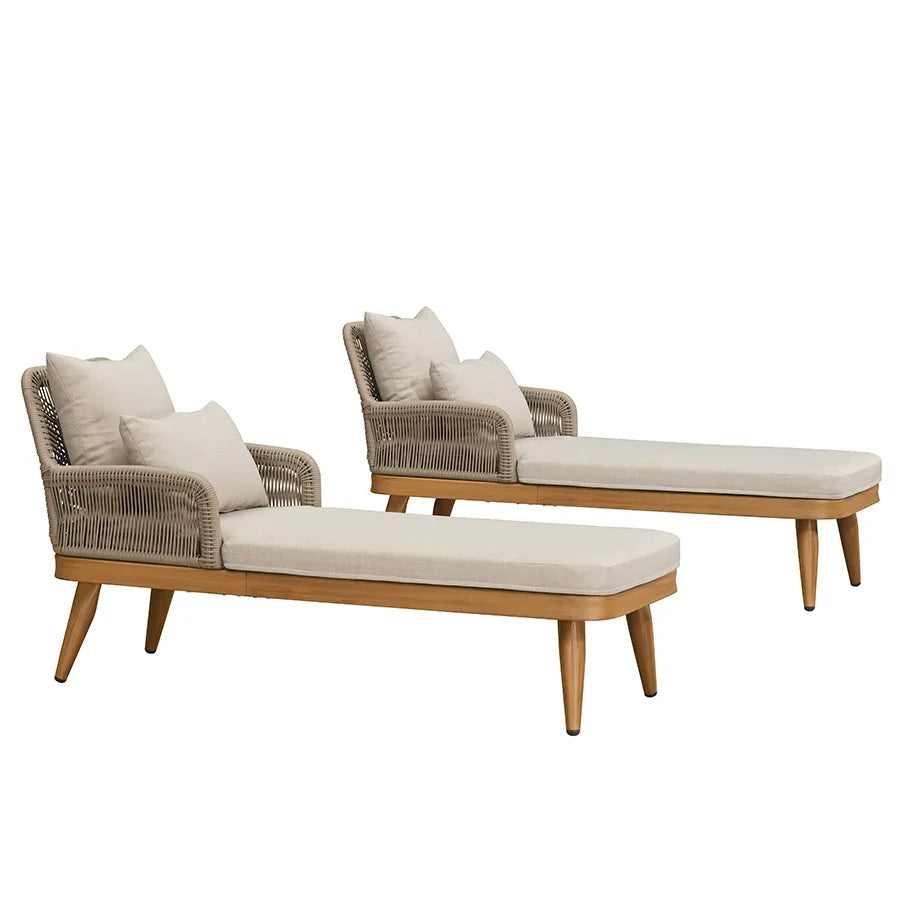
For shoppers focused on a rust-resistant aluminum option, our rust-resistant aluminum chaise is built on an aluminum frame rated for up to 440 pounds and is documented for pool and deck use. That capacity and frame material are useful facts, but they don't confirm saltwater certification or wind performance for your specific setup, so still run it through the checklist above.
FAQs
How do I keep rust from staining pool-deck pavers?
Trace the runoff path first. If rust-colored water can reach light pavers, inspect the furniture's finish for chips or exposed metal, remove loose rust or residue per the frame's care instructions, and repair or replace the piece before it sits through more splash exposure.
Is aluminum patio furniture safe for a saltwater pool area?
Saltwater doesn't make aluminum maintenance-free. Rinse and clean it according to its exact care instructions, and check the powder coating and joints for damage, because the material's lower rust risk doesn't confirm saltwater certification on its own.
What should I do if the finish is chipped or scratched?
Treat the piece as no longer fully protected. Document the damage, follow the manufacturer's repair or warranty steps, and keep it away from repeated splash until the exposed area is cleaned, dried, and recoated or repaired.