A retractable fabric canopy is the better fit when you want flexible shade and can accept documented water-repellent fabric rather than full waterproofing. A louvered metal roof only earns preference when its exact model documents a complete collection-to-outlet path, slope, and capacity for your local rainfall. Neither roof style is the safe pick for concentrated runoff near a wall, foundation, or door until you confirm exactly where that water goes.
Key Takeaways
- A retractable pergola with water-repellent fabric is a reasonable match for intermittent rain and flexible shade, but the listing does not document routed heavy-rain drainage.
- A louvered metal roof can offer a controlled collection path, but only when the exact model documents its channels, outlets, alignment, and rainfall limits.
- Positive slope and outlet capacity, not roof material alone, decide whether collected water reaches a safe discharge point.
- Runoff near a foundation, wall, or door is a site-planning problem first; resolve the discharge route before choosing a roof style.
The practical choice: verify the runoff path before choosing a roof style
Choose based on the documented path water takes from the roof surface to a final discharge point, not on fabric versus metal as a category label. A backyard pergola with a water-repellent canopy is the more bounded option when your priority is retractable shade and the site can tolerate its documented limits. A louvered system becomes the stronger candidate only when its manufacturer specifies a complete collection and discharge path, along with the operating conditions that path was designed for.
Three checks apply to either style before you commit: confirm the collection path, confirm the slope or alignment that moves water toward an outlet, and confirm where that outlet actually discharges. If the pergola sits near a foundation, wall, door, or occupied patio area, treat that discharge question as a hard stop until it is resolved, not a detail to handle after installation.
How a retractable fabric canopy handles heavy rain
Fabric performance depends on the surface treatment, tension, edges, and whatever happens to water after it leaves the canopy. The available product evidence supports water repellency and protected retraction, not a rated drainage system.
What the supplied listing establishes
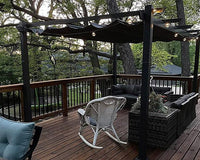
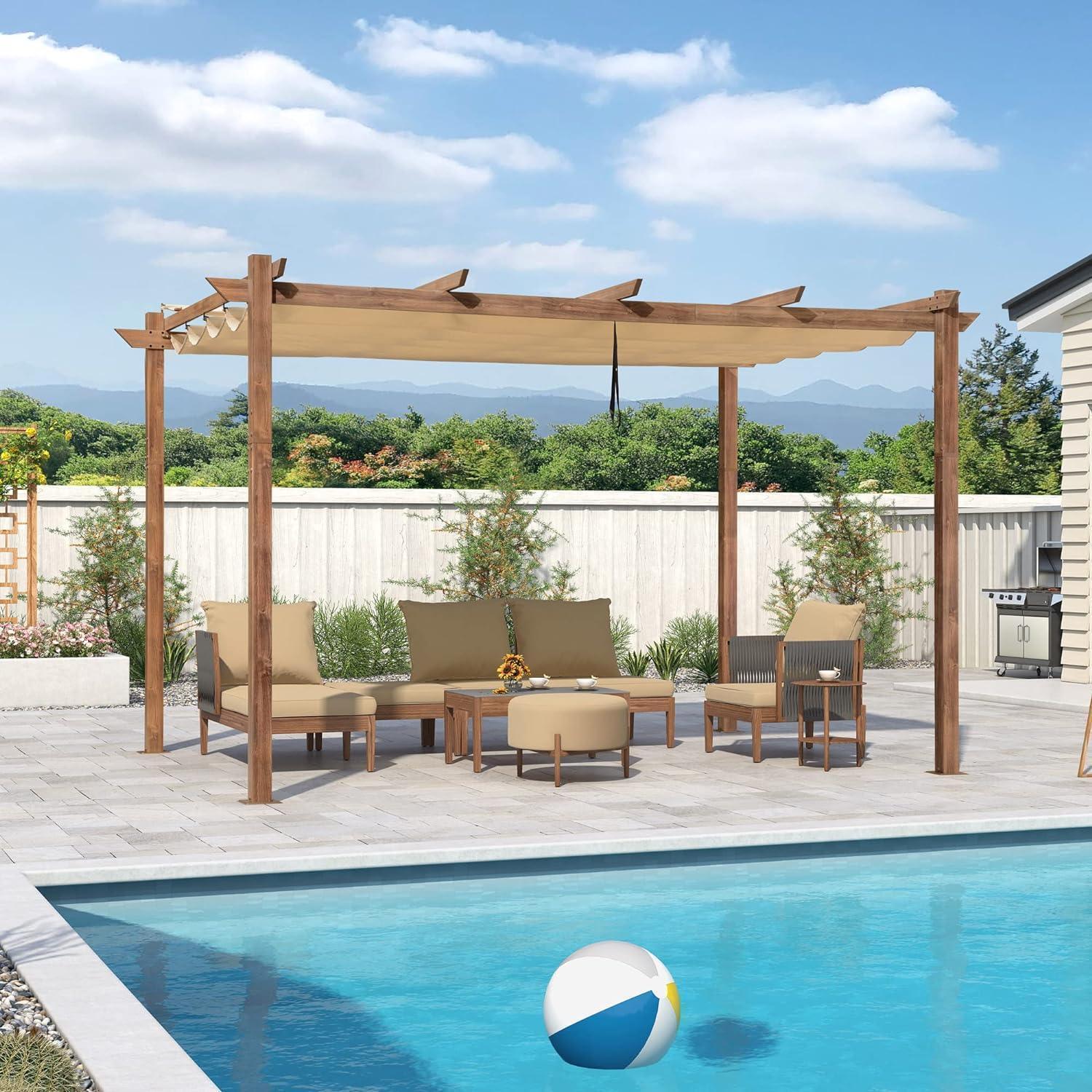
The retractable canopy on our water-repellent fabric listing uses yarn-dyed polyester fabric described as water-repellent, and its sheltered top protects the retracted canopy from rainwater accumulation while stored. That listing also carries a 30 mph wind rating, which describes structural wind tolerance and should not be read as a rain-drainage figure; wind rating and rain-handling capacity are separate specifications that answer separate questions.
What remains unverified for heavy rain
No extended-canopy gutter path, channel capacity, outlet arrangement, or required slope is documented for this canopy style. Water-repellent fabric sheds surface moisture better than untreated fabric, but that wording is narrower than waterproof, leak-proof, or heavy-rain-rated. If your site needs controlled runoff during sustained storms, treat the missing drainage documentation as an open question and check the exact product manual or installation drawing before relying on the extended canopy in heavy rain.
How a louvered metal pergola routes heavy rain
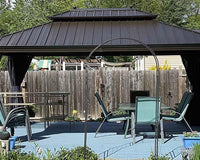
A louvered roof can offer collection and drainage advantages, but only when its exact channels and outlets are documented; closed louvers by themselves do not prove unlimited rain handling. Treat the mechanism below as conditional on the specific model you are evaluating.

The collection path to verify
Look for a continuous, model-specific path that runs from the closed roof surface into integrated channels and then onward to posts, downspouts, or another outlet. That path only counts as a real feature when the manufacturer's technical documentation names each component. Some louvered pergolas drain differently from others, so this collection path should never be assumed from the category label alone.
Why channels still have limits
Channel and outlet capacity depends on rainfall intensity, duration, outlet configuration, and blade alignment or slope. A system that performs well in light-to-moderate rain can still fall short once rainfall intensity or duration exceeds the conditions its channels were sized for. Ask for the exact drainage-hole configuration and blade-axis specification for your model rather than assuming one louvered design behaves like another.
Slope, outlet routing, and drainage limits
Positive slope helps collected water reach an outlet, but the slope that matters depends on which component you are checking. Channel and outlet capacity, not the roof material, is usually the limiting factor once rain becomes sustained.
Separate product slope from site drainage slope
A pergola may specify a roof, blade-axis, or canopy alignment condition, while an attached gutter or downspout has its own separate slope requirement. Always verify roof and blade slope requirements directly from the specific model's installation guide, rather than assuming general gutter guidelines apply to pergola surfaces.
Capacity and discharge are the real limits
Channels and outlets need enough capacity for the water load your local storms actually produce, and general gutter slope guidance recommends at least 1/16 inch of slope per foot of run, with downspouts discharging away from the foundation or into a properly designed catchment system. Treat that as general building-science guidance rather than a fixed pergola requirement or local code, since it was written for house gutters. After water leaves any pergola roof, check where it lands: grade, splashback, ponding, and existing drainage infrastructure all affect whether the discharge point is actually safe. Do not move forward with an installation that routes concentrated runoff beside a foundation, wall, door, or occupied area until that destination is resolved.
Water-management comparison: fabric canopy vs. louvered metal roof
The table below converts the evidence into a decision instead of restating the mechanics already covered above.
| Criterion | Retractable fabric canopy | Louvered metal pergola |
|---|---|---|
| Documented surface behavior | Water-repellent polyester; protected retraction | Closed louvers shed water; behavior is model-specific |
| Collection path | Not documented for extended canopy | Conditional integrated channels, when specified |
| Slope/alignment evidence | Not established | Requires exact blade-axis and alignment documentation |
| Outlet/site limit | Discharge path unresolved | Channel and outlet capacity limits apply |
| Best-supported implication | Fits flexible shade with accepted exposure limits | Fits heavy rain only with verified drainage specs |
Neither column supports a universal winner. The fabric canopy is the lower-commitment choice for flexible shade, while the louvered roof is only worth its added cost and rigidity when its documentation actually closes the drainage question.
Choose by precipitation and runoff scenario
Match the roof style to your rain pattern and site, not to a fixed preference for fabric or metal.
Intermittent rain and flexible shade
A retractable canopy option like our retractable canopy option can remain a good fit when your main goal is flexible shade and occasional showers, not sustained storms. Water-repellent fabric supports a narrower claim than waterproof heavy-rain protection, so confirm the product's stated exposure and weather limits match how you plan to use it before leaving it extended in wet weather.
Sustained heavy rain
For sustained or locally intense rain, require documented collection, channel or outlet capacity, alignment, and rainfall-duration assumptions before selecting either roof type. A louvered system may be the better fit here, but only when the exact model supplies that evidence; without it, neither option should be assumed capable of handling a multi-hour downpour without oversight.

Runoff near a wall, foundation, or occupied area
Once the pergola sits close to a foundation, exterior wall, door, or furnished patio, the discharge destination becomes the first question, ahead of roof material. A few inches of rain across a roof surface can produce a large volume of runoff quickly, and while that figure describes house roofs rather than pergolas, it is a reminder that the receiving site needs its own plan. Check the site grade, any catchment system, and existing drainage infrastructure, and reject or redesign any option whose discharge would land where it causes ponding, splashback, or water intrusion.
Installation and maintenance checks before relying on either system
Resolve documentation before installation, then keep tracing the water path through the season.
Before installation
- Request the exact drainage drawing or manual for the specific model.
- Confirm roof, blade, canopy, gutter, and site-grade slope as separate items, not one measurement.
- Map every outlet to its final discharge destination and the surface that receives it.
- Compare documented weather limits against the exposure your site actually sees.
Before seasonal or storm exposure
- Trace accessible channels and outlets and clear debris according to the product instructions; our pergola drainage checks guide walks through this before fall rain and leaf season.
- Watch for overflow, ponding, splashback, a blocked outlet, or a discharge route that has shifted since installation.
- Escalate damaged, inaccessible, or undocumented drainage components to the installer or manufacturer instead of guessing at capacity.
FAQs
Does water-repellent fabric mean a retractable canopy is waterproof in heavy rain?
No. Water-repellent describes a documented fabric treatment on the listed canopy, not a verified waterproof rating or a routed heavy-rain drainage path. Check the exact product's weather and exposure limits before leaving the canopy extended through a sustained storm.
What maintenance should I do before relying on a pergola during the rainy season?
Trace every accessible channel, outlet, edge, and discharge point, and clear debris according to the product instructions rather than waiting for a fixed calendar date. Repeat that check after any unusually heavy storm, visible blockage, or change to the surrounding grade or landscaping.
What should an installer confirm when a pergola drains near a house?
The installer should document the collection path, the required slope or alignment, the channel and outlet assumptions, the stated weather limits, and the final discharge destination. That documentation should be checked against the foundation, walls, doors, grade, and any existing drainage infrastructure before the runoff is routed anywhere near occupied space.