
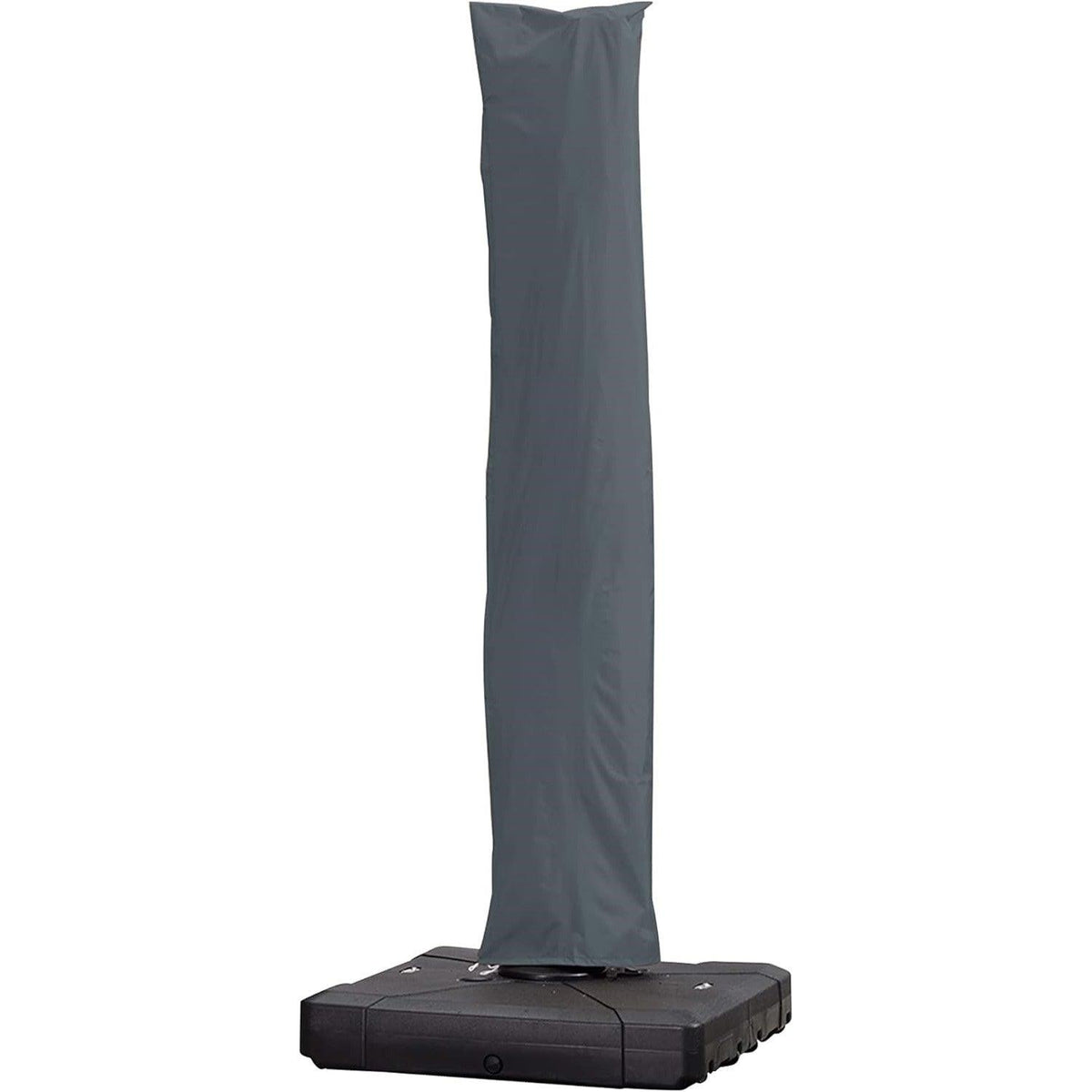
To store a patio umbrella for winter, first find your model's instructions so you know what comes apart. Then handle each part on its own terms: clean the canopy and dry it fully, wipe the frame dry, and store the base according to its material and fill.
An outdoor umbrella is really three items with different needs. A breathable cover helps damp fabric, but it does nothing for a water-filled base that could crack in a freeze.
Prepare Each Patio Umbrella Part for Winter Storage
Work in order: instructions first, then canopy, frame, and base. Each step below covers one part, so you never have to force one storage rule onto all three.
Check the Umbrella's Instructions First
No single teardown method works for every umbrella. Before you remove anything, run this short check:
- Find the brand and model, usually on a label, the original box, or your order record.
- Read its manual for what can be separated, how the canopy should be cleaned, and which storage positions are allowed.
- Leave connected any part the instructions don't say to remove. Don't pry or force pieces apart.
- Lift the base to judge its weight. If it's too heavy to move comfortably, line up a helper or a hand truck before you start.
Prepare and Store the Canopy
The fabric's biggest winter enemy is trapped moisture. Manufacturer care guidance lays out a simple sequence:

- Clean the canopy in the way its fabric care instructions allow.
- Leave it open until it is completely dry. If a late-fall storm soaked it, our guide to drying after rain covers fabric and frame concerns.
- Close the umbrella, fold the panels along their seams, and fasten the wind tie if your model has one.
- Fit a breathable cover. A sealed plastic bag traps moisture and can grow mildew. If you need one, our patio umbrella covers come in options for market and cantilever styles.
For fabric that has already picked up grime or spots, our tips to prevent winter mildew on fabric cover deeper cleaning. The same applies to shade fabric stored under a wood pergola or carport roof: dry it before you cover it.
Dry and Position the Moving Frame
The frame has hinges and ribs, so it needs its own wipe-down. Don't count on the canopy drying to cover it.
- Wipe the pole and ribs, then dry them, paying close attention to where the ribs meet the hub.
- Keep the frame assembled unless your manual allows taking it apart.
- Store the folded umbrella upright in a dry, ventilated space. Lay it flat only if it is supported along its whole length, so the pole and ribs don't sag or bend.
These positions apply to the folded umbrella as one unit. If your manual lets you detach the frame, follow its placement directions for that piece.
Handle the Base by Its Material and Fill
The base needs its own plan, and the right plan depends on what it's made of and what's inside it.
- Identify the type. Is it fillable plastic, or solid cast iron or steel? Is it built to separate from the pole? Follow the base's own instructions before you detach or move it.
- Fillable plastic base. The instructions for one 70-pound fillable plastic base recommend storing the umbrella and base inside, in a dry place, during long stretches of non-use, especially through winter. The same manual warns that freezing temperatures can make the water expand and crack the plastic. If you keep that base outdoors when temperatures may drop below freezing, it says to add antifreeze to the water using the antifreeze maker's ratios, even with a sand-and-water fill. It also notes that a sand-and-water fill is almost impossible to empty, so plan for a heavy move.
- Cast-iron or steel-plate base. One maker's guidance for these bases is to keep them clean with mild soap and water, never leave them standing in water, and consider storing them during long periods of non-use. Place the base on a dry surface where water can't pool around it.
- Move safely. Store the base wherever its own guidance points, which may be a different spot than the umbrella. Use help or a dolly for heavy bases.
FAQs
Can I leave my umbrella in its base over winter?
Only if both manuals allow it and the umbrella is closed and secured. One umbrella maker advises never leaving any umbrella open and unattended, and says to close it and remove it from its base or lay it horizontally in windy weather. Our post on leaving an umbrella open explains the wind and UV risks.
Is a waterproof cover enough to protect a wet canopy?
No. Any cover is only as good as the dryness of the fabric under it. Cover the canopy only after it has fully dried while open, and choose a cover that lets moisture escape.

Should I treat metal parts on the base before storage?
The 70-pound plastic base manual above suggests regularly applying a water-displacing penetrating oil to the base's metal parts, including the bolt and washers underneath. It also suggests a plastic protectant for the base body. Check your own base's manual for its recommended products.
What should I check when I bring the umbrella back out in spring?
Open the canopy in dry weather and look for mildew spots, stiff hinges, or bent ribs. Then make sure the base is intact and heavy enough for your umbrella before you use it again.


