A patio umbrella provides a nice refuge from the sun, a cool and comfortable outdoor retreat. Conveniently, it's easy to want to leave it tilted up and available for instant use. But is it? Although the practicality can't be denied, leaving your patio umbrella up all the time is a big risk. In the following guide, we will examine the dangers, the considerations you should make, and the best practices for safeguarding your investment and the safety of your outdoor setting.
A General Rule of Thumb
In short, no, you shouldn't leave your patio umbrella up all the time. Any user's best rule of thumb is therefore as follows: if you're not actually using it, you ought to fold it up. Even on what seems like a beautiful, clear day, the climate can change on a dime. The few seconds it takes for you to spin an umbrella closed can save you from having to pay through the nose for repairs, risk injury, and suffer replacing your entire system. Make it a small, simple habit that can only help it last.
The Primary Risks of an Open Umbrella
Leaving an umbrella unattended and open exposes it to several environmental threats. Any one of them can lead to serious damage, both to the umbrella and your surrounding property.
The Threat of Wind
The open patio umbrella's biggest enemy is the wind. The big canopy is for protecting from the sun, but when it is windy, it is like a giant sail. A sudden blast of wind can lift the canopy and exert a lot of force on it. Anything from small damage to the complete failure of the frame can be the outcome. It can break the umbrella's aluminum or fiberglass ribs, bend the central pole, or shatter the tilting mechanism. In the worst cases, the wind can toss the entire base and the umbrella across your yard or into an adjacent property. This not only damages the umbrella but can seriously risk damaging your furniture, windows, fences, or even injuring you.

Damage from Rain and Water
Though a light shower is rarely anything to worry about, heavy rain can be astonishingly damaging. When rain accumulates on the canopy material, the very weight of the rain can exert incredible pressure on the frame and stitching. This can stretch or rip the material and, in the worst situations, the weight can be severe enough to warp or shatter the ribs holding it up.
In addition, if an umbrella is left ajar and filled with water, it must dry thoroughly. If closed when damp, mold and mildew can readily develop on the material. In addition to causing ugly stains and a mildew scent, it also breaks down the material fibers over the course of time, causing the material to become more prone to ripping.
Degradation from Sun Exposure
An umbrella's main purpose is to cover you from the sun, though that puts the umbrella itself into an ongoing struggle with UV light. Continuous, prolonged exposure to the sun will inevitably bleach the canopy's bright color away. Though this is more of an appearance problem, the performance damage is more of a worry. UV light slowly degrades the fibers within the material, causing them, over time, to become brittle and frail. An umbrella left continually open will arrive at the weakened state more quickly and thus be more prone to ripping within the winds or through ordinary wear and tear.
Key Factors That Influence the Risk
Not all umbrellas and situations are created equal. The level of risk associated with leaving an umbrella open depends on several variables, including the quality of your equipment and your local environment.
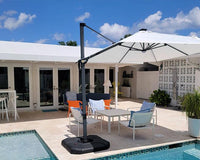
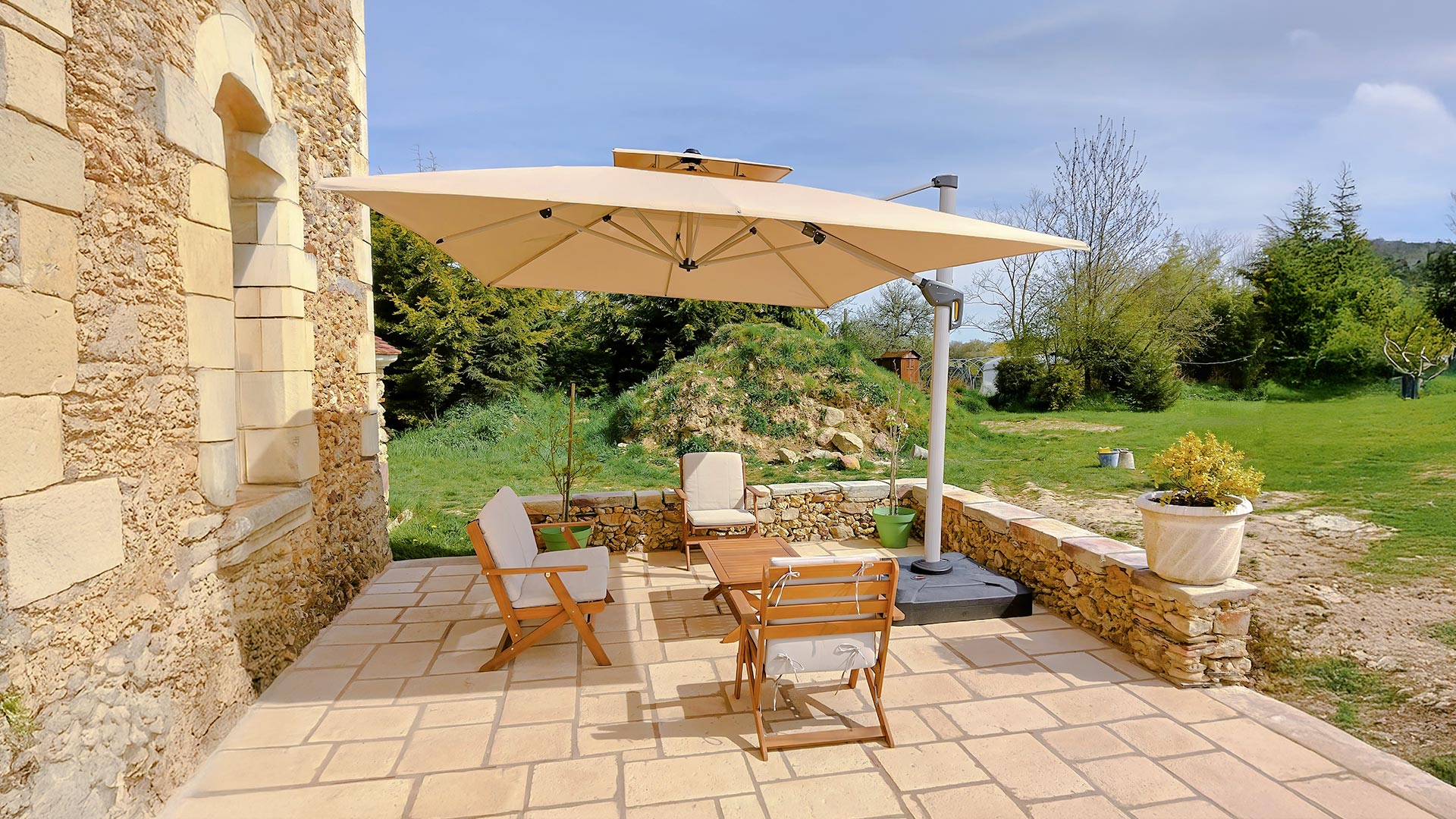
- Umbrella Quality and Design: A cheap, lightweight market umbrella from a discount store is far more vulnerable than a high-end, commercial-grade cantilever umbrella. Premium models are built with thicker poles, more durable rib materials (like fiberglass, which is flexible), and high-quality, weather-resistant fabrics. However, even the most expensive umbrella is not invincible against strong winds.
- The Importance of a Heavy Base: The umbrella base is your anchor. An improperly weighted base is one of the most common reasons for umbrella accidents. A small table umbrella might only need a 50-pound base, but a large 9- or 11-foot cantilever umbrella requires a base of 100 pounds or more to remain stable. Always follow the manufacturer’s recommendation for base weight. Without a sufficiently heavy base, even a moderate breeze can be enough to topple your umbrella.
- Your Local Climate: Where you live plays a massive role. If you reside in an area known for calm weather and gentle breezes, your risk is lower. Conversely, if you live in a coastal region, a flat open plain, or an area prone to frequent thunderstorms and high winds, leaving an umbrella open is exceptionally reckless. Be aware of your local weather patterns and always err on the side of caution.
What About "All-Weather" or Vented Umbrellas?
Most contemporary umbrellas have a wind vent—a panel of material on top of the canopy. This is a great piece of engineering designed to make the umbrella more stable. The vent enables gusts of wind to blow through the canopy instead of catching it and thus cuts down the "sail effect" and the pressure on the frame.
Even so, it is crucial to understand the fact that the vent is a risk-reduction factor, not a guarantee of invincibility. It can help an umbrella through light to medium winds, but it will never save it from a fierce storm or steady heavy winds. See it as your safety net, but one you shouldn't be testing deliberately. The rule doesn't alter: the vented umbrella is safer, but it needs to be closed whenever it is not being used.

Best Practices for Umbrella Care and Longevity
Proper care is more than simply folding up your umbrella. In a few easy steps, you can significantly prolong its life and make it look great for the coming years.
- Close It When Not in Use: This is the most overriding rule. Adopt the habit of closing the umbrella and fastening it with the umbrella's built-in tie when you are done with it or walking into a building.
- Apply a Protective Cover: When the closed umbrella is going to be unused for a longer duration (such as overnight or for more days), apply a full-length waterproof cover. That protects it from UV light, rain, dust, and bird deposits and prevents the material from getting dirty.
- Clean Regularly:Once a season, wash the canopy off with a mixture of mild soap and lukewarm water. Scrub gently with a soft bristle brush and rinse off with a hose. Let it dry off fully in the open position prior to folding it up and keeping it closed to avoid mildew.
- For Wear and Tear: Check the working mechanisms of the umbrella, the crank, the cord, and the tilting mechanism frequently. Check for rusting on metal parts or for fraying on the cloth and correct small problems before severe damage occurs.

The Cost of Replacement vs. the Minor Inconvenience
Think about the cost considerations. A decent patio umbrella can cost into the hundreds or even the thousands of dollars. A patio table with a tempered-glass top can be pricey if it is broken by a dropping umbrella. Repairing a busted fence or window is still more costly.
When you weigh these potential costs against the expense of ten seconds to close your umbrella, the decision is a no-brainer. That little inconvenience of opening and closing your umbrella is a small cost worth paying for the peace of mind and security that results from protecting your investment.