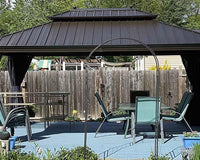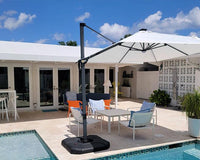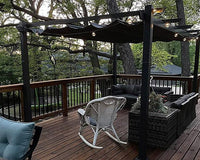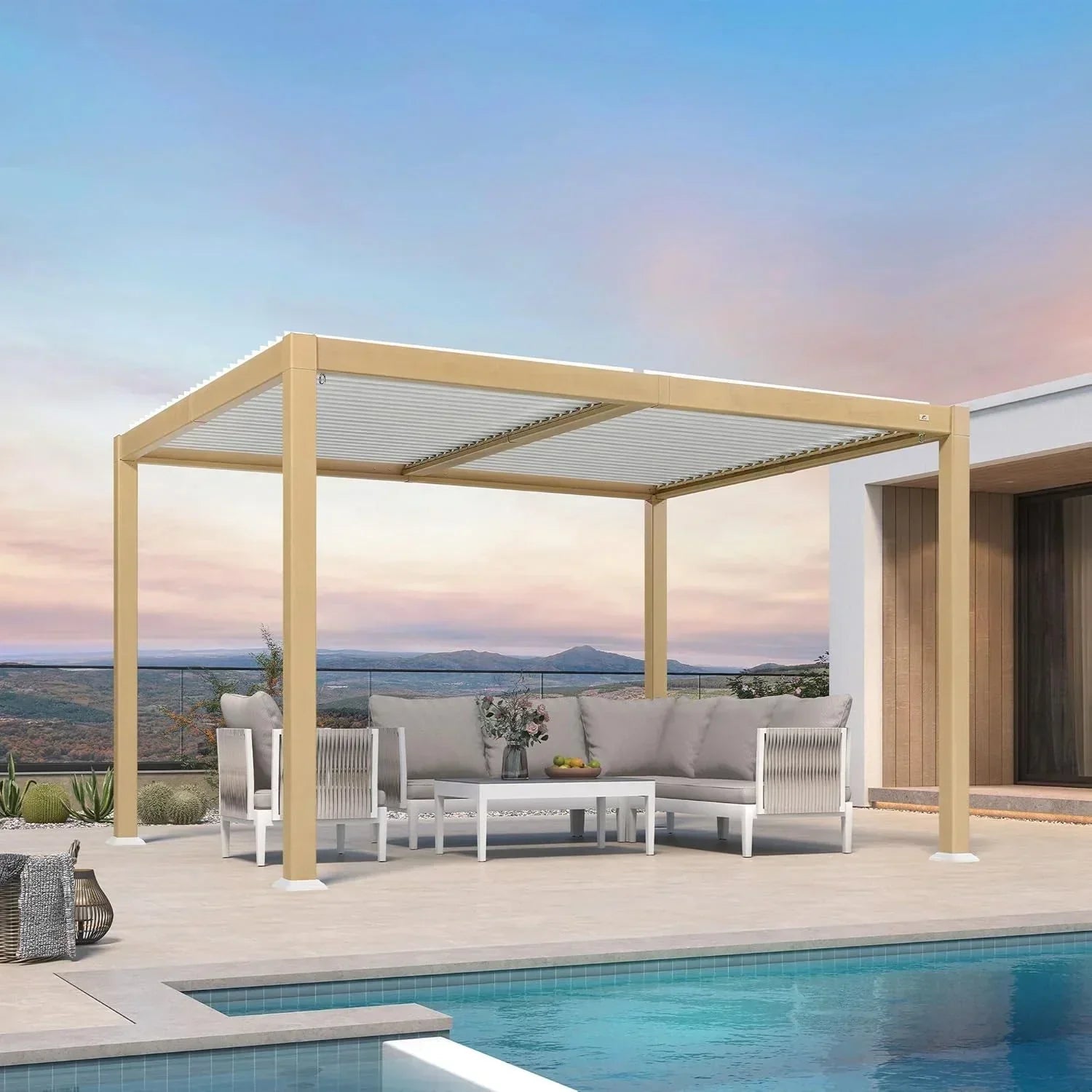
For pergola vs gazebo planning, start with the condition most likely to interrupt your fall gathering. Choose an open pergola for dry, mild hosting when airflow and open sightlines matter most. Consider a louvered pergola when changing conditions call for adjustable coverage, or a hardtop gazebo when you need more consistent overhead coverage for dining and cooler evenings. Site exposure, installation requirements, model specifications, and accessory compatibility determine the final choice.

Choose the structure that protects your fall hosting plan
An open pergola is the best starting point for a dry daytime gathering that benefits from daylight, airflow, and an open view. Move toward a louvered pergola if rain is possible or you need to adjust roof coverage during the event.
A louvered pergola is the better configuration to consider first when the weather may change and adjustable overhead coverage is central to the plan. Move toward a hardtop gazebo if the meal depends on consistently covered space and a fixed table-and-chair layout. Before relying on the louvers, check the model's operation, drainage, dimensions, and installation requirements.
A hardtop gazebo is the better starting point when a defined, consistently covered dining or seating area matters more than maximum openness. Move toward a louvered or open design when airflow, daylight, or a lighter visual footprint matters more. A hardtop label alone does not establish severe-weather protection, ventilation, anchoring, or accessory compatibility.

If your site has noticeable wind or recurring rain, let local exposure, anchoring and installation requirements, and the structure's specifications override the category-level starting point. This weather-first approach is more useful than naming one universal winner.
Understand what open, louvered, and hardtop structures change
The practical difference in an outdoor structure for fall comes down to how much overhead exposure you accept and how much control you have during the gathering. Open pergolas, louvered pergolas, and hardtop gazebos are planning categories, not automatic performance ratings.
Open pergola: prioritize airflow and openness
An open pergola leaves the hosting area more exposed to the sky, so it suits dry daytime meals where airflow, daylight, and open sightlines are part of the experience. That openness can become a limitation when rain, wind-driven exposure, bugs, or post-sunset chill could interrupt the event. It is a starting point for openness, not a promise of shelter.
Louvered pergola: add adjustable roof control
A louvered pergola makes roof position part of the hosting plan. Consider this configuration when the gathering may shift between open-air comfort and overhead coverage, but let the model's operating range and drainage design guide your setup. Dimensions, installation requirements, and compatibility with side treatments also affect whether adjustable coverage works for the space.
Hardtop gazebo: create consistent overhead coverage
A hardtop gazebo creates a more consistently covered, defined area for dining or seating than an open configuration. That makes it a logical starting point for a set table, a cooler evening, or a gathering where moving food and furniture indoors would be disruptive. Roof design, ventilation, side treatments, anchoring, and site conditions still determine practical fit, so fixed coverage is not a universal weather guarantee.
For broad category orientation, compare pergola and gazebo types before applying the weather factors. Use that comparison for general planning, then use the model's specifications for purchase decisions.
Compare pergola vs gazebo in one weather-first decision matrix
Use the factor most likely to interrupt the event as your first filter. Before using this matrix, note the site's usual fall rain direction, wind exposure, sunset timing, and intended table-and-chair layout. Each row identifies a configuration to consider first, not a rating or guarantee.
| Fall factor | How it can shape the gathering | Configuration to consider first |
|---|---|---|
| Rain | Rain can interrupt food service, seating, and furniture use. Compare the roof and drainage design rather than assuming the category is watertight. | Hardtop gazebo for more consistently covered dining; louvered pergola when adjustable coverage fits the model and plan |
| Wind exposure | Open sides, roof attachment, anchoring, installation, and site exposure affect the decision. Do not infer wind suitability from the structure name. | The configuration with attachment and installation details suited to the site |
| Airflow | Open sightlines and moving air may matter more than coverage during a mild daytime event. | Open pergola |
| Bugs and screening | As temperatures cool, some nuisance insects seek sheltered spaces. Fall insect behavior makes intact screens and compatible side treatments a fit question rather than a benefit to assume from the roof alone. | Louvered pergola or hardtop gazebo when compatible screening is available and useful |
| Cooler evenings | A more defined overhead area may support a longer gathering, but roof coverage does not by itself establish warmth or comfort. | Hardtop gazebo; consider a louvered pergola when adjustable openness is important |
| Outdoor dining | A fixed table, chair pull-back, serving route, and food movement can make uninterrupted coverage more valuable than open views. | Hardtop gazebo or louvered pergola, depending on the coverage requirement |
| Furniture footprint | Posts, roof edges, doors, cushions, and storage can change whether the advertised footprint works in practice. | The configuration whose dimensions fit the complete layout |
| Accessories and lighting | Curtains, netting, lighting, hooks, and louvers may affect comfort and usability. UMN Extension lighting guidance notes that some nuisance insects are attracted to lights, so review lighting placement alongside screening. | The configuration with compatible accessories and a workable lighting plan |
For roof and weather-related decisions, compare the model's information with IRC roof-assembly provisions and manufacturer instructions. The relevant question is not whether the label says pergola or gazebo. It is whether the roof assembly, attachment, anchoring, installation conditions, and design information match the location.
Apply the matrix to three fall entertaining scenarios
The following examples show how the dominant interruption changes the starting point. They are planning examples, not seasonal performance tiers.
Dry daytime meal with airflow as the priority
Start with an open pergola when the forecast is mild and dry and the meal depends on airflow, daylight, and open sightlines. Place the table and chairs so guests can move comfortably without treating the roof footprint as the entire usable area. Move to a louvered pergola if forecast flexibility becomes more important than maximum openness or a brief weather change would disrupt the meal.
Outdoor dinner with a forecast that may change
Start with a louvered pergola when adjustable coverage is central to the dinner and its roof controls and drainage fit the site. This configuration suits a plan that may shift between open air and overhead coverage, not a promise that every louvered roof is watertight or windproof. Move to a hardtop gazebo when consistent coverage for a fixed table and chairs matters more than the ability to open the roof.
For either option, browse pergola configurations or browse gazebo configurations after identifying the roof behavior your dinner requires. These category pages help with navigation; they do not replace model-level fit information.
Cooler evening or recurring weather exposure
Start with a hardtop gazebo when cooler evenings or recurring autumn rain make a defined seating or dining zone the dominant need. Roof details, ventilation, anchoring, installation, side treatments, and furniture placement can change that starting point. Return to a louvered or open option when airflow and openness outweigh more consistent coverage and the site's conditions support that trade-off.
Verify dining fit, accessories, upkeep, and the next purchase step
Before ordering an outdoor structure for fall entertaining, turn the weather-first choice into a complete site and purchase check. Use these five steps in order:
- Map the full dining footprint. Measure the table, chair pull-back space, serving route, walking paths, post locations, doors, and roof edges. Then mark curtain, screen, lighting, and hook positions on the same sketch. The advertised footprint is not the same as usable dining space.
- Match the roof to the exposure. Compare the roof, drainage, ventilation, and dimension information with the site's usual rain direction and wind exposure. Use the manufacturer's instructions and applicable local requirements when assessing the roof and installation.
- Check anchoring and installation. Review the assembly method, foundation or attachment requirements, installation conditions, and stated wind information for the structure. In exposed locations, attachment details depend on design conditions and exposure, so do not transfer a result from another site or structure category.
- Check accessories and seasonal upkeep. Confirm whether curtains, netting, lighting, hooks, louvers, and other accessories are included, removable, suitable for the intended use, and compatible with the configuration. If bugs are a recurring fall interruption, inspect screen condition and side-treatment fit. Clear leaves and debris from drainage paths, moving parts, curtains, and screens according to the model's instructions. You can review louvered pergola upkeep for general seasonal planning, but use the exact manual for maintenance requirements.
- Compare purchase terms. Before ordering, compare dimensions, roof and drainage details, anchoring and assembly requirements, warranty, shipping, and returns. Lay out the table, chairs, serving route, and accessory positions against those dimensions. Stop and resolve the fit if the site's anchoring, installation, wind exposure, or local requirements do not match the model's documented conditions.
For a pergola vs. gazebo purchase, identify the interruption most likely to end the gathering, then compare pergola sizes and layouts or review gazebo sizes and layouts against your measured plan.
Frequently Asked Questions
These answers apply the same weather-first lens to common fall-hosting decisions.
What is the practical difference between a pergola and a gazebo for fall entertaining?
An open pergola emphasizes airflow and openness, a louvered pergola adds adjustable roof control, and a hardtop gazebo creates a more consistently covered area. Choose among them based on exposure and the activity, not the category name alone.
Is a gazebo or pergola better for rain?
Start with a hardtop gazebo when consistent fixed-roof coverage is the priority, or a louvered pergola when adjustable coverage fits the plan. The roof and drainage design should settle the choice.
Which is better for outdoor dining in the fall?
Use an open pergola for mild, dry dining; a louvered pergola when changing conditions make roof control useful; and a hardtop gazebo when consistent shelter for a set table and chairs matters most. The complete furniture footprint can change that starting choice.
What should I check before choosing an outdoor structure for fall gatherings?
Measure the table-and-chair footprint, note local rain and wind exposure, and review anchoring, installation, roof, drainage, accessories, maintenance, warranty, shipping, and returns before ordering.