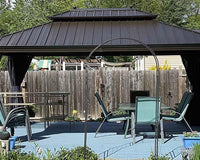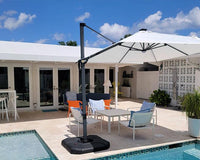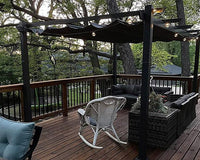
Gazebo storm preparation starts with official forecasts and warnings—not hardware. If conditions are safe, follow the structure’s instructions, make only accessible observations, and remove or secure movable items as directed. Stop before warnings, lightning, worsening weather, unsafe access, or visible damage make outdoor work unsafe. The same warning-first approach supports pergola wind protection, but accessory procedures and anchoring remain model- and site-specific.

Start with a safe gazebo storm preparation sequence
The safest order is forecast first, safe access second, low-risk observation third, and model-specific preparation last. Use this checklist only while you can work from stable ground without exposure to dangerous conditions.
- Check official forecasts and warnings. Review the National Weather Service forecasts and warnings before going outside. Read the owner’s instructions for the gazebo or pergola and its accessories before deciding what to move, remove, retract, or leave in place.
- Decide whether it’s safe to work. Continue only while footing, visibility, access, and weather conditions remain safe. Do not treat a brief lull as permission to work during an active warning. If a high-wind or severe thunderstorm warning, lightning, dangerous worsening conditions, or an unstable structure makes exposure unsafe, go indoors during a high-wind or severe-thunderstorm warning and leave the preparation unfinished.
- Observe accessible connection points. From the ground or a normal walking surface, look for visibly loose, missing, shifted, corroded, separated, or damaged components. Do not turn this check into tightening, drilling, excavation, lifting, dismantling, or structural alteration.
- Follow approved accessory instructions. Use the applicable manual for curtains, netting, louvers, screens, canopies, lighting, and gutters. Perform only the removal, retraction, tie-back, opening, or securing steps supported by the instructions.
- Move loose objects. Bring furniture, cushions, décor, planters, umbrellas, grills, toys, and similar items into sheltered storage when possible. Keep doors, drainage, exits, and emergency access clear. Do not improvise weights, ropes, straps, or tie-downs.
- Stop or escalate. Stop outdoor work when the weather or access becomes unsafe. Stop routine preparation if anchors are questionable, the structure moves unexpectedly, there is structural damage, components are jammed, or the task requires unsafe access or structural work.
This sequence is a go/no-go aid, not a wind-rating chart. It does not establish a universal wind threshold, anchoring method, or protection level for every gazebo or pergola.

| Decision point | Continue only if | Stop or escalate when |
|---|---|---|
| Forecast and warnings | Official information supports a safe preparation window. | A warning, lightning, or worsening conditions make outdoor work unsafe. |
| Access | You can work from stable ground or a normal walking surface. | The task requires a ladder, roof access, lifting, or another unsafe position. |
| Accessible check | You are only observing visible connections and components. | An anchor or connection is questionable, or the structure moves or shows damage. |
| Instructions and loose items | The applicable manual supports the accessory action or item handling. | The procedure is unclear, a component is jammed or damaged, or securing would require improvisation. |
Inspect accessible connections and anchors without changing the structure
A routine check can identify visible reasons to stop, but it cannot prove that permanent anchoring or structural performance is adequate. Stay on a stable walking surface and compare what you can see with the specific assembly and maintenance instructions.
Look at visible posts, bases, frames, deck or foundation connection points, and other accessible hardware for separation, movement, corrosion, missing components, or damage. Unexpected movement or a shifted connection is not a routine tightening task. Do not replace hardware, drill, excavate, dismantle, lift, or alter the structure based on a generic storm tip.
An unsecured accessory structure can be loosened, lifted, or moved by high winds and become windborne debris. FLASH guidance on unsecured accessory structures supports site-specific assessment when anchorage or connections are questionable. If an anchor looks shifted, separated, corroded, damaged, or inaccessible, stop and arrange a qualified assessment instead of applying a generic fix. For permanent anchoring questions, consult our permanent anchoring guidance, but do not use general tips as proof that your structure is adequate for a particular forecast.
Handle curtains, louvers, and attached accessories according to their instructions
Gazebo curtains and pergola louvers do not have one universal storm position. Follow the exact manual for the structure and accessory, and stop if a component is jammed, damaged, under load, unclear, or reachable only through unsafe access.
Gazebo curtains and netting
Removable curtains do not automatically need to come down before high winds. Check whether your gazebo instructions call for removal, retraction, tie-back, or another approved position. A cited hardtop gazebo, for example, has removable exterior curtains, but that product fact establishes removability only—not the correct storm position for every gazebo.
If the manual supports removal, place the panels in sheltered storage where they cannot become airborne and where they will not block doors, drainage, exits, or emergency access. If reaching the curtain requires a ladder, roof access, or another unstable position, postpone the task rather than forcing it.
Pergola louvers and attached components
Pergola preparation follows the same forecast-first safety logic as gazebo storm preparation, but the accessory steps may differ. For one cited Purple Leaf louvered-pergola model family, the manufacturer instructs owners to open the louvers and raise or remove installed shade screens during high winds or other extreme weather. Treat that as a model-specific instruction, not a universal rule for pergolas.
Use the applicable instructions for louvers, screens, canopies, lighting, gutters, and other attached components. Do not force a jammed louver or reposition a damaged part. If the manual does not clearly state a safe action, leave the component alone and seek guidance from the manufacturer or a qualified professional.
Remove or secure furniture and loose objects around the structure
The practical loose-object step is to bring items inside or place them in sheltered storage before winds increase, using only handling or securing methods supported by the item’s instructions. This is separate from proving that the gazebo or pergola itself is permanently anchored.
Inventory furniture, cushions, décor, planters, umbrellas, grills, toys, and other movable objects around the structure. National Weather Service guidance for before a high-wind event supports putting away or securing loose outdoor items while a safe preparation window remains. Store removed items in a closed, sheltered location that does not obstruct doors, drainage, exits, or emergency access.
Do not improvise weights, straps, ropes, or tie-downs. A cover is not proof that an item is safe to leave outside, and you should use a cover only when its dimensions and instructions fit that specific item. If the item’s instructions do not support outdoor use during the forecast, move it to sheltered storage instead of inventing a restraint.
Stop DIY work and arrange a qualified assessment when the structure is questionable
Stop DIY work and arrange a qualified assessment when an anchor is loose, missing, shifted, corroded, or damaged; posts or frames move unexpectedly; or the structure shows visible separation, displacement, or other damage. The right next step is an assessment—not a generic fastener, weight, strap, repair, or tie-down recommendation.
Also stop when the task requires a ladder, roof access, lifting, dismantling, excavation, drilling, electrical work, or structural alteration. These conditions exceed a routine accessible storm check. If you cannot safely reach a connection, document the visible concern from a safe distance and leave it undisturbed.
After severe weather, wait until the severe-weather threat has ended before assessing the property. Stay away from downed power lines and damaged or unstable structures. Arrange a qualified assessment before repair or reuse if the gazebo or pergola has shifted, is damaged, or cannot be reached safely. No universal wind rating, hurricane-resistance claim, or anchoring solution can replace a site-specific evaluation.
FAQ: fall storm preparation for gazebos and pergolas
These answers address the immediate choices that often arise when a fall forecast leaves limited preparation time. Use the exact product instructions whenever an accessory or structural condition differs from the examples below.
How do I secure a gazebo before a storm?
Check official warnings first, then work only while conditions remain safe. Follow the gazebo manual for accessories, bring loose items into sheltered storage, and stop if a warning, unsafe access, damage, or questionable anchoring applies.
Should I remove gazebo curtains before high winds?
Not automatically. Check the exact gazebo instructions for removal, retraction, tie-back, or an approved position. If the curtains are damaged or the procedure requires unsafe access, leave them alone and seek appropriate guidance.
When should I call a contractor about gazebo anchoring?
Arrange qualified help when an anchor is loose, missing, shifted, separated, corroded, or damaged, or when the structure moves unexpectedly. Call before attempting work that requires drilling, excavation, lifting, dismantling, or structural alteration.
Can I prepare a pergola the same way as a gazebo?
Use the same warning-first and stop-work logic, but do not transfer gazebo accessory steps to a pergola. Louvers, screens, attachments, bases, and permanent anchoring remain model- and site-specific, so follow the pergola manual before acting.