Outdoor Thanksgiving planning comes down to four steps. First, measure the part of your patio you can actually use. Next, test the seating with your real tables and chairs, then pick a serving style and walk the route to the food, and finally name a backup room and the trigger that sends everyone there.
No single square-foot rule tells you how many guests your patio can hold, so your own measurements set the layout. Weather has one fixed rule: if you hear thunder, the meal moves inside. For every other change, decide your trigger ahead of time based on your site and the local forecast.
Fit the Seating to Your Patio and Guest Count
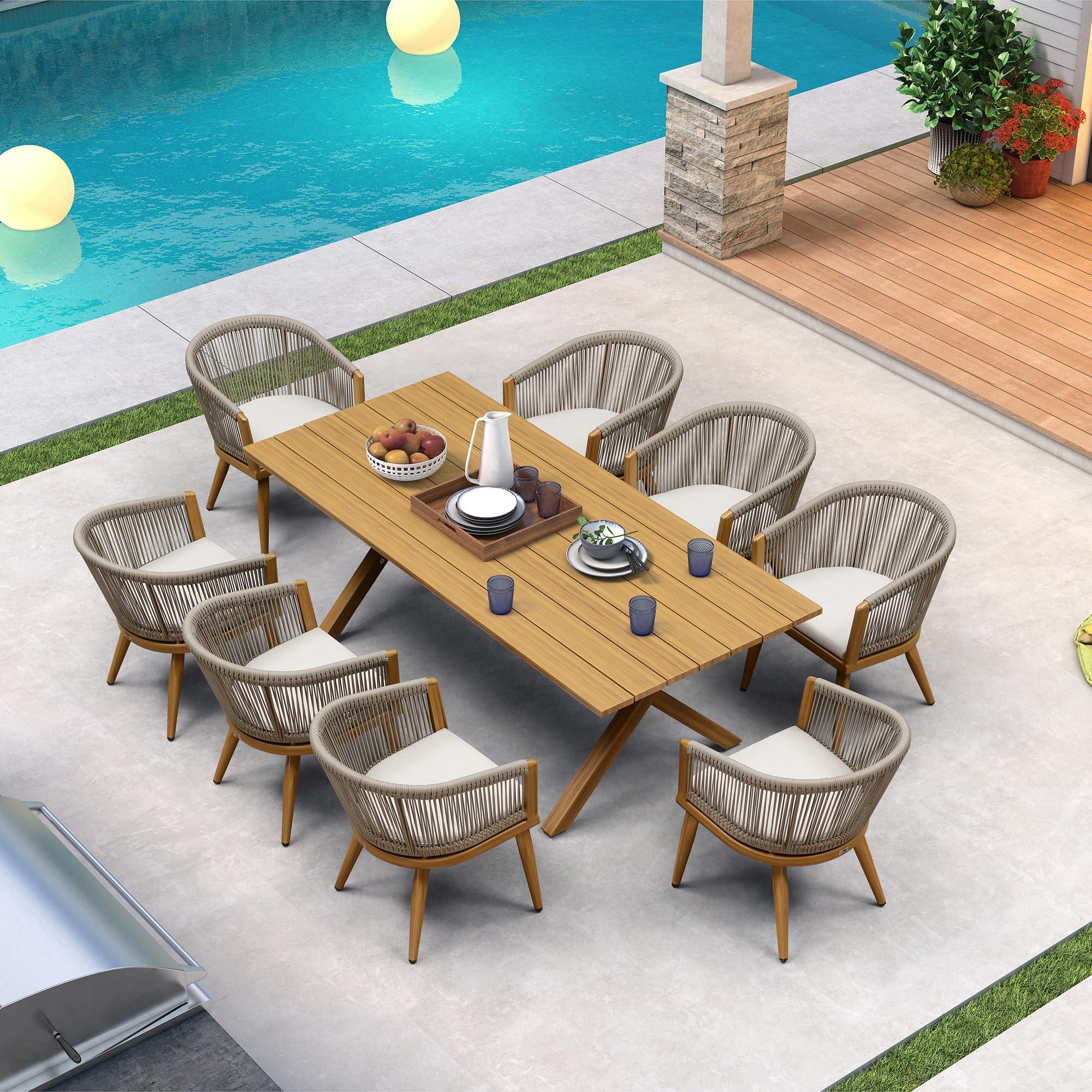
A seating plan works only when every guest has a place and the real furniture fits in the space you can use. Whether you are arranging 5-piece patio dining sets or an expanded setup, a tape measure and a roll of painter's tape answer this faster than guessing from a table's listed size.
- Define the usable dining area. Measure, in feet, the part of the patio you can give to the meal. Take out anything you can't move: the grill, planters, steps, posts, and the swing of any door that opens outward.
- Write down your guest count. Include every person who needs a seat at the table, kids too.
- Measure furniture the way it gets used. Record the table's length and width. Then measure chairs pulled out to where someone actually sits, not tucked under the table.
- Mark the layout on the ground. A Houzz outdoor furniture layout guide suggests marking furniture pieces and the layout you want with rope, string, tape, or chalk so you can see whether everything fits. Outline the table first, then each chair in its pulled-out position.
- Count the places and compare. If every guest has a marked place and every chair stays inside the usable edges, keep the layout. If not, try another table shape or grouping, or add a second table. If none of those fit, plan the meal for your backup room.
The same guide suggests at least 3 feet of clearance where foot traffic is heavy, with 4 feet or a bit more preferred. For a larger dining area, it suggests adding 3 feet on all sides of the table with the chairs pushed in. Use those numbers as a starting point for your tape marks, not as a rule that decides your guest count.
If your usual table seats fewer people than you're hosting, our guide to seat count and fit explains how to plan for everyday diners versus occasional guests. For a bigger crowd, our tips on seating for 10+ people cover splitting the space into zones. When comparing outdoor dining sets or larger 11-piece patio dining sets, check each one against the same tape outline before you decide.

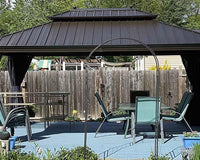
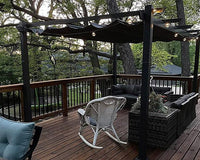
A pergola attached to house gives you a second boundary to mark. Tape the covered footprint separately from the full patio, so you can see which seats sit under the roof and which don't. That tells you who sits where. It doesn't give you a backup location, because covered patio space is still outdoors.
Choose a Serving Style and Map the Guest Route
Pick the service style your space and helpers can handle. Then give it a physical spot and a route guests can walk without squeezing past occupied chairs. University of Minnesota Extension guidance on choosing a type of service says to weigh the location, the needs of the event, and what your helpers can handle.
- Buffet: Works with food guests can easily serve themselves, though you lose control over portions. Guests walk to a serving table, so that table needs a spot people can reach and line up at.
- Family-style: Needs extra serving pieces and dishes that are easy to pass. The food moves around the table instead of guests moving to the food.
- Plated: Someone serves a plate to each guest. Your helpers carry food from the kitchen or a serving station to every seat.
None of these is automatically the right choice for a patio. A buffet adds foot traffic across the patio. Family-style needs room on the table for serving dishes, and plated service depends on having enough people to carry plates.
Once you've chosen a style, mark the serving point with tape: a buffet table, a side table for refills, or the path from your kitchen door. Houzz also recommends deciding how people will get to each area of the yard. Apply that to your meal with a walk-through. Seat a family member or two in the marked chairs, then walk from the farthest seat to the food and back with a full plate. Walk from the kitchen door to the serving point carrying a heavy dish, too.
Watch what happens. If you have to turn sideways, ask a seated person to stand, or step off the patio edge, the route doesn't work yet. Move the serving point, shift a table, or regroup the seats, then walk it again until the trip is clear both ways.
Set an Adjustment Trigger and a Backup Location
Choose your backup room before the holiday and write down what sends you there. Lightning has a clear rule. For other changes, you set the trigger for your own patio.
- Backup destination: Name the indoor room, such as the dining room or family room. Note how many people it seats and where the food will go.
- Adjustments you can make outside: List small fixes that keep the meal on the patio. Examples include moving seats into the covered footprint or bringing the serving point closer to the door.
- Your move-inside trigger: Write the condition in plain words, for example "rain reaches the serving table" or "the patio is still wet an hour before dinner." These examples are illustrative; pick what matters for your site and guests.
- Lightning: This one isn't up to you. The National Weather Service says no place outside is safe during a thunderstorm, so move indoors when you hear thunder. Go into a substantial building; sheds and rain shelters are not safe. Wait at least 30 minutes after the last thunder before going back outside.
Seats under a pergola attached to house are still outdoors, so they don't count as lightning shelter.
Check the National Weather Service point forecast the day before and again the morning of the meal. Click the map to set your own location, then open the hourly forecast for your dinner window. Compare what you see with the triggers you wrote down. That tells you whether to adjust the patio or set up the backup room.
Before guests arrive, tape out the layout, walk the serving route, and post the backup room and your trigger where your helpers can see them.

FAQs
What if I don't have anyone to help serve?
Start with how many people can actually help. Plated service needs someone to bring a plate to every guest, which is hard for one host to do. A buffet or family-style meal moves more of that work to the guests, as long as the dishes are easy to serve or pass.
Can I split guests between the patio and indoors?
Yes, if both spaces work on their own. Tape out the patio group as usual, set up the indoor group with its own seats, and put the serving point where both groups can reach it. Walk from each group to the food before the meal to make sure neither route crosses through occupied chairs.
How much should I prepare the backup room ahead of time?
Get it ready enough that switching takes minutes, not an hour. Know how many seats it holds and where the food will go. Keep a clear path from the patio door so guests can carry plates inside. If it can't seat everyone, decide ahead of time where the overflow will sit.
Should kids have a separate table outside?
A separate kids' table can free up room at the main table. It adds another footprint to mark, though. Tape it out with chairs pulled out, and make sure the route to the food doesn't cut between the two tables.