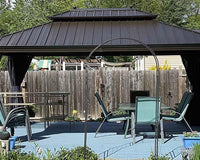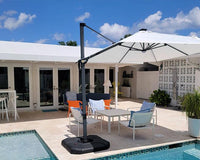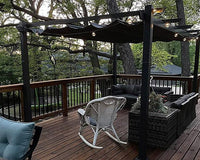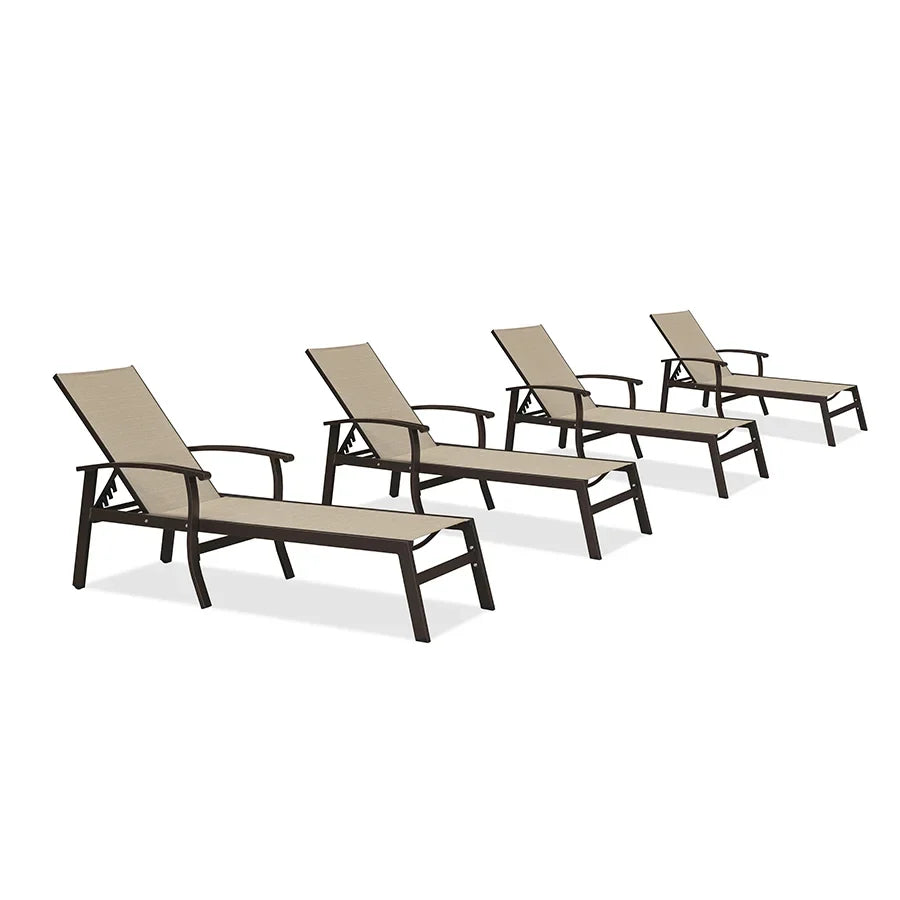
Start with an outdoor chaise lounge if you mainly want to relax, recline, or stretch out. Start with a conventional patio chair if you mostly sit upright, for example at an outdoor dining table. Neither one wins on every patio.
The specific piece you pick still has to fit. If its listed footprint crowds your patio or blocks the path you need to keep open, that result should override your first preference. The checklist below shows you how to test that before you buy.
Choose by the position you'll use most
Pick your starting point by thinking about what you'll actually do in the seat most days. Houzz's outdoor layout guide supports choosing by the planned activity: it describes chaise lounges as made for relaxing and includes chairs in compact outdoor dining setups. If sunbathing or reclining by the pool is your routine, compare an adjustable outdoor chaise lounge set to see how those dedicated lounging features fit into that layout.
Consider a chaise when reclining or stretching out is central
A chaise earns the first look when your plan is to lie back with a book, nap in the shade, or sunbathe. Its long seat is built around stretching out, not perching at a table. That makes it a natural match for a quiet corner of a deck or a spot by the pool.

The category label is only a starting point, though. Chaises differ in length, width, and how the back adjusts, so compare the exact configuration you'd buy. If back support matters to you, our guide to choosing an ergonomic chaise lounge walks through lumbar support. Then confirm the piece fits your space using the checklist below.
Consider a conventional patio chair when upright seating is the priority
A patio chair is the better first comparison when you mainly sit upright. Think eating dinner outside, working on a laptop, or talking with guests around a small table. Houzz's compact dining example pairs chairs with a bistro table, which is a helpful model for a small porch or balcony.
That doesn't make a chair more comfortable or better for your body in general. It simply matches upright activities. Chairs also vary a lot. Back height alone changes how a chair feels and what you see from it, which our comparison of high-back vs. low-back patio chairs covers in more detail. Some chairs recline or have a footrest, and those need extra room in your measurements.
Use a fit-and-feature checklist before choosing
Run the exact item you're considering through these five checks. The goal is simple: the seat fits, your path stays open, and the listing actually states the features your main activity needs.
- Measure the usable area. Use a tape measure and record the length and width in inches. Measure only the space you can really use. Take out grills, planters, steps, door swings, posts, and the walking route you want to keep clear. On a tight or narrow deck, our guide to mapping obstructions and walkway clearance shows how to plan around fixed features.
- Compare the listed dimensions for the exact size you'd buy. Houzz's general planning estimates put a chaise at about 80 by 24 inches and suggest about 3 square feet for most chairs. Individual products can differ a lot from those figures, so use the product's own numbers. For example, our aluminum chaise with a side table and wheels comes in two sizes, and the listed chaise dimensions are 52.36 × 25.59 × 10.24 inches for the standard size and 56.3 × 30.31 × 12.6 inches for the oversize version. Pick the size first, then compare its length and width with your measured area. If you can't tell whether a listing's numbers describe the seat as you'll use it, ask before you rely on them.
- Mark the footprint and walk your route. Use painter's tape, chalk, string, or rope to outline the piece at its listed length and width. The same Houzz guide suggests marking a proposed layout this way and thinking about access and traffic flow. Then walk to the door, the grill, or the table the way you normally would. Also check that you can reach the seat from at least one side. If the path feels pinched, or you need to step over the outline, try a different spot, a smaller size, or the other seating type.
- Check the features your activity depends on. Look for features the listing actually states, not ones you assume. For lounging, that could be the number of back positions. Our chaise listing states five adjustable positions, wheels, and a side table. A position count won't tell you the exact recline angle, so look for a stated angle if that matters to you. For upright seating, check whether the chair reclines or has a footrest, and add that depth to your taped outline. If an accessory like a side table is included, tape its footprint too. The chair's own measurements don't cover it.
- Decide from the result. Keep the option whose listed configuration supports your main activity and whose taped outline leaves your route open. If your first-choice seating type fails step 3 but the other type passes, the fit result wins.
FAQs
Can I mix a chaise and patio chairs on the same patio?
Yes, if both fit together. Tape each piece at its own listed size in the positions you'd actually use, then walk between them. A common split is a chaise in a quieter corner and chairs near the table or door. The combined layout still has to leave your main walking route open.
Does a chaise with more positions recline flatter?
Not necessarily. The number of positions tells you how many settings the back has, not how far it tilts at each one. If you want a nearly flat position for sunbathing or napping, look for a stated recline angle or a clear description of the flattest setting on that product's listing.
Are wheels worth having on an outdoor chaise lounge?
Wheels matter most if you plan to move the chaise to follow sun or shade, or to clear space for guests. If the chaise will stay in one spot, they matter less. You can compare options in our chaise lounges with wheels collection, then check each listing's dimensions against your taped area.
How should I place a chaise on a pool deck?
Think about where the sun will be when you use it, glare off the water, and the routes people take around the pool. Our guide on positioning a poolside chaise covers sun tracking, glare control, and keeping deck paths clear.