The most reliable way to keep aluminum and metal patio dining furniture comfortable in direct sun is to fix the shade first, then treat finish color and cushion choices as secondary refinements. Shade intercepts sunlight before it ever reaches the table or chairs, which is a bigger lever than any color or fabric choice alone. No single color, coating, or cushion will make metal furniture stay cool on its own, so plan for a combination instead of a single fix.
Check the patio during the actual hours you eat outside, not just at noon, since the sun's angle shifts through the day and across seasons. Then choose a lighter finish as a cautious preference rather than a guaranteed cooling upgrade, and pick cushions based on documented outdoor construction rather than fabric name alone.
The Most Effective Order: Shade First, Finish Second, Cushions Third
Solar exposure and surface warmth require different solutions. Direct overhead shade prevents sunlight from heating the table and chairs, while cushions only buffer the surface you touch. Treat shade as your primary layout decision, then use finish color and cushion materials to adjust seated comfort.
For an Existing Set
If you already own a metal dining set, watch the patio during the period when discomfort is worst, whether that is early afternoon or a stretch of late-day sun. Test a movable or adjustable shade option, like an umbrella or a repositioned canopy, in that exact spot before assuming you need new furniture. A shade solution that only works part of the day still needs to be checked at the times you actually use the table.
For a New Purchase
When buying a new set, match the table, chair, and cushion combination to the shade footprint and the clearance your patio actually offers. A six-chair set does not automatically fit the same space as a four-chair or eight-chair version, so confirm the model's real dimensions rather than assuming seat count tells you enough.
Choose a Powder-Coat Color Without Overpromising Cooling
Choose a lighter powder-coat finish as a cautious preference if you want to avoid a dark, fully exposed metal surface, but no supplied testing ranks specific colors by how cool they keep patio furniture. Treat color as one input among several rather than the deciding factor.
Use Color as a Preference, Not a Promise
If the finish and overall look suit your patio, a lighter color is a reasonable soft preference. Avoid trusting marketing language like "stays cool," "heat-resistant," or "coolest" unless a manufacturer has run comparative testing specific to that model. Without that data, the phrase is a description of intent, not a measured result.

Separate Finish Durability from Heat Performance
UV-resistant or fade-resistant wording on a product page answers a different question: it describes how the color holds up over time, not how hot the surface gets at noon. Check the exact finish name and its care instructions for your specific model before assuming any durability claim also covers surface temperature. Shade still does more to limit direct exposure than color choice by itself.
Choose Cushion Fabric and Construction for Outdoor Comfort
Cushions change what you feel when you sit down, but they do not lower the temperature of the aluminum frame underneath. Choose cushions based on documented outdoor fabric, cover construction, and care details rather than assuming a named material is automatically breathable or cool.
For Hot Seats
Look at what the product page actually documents: fabric type, cover construction, and any stated airflow or ventilation feature. A cushion can make sitting more comfortable by adding a buffer between you and hot metal, even though it is not changing the frame's actual temperature. Our seating material guide walks through how different seating materials behave under direct afternoon sun if you are also comparing stool or chair options.
For Humid or Changeable Weather
Before choosing a cushion package, check the drying, cleaning, removal, and storage instructions. A cushion that traps moisture will feel warm and damp regardless of its listed fabric name. Treat "UV-resistant" or "all-weather" claims as specific to that model and that fabric, not as a universal ranking that applies to every outdoor cushion on the market.
Position an Outdoor Pergola or Other Shade Over the Dining Set
Position any outdoor pergola, canopy, or umbrella by checking its actual shadow during planned meal times rather than noon. Direct sunlight changes with the time of day, season, and surrounding landscape (solar radiation basics). A structure that shades the table at midday may miss it completely in the late afternoon, leaving diners exposed.
Check the Shadow Where People Actually Sit
Mark or photograph the table and chair footprint during your typical meal period, then repeat that check on a day when the sun sits lower in the sky. This tells you whether the shade actually protects the space people use, rather than just the space it appears to cover in a product photo. For general layout inspiration, our article on patio shade ideas covers several shade approaches beyond a single pergola.
Compare Coverage with Structure Limits
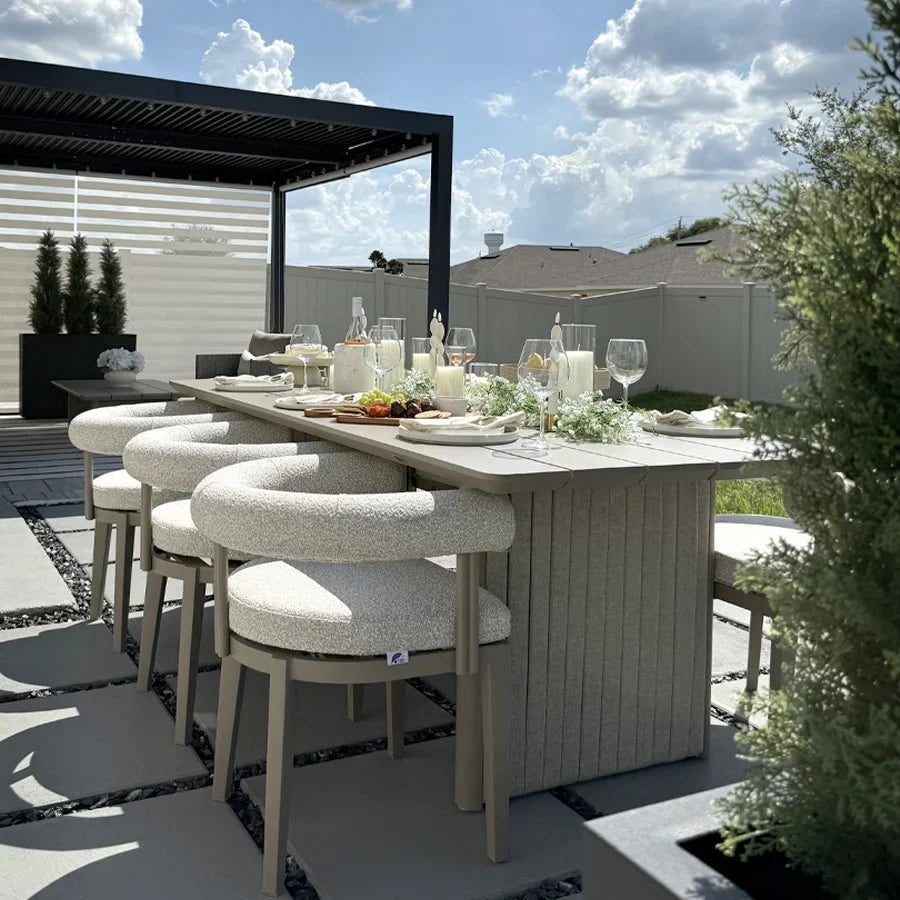
Once you know the footprint you need to cover, compare it against the shade system's listed size and height. Our Caesar louvered pergola is one example listed with adjustable louvers for sunlight control, several available sizes, and a documented height, but anchoring, drainage, wind conditions, and ground-mounting requirements are site-specific. Confirm those details against current installation instructions before ordering, since a structure sized correctly on paper can still be unsuitable for a particular patio or local wind exposure.
Apply the Plan to an Outdoor Dining Set for Six
Applying this plan to outdoor dining sets for 6 metal frames means matching the exact configuration's dimensions, cushions, and finish to your shade footprint, not assuming every six-chair set behaves the same way. Seat count alone does not tell you the table footprint, chair clearance, or shade coverage you will need.
For a New Six-Seat Purchase
Compare the specific six-seat version of a set rather than assuming its dimensions from a four-chair or eight-chair listing. Our Provence six-seat set is currently listed with a powder-coated aluminum frame, a rectangular tabletop, olefin fabric cushions at 2.75 inches thick, and a brown finish in a seven-piece six-chair configuration. Those are listed construction facts, not an independent cooling test, so use them to check fit and materials rather than to assume the set stays cooler than another brown or aluminum option.
For an Existing Six-Seat Set
If you already own a six-seat metal set, improving shade coverage and cushion comfort is usually more practical than replacing the furniture. Check the product page or owner's manual for care and finish limitations before adding any coating, sealant, or cover, since some finishes have specific cleaning or maintenance restrictions.
Verify the Product and Setup Before You Buy or Install
Before relying on any comfort claim for an outdoor dining set or shade structure, verify the manufacturer specifications for finish care, cushion fabric, UV resistance, and anchoring limits. If a listing claims cooling or breathability benefits without comparative test data, treat that claim as unproven rather than a buying reason.

Check your patio measurements against the full seating footprint and shadow area. If every documented specification matches your space and dining hours, move forward with your order; if key dimensions or care details are unlisted, ask the seller for confirmed specs before buying.
FAQs
Will a lighter powder-coat color keep metal patio furniture cool?
A lighter finish can be a reasonable preference if you want to avoid a fully exposed dark surface, but no supplied testing establishes a universal ranking of powder-coat colors by temperature. If color is your deciding factor, look for a manufacturer's comparative testing on that specific model before assuming it will run cooler than another shade.
Do outdoor cushions stop metal chairs from feeling hot?
Cushions change the surface you actually touch, which can make sitting more comfortable, but they do not lower the temperature of the metal frame itself. Choose cushions by documented outdoor fabric, cover construction, drying, and care details instead of assuming any named fabric is automatically breathable or cool.
How do I know whether a pergola will shade my dining table in the afternoon?
Observe the patio during your actual meal window and through the season, since the sun's angle shifts and a structure that covers the table at noon may miss it later in the day. Compare that observed footprint, including both tabletop and seating, against the pergola's current listed dimensions and installation requirements before ordering.
Is an aluminum six-seat dining set automatically suitable for a sunny patio?
Seat count alone does not tell you the table footprint, chair clearance, finish performance, or shade coverage a set will need. Verify the specific model's dimensions, frame and cushion materials, care instructions, and how well it fits your available shade before treating any six-seat set as sun-ready.