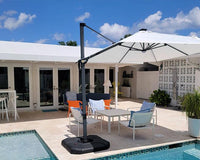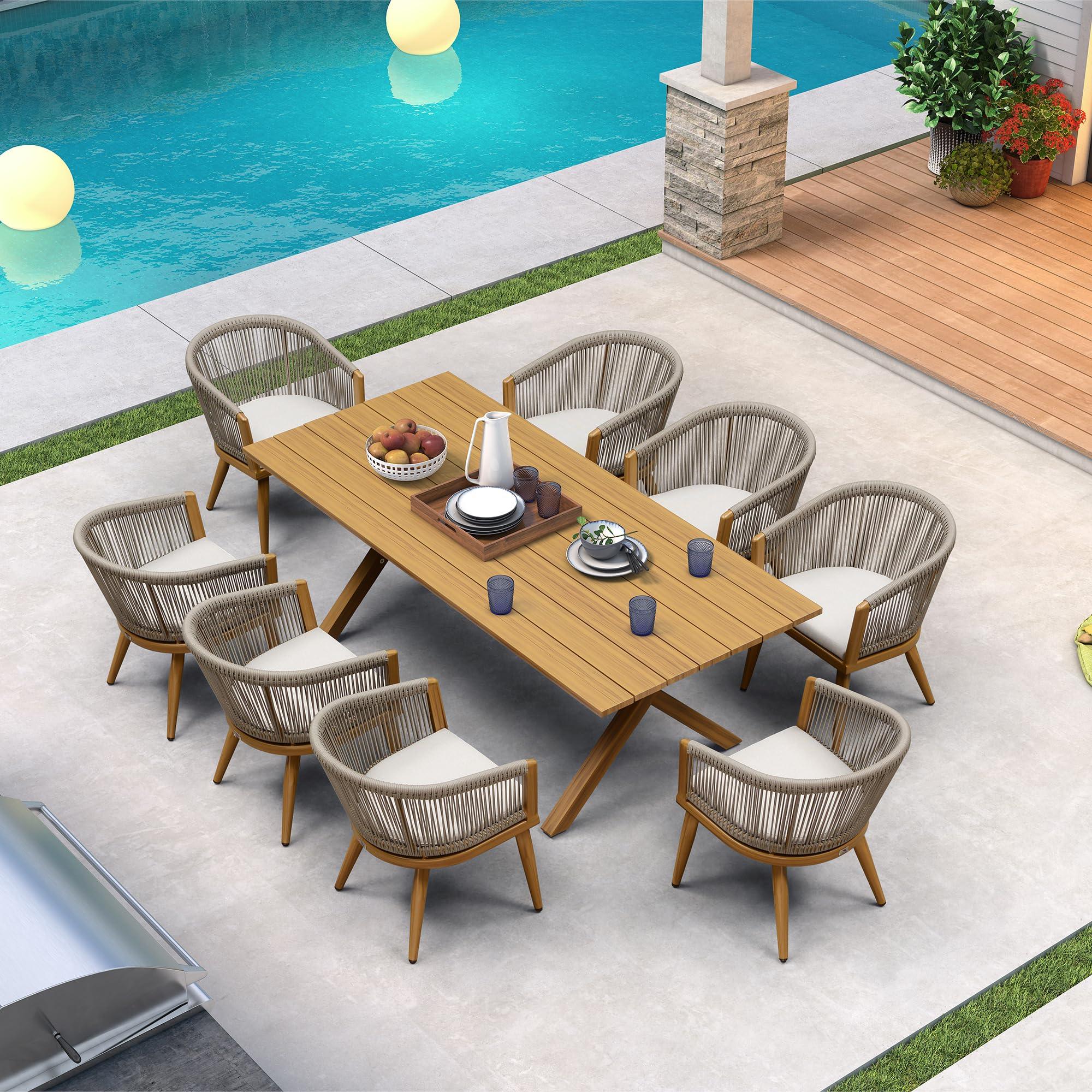
Clean and dry the mark first, then check whether the wood-grain texture and film are still intact before you touch up anything. Test only a verified, finish-compatible product in a hidden spot, and stop if the coating is lifted, peeling, exposed, or deeply gouged. This staged approach protects the textured finish on wood-grain aluminum contemporary outdoor furniture, including sectionals and dining sets, without guessing at a chemical or repair product that may not match the exact coating system.
Key Takeaways
- Clean and dry any mark before deciding whether it is dirt, a cosmetic scuff, or real finish damage.
- A light scratch with intact texture may be safe to test cautiously in a hidden area; peeling, lifted, or exposed spots are not.
- Mild soap and warm water with soft tools are the conservative cleaning starting point; solvents, abrasives, and compound waxes carry more risk.
- Sun, dirt, and moisture management help preserve the finish, but no source here supports a fixed UV lifespan or guaranteed fade prevention.
- A pergola canopy changes exposure patterns around nearby furniture, but it does not certify UV protection for that furniture's finish.
Start with a Finish-Safe Inspection
Before you decide whether a mark is a quick fix or a bigger problem, clean it and let the surface dry completely. Then compare the texture and coating around the mark to the surrounding finish.
Clean and Dry Before Judging the Mark
Work on a cool section of the frame, not one that has been sitting in direct sun. Use a soft cloth or soft brush with a mild soap and warm water, rinse thoroughly, and let the area dry completely before inspecting it again. Wet or dusty surfaces can hide the real depth of a mark, so this first pass is what actually tells you whether you are looking at residue or an actual finish issue.
Use the Finish Condition to Choose the Path
Once the area is clean and dry, the coating itself decides your next step.
- Cosmetic mark: The texture feels continuous, color is unchanged, and nothing is lifted. This may qualify for a cautious, hidden-area test with a verified, finish-compatible product.
- Finish damage: The film is lifted, peeling, visibly exposed, or gouged deep enough to change the surface. Wood-grain coatings are their own system rather than plain painted aluminum or bare metal, so a textured wood-grain coating system can respond differently to sanding, solvents, or generic touch-up paint than a smooth finish would. Treat any of these signs as a stop point and move to exact manufacturer or specialist guidance instead of a generic repair.
How to Repair a Minor Scratch on Wood-Grain Aluminum Patio Furniture
A minor scuff with intact texture can sometimes be blended, but only through a bounded sequence that stops before you apply anything unverified. Skip straight to specialist help if the mark exposes metal or lifts the coating.

A Bounded Touch-Up Sequence for Minor Scuffs
- Wash the scratched area gently with mild soap and water, then let it dry fully.
- Compare the mark to the surrounding grain pattern and sheen in good light.
- Locate the exact model or finish-care documentation for your furniture before choosing any product.
- Test the approved method on a small, hidden section first, such as the underside of a table leg.
- Move forward only if color, gloss, and texture still look correct after the test dries; if anything looks off, stop and leave the visible area alone.
Because texture, sheen, and color vary by finish system, a marker, paint, sanding pad, or solvent that is safe on one coating can flatten or discolor another. Skipping the hidden-area test is the step most likely to turn a small cosmetic mark into a visible mismatch.
When a Scratch Is Beyond Cosmetic Repair
Exposed metal, a peeling edge, a lifted patch, or a deep gouge changes the job from touch-up to finish repair. Specialty woodgrain coatings can require diagnosis before coating and manufacturer-level color matching to blend correctly, which is not something a home touch-up kit is built to do. Before contacting support or a finish specialist, note the furniture model, the exact finish name if it is listed, where the damage is located, and take clear photos in natural light so the next step is not another guessing exercise.
How to Clean and Preserve the Finish Against UV Exposure
Routine cleaning is the main lever you control, and it works best when you stick to gentle products until the exact care instructions say otherwise. Sun and weather exposure matter too, but nothing here supports a fixed lifespan for the coating.
Cleaning Agents: Conservative Starting Choices Versus Avoid
| Generally appropriate starting point | Avoid pending finish-specific verification |
|---|---|
| Mild soap and warm water with a soft cloth or brush | Harsh solvents or petroleum-based cleaners |
| Rinsing and drying fully after cleaning | Steel wool, Scotch-Brite-type pads, or other abrasive tools |
| Occasional light dusting between full cleans | Compound-type waxes, which contain abrasives |
| Spot-testing any new product in a hidden area first | Finish-specific stain removers or waxes without checking your care instructions |
For powder-coated surfaces generally, starting with mild soap and warm water applied with a soft cloth is the recommended approach, followed by a full rinse and dry. The same source cautions against solvents, petroleum-based cleaners, and abrasive pads or compound waxes unless your specific finish instructions say they are fine. If you want more detail on routine upkeep for aluminum frames, our guide to outdoor aluminum care walks through a broader maintenance routine.
Manage Sun and Weather Without Promising a UV Lifespan
Positioning furniture out of constant direct sun, brushing off dirt regularly, and drying the surface after rain or cleaning all reduce avoidable stress on the finish. None of that guarantees a set number of years of color retention, since coating system, climate, and how consistently you clean it all affect the outcome. Check any wax or UV-protectant product against your exact finish instructions before use, since an incompatible product can do more harm than the sun exposure it's meant to prevent.
How Pergola Canopy Care Changes Furniture Maintenance
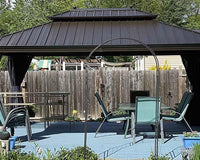
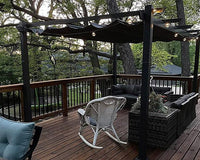
A pergola canopy changes how much direct sun, dirt, and moisture reach the furniture beneath it, which means the canopy's condition becomes part of your furniture-care routine. Shade from a canopy is exposure management, not proof that the furniture finish is protected from UV.
Account for Shade, Runoff, and Moisture
A shaded spot under a canopy can still collect dust, pollen, or blown debris, and it may stay damp longer after rain than furniture in open sun. Check where the canopy edges direct runoff and whether furniture legs or bases sit close to posts, walls, or low spots where water pools. Keeping both the canopy fabric or roof and the furniture surface clean and dry matters more than assuming the shade alone is doing the work.
A Practical Canopy-to-Furniture Inspection Routine
- Check the canopy and its drainage or runoff path after any heavy rain or wind.
- Look over nearby furniture for residue, lingering dampness, or new marks.
- Reposition furniture or adjust your cleaning frequency if one spot gets repeated direct sun or trapped moisture.
- Follow the canopy's own care instructions for cleaning the canopy material itself; our pergola cleaning tips cover a simple routine for keeping an aluminum louvered structure dust-free.
FAQs
What should I do if mild soap and water do not remove a mark?
Do not automatically move to a solvent, petroleum-based cleaner, abrasive pad, or compound wax. Instead, check your furniture's exact finish-care instructions first, since a stronger product that works on one coating system can dull or damage another.
Can I use wax or a UV protectant on wood-grain aluminum patio furniture?
Only if your exact finish instructions permit it, and only with a non-abrasive product. Don't assume an automotive wax or a general UV spray is compatible just because it works on other outdoor metal surfaces.
How long should a wood-grain aluminum finish last outdoors?
There is no universal lifespan that applies across every finish system. How long the coating holds up depends on the specific finish, your climate and sun exposure, and how consistently you clean and protect it, so your product's own documentation is the most reliable reference.
What should I do if a scratch exposes metal or the finish is peeling?
Stop trying to color in or sand the area. Document the furniture model, the finish name if available, and clear photos of the damage, then reach out for exact manufacturer or specialist guidance before attempting any repair.