If your freestanding patio swing canopy is sagging or fluttering, work through it in order: inspect the frame and fabric, set a documented rain-shedding angle, remove excess slack from the crossbar sleeves, then reassess the weather. Fixing the wrong step first, like cranking down the tilt knob when the real issue is a loose sleeve, wastes effort and can strain the hardware.
Most sag and flutter problems trace back to one of three things: an unset canopy angle, loose fabric at the attachment points, or wind conditions that call for removal rather than adjustment. The sections below walk through each decision point so you know which one applies to your swing right now.
Inspect the Frame, Fabric, and Attachment Points First
Before touching any adjustment hardware, confirm the frame is stable and identify what kind of canopy you actually have. A freestanding patio swing with canopy relies on a planted, square frame and intact fabric or panel to shed rain and resist gusts; skipping this check means you might tighten a sleeve when the real problem is a wobbling leg or torn seam.
- Frame stability: Gently push the canopy frame. If it rocks, leans, or the feet lift, stop and secure the base before adjusting anything else. This is different from a deck pergola, which is typically bolted to a structure rather than freestanding, so its wind and attachment considerations don't transfer directly to a swing.
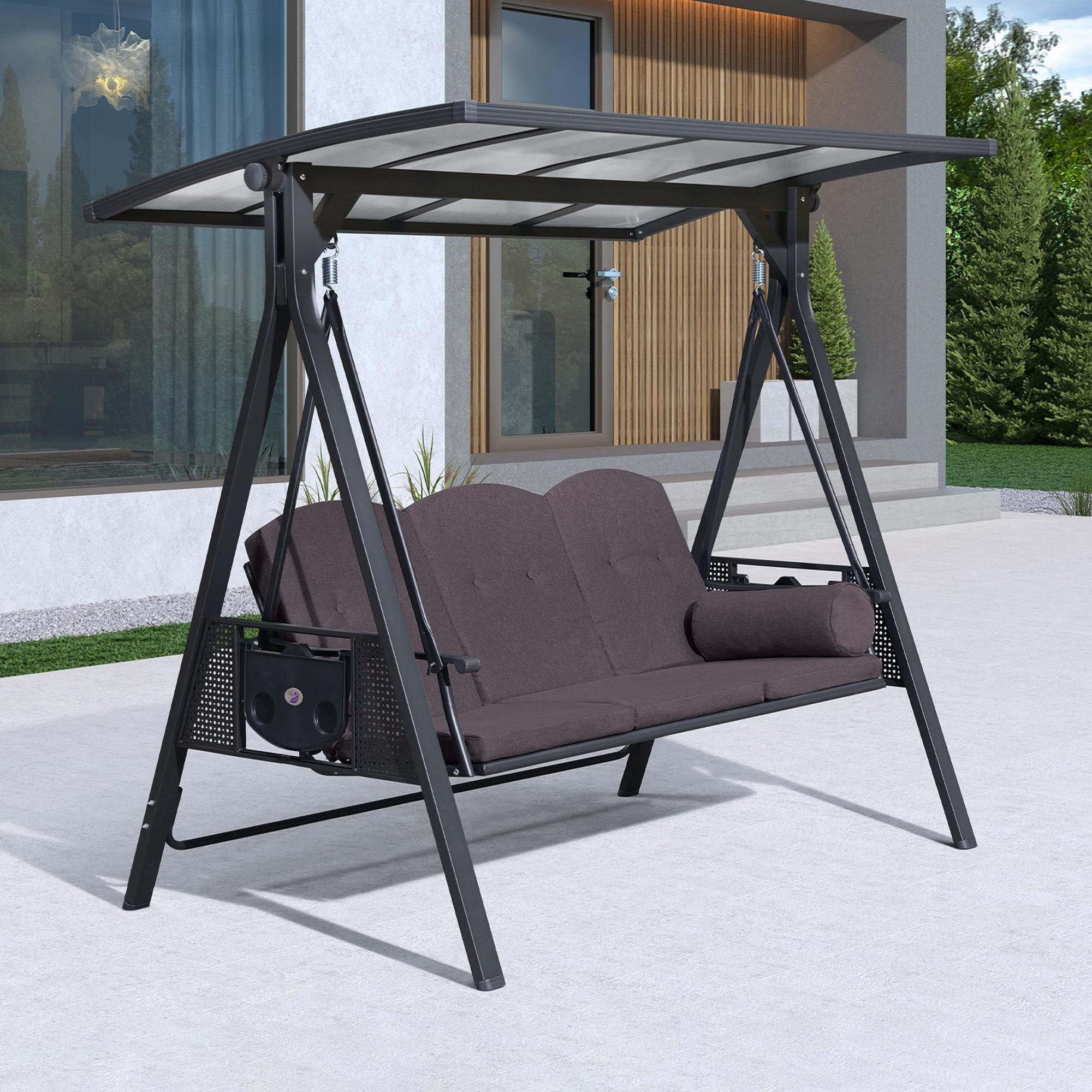
- Canopy construction: Confirm whether your canopy is fabric or Textilene-style or an adjustable hardtop canopy example made of PVC or polycarbonate. Fabric-sleeve tensioning instructions do not apply to a hardtop panel.
- Fabric condition: Look for tears, stretched spots, standing water, or fabric that has pulled away from its frame track.
- Attachment hardware: Check crossbar sleeves and tilt knobs for looseness, slipping, or visible bending.
- Active wind signs: Note whether the canopy is already flapping hard or lifting at a corner.
Match what you find to the next step: an angle problem sends you to the tilt-knob section, loose fabric sends you to the sleeve-tensioning section, and any torn fabric, bent hardware, or shifting frame means you stop and follow the product's repair or removal instructions instead of continuing to adjust.
Troubleshoot Tilt Knobs and Set a Rain-Shedding Angle
Rain pooling on a canopy is usually an angle problem, not a tension problem. Setting the canopy to a documented tilt position so water runs off toward one edge solves this before you touch the fabric sleeves at all.

Set the Angle Only Within the Documented Range
Use your swing's exact instructions to find the permitted tilt positions; an adjustable tilt canopy swing confirms that tilt adjustment exists as a feature, but the allowable range and hardware method come from the model's own manual, not a universal rule. Change one tilt setting at a time, then watch the low spot and runoff during ordinary rain to see if it improved. A steeper rain-shedding angle is not the same thing as a wind rating, so don't treat it as protection against gusts.
If the Tilt Knob Will Not Hold
- Stop forcing or repeatedly cranking the knob; that usually strips threads instead of fixing the angle.
- Check for visible slippage, a stripped thread, a bent bracket, or a part that doesn't match the frame.
- If the documented adjustment still won't hold, use the manufacturer's support or replacement-part path instead of continuing to force it.
Tighten Crossbar Fabric Sleeves Without Overstretching
The right amount of tension is whatever removes slack while leaving the fabric flat and unstrained, not the tightest setting you can manage. There is no universal number of turns or measurable tension target that applies across every swing canopy.
Aim for Supported Fabric, Not Maximum Tightness
Judge the result by how the fabric looks and feels: smooth, evenly supported, and free of ripples, not pulled taut by force. Make small, even adjustments only where your model's instructions allow it, working one attachment point at a time. Stop the moment you see puckering, white stress marks along a seam, distortion in the sleeve, or any hardware shifting out of place.
Recheck the Canopy Under Ordinary Conditions
After one adjustment, observe the canopy during normal weather to see whether the flutter or sag actually improved. If the same spot stays loose, that points to stretched fabric or a damaged attachment point, not a reason to tighten further. Keep this everyday check separate from the wind decision below; a canopy that looks fine on a calm day can still need to come down before a storm.
Remove the Canopy When Wind Conditions Worsen
There is no universal wind speed limit that applies to every freestanding patio swing canopy, so the removal decision starts with your product's exact instructions, not a number you find online. When those instructions and the forecast disagree, act on the more cautious one before conditions arrive.
Use Weather Alerts as Action Signals
The National Weather Service advises securing loose outdoor items before high winds arrive, and treats local wind watches and warnings as prompts to act, not as a rating for any specific product. Treat a Wind Advisory, High Wind Watch, or High Wind Warning in your area as your cue to secure or remove the canopy, ideally before gusts actually start. This guidance covers outdoor objects generally; it does not certify a safe wind speed for your particular swing, so it works alongside your product manual rather than replacing it.
If Gusts Begin While the Canopy Is Installed
Stop fine-tuning the tilt angle or sleeve tension the moment wind picks up; that is no longer the task at hand. Stay clear of a canopy that's lifting or a frame that's shifting, and follow your product's securing or removal steps once you can safely reach the hardware. Our high-wind securing guide covers anchoring a freestanding swing frame in more detail. After the wind passes, check for bent brackets, pulled seams, or other damage before reinstalling the canopy.
FAQs
Can I use fabric-sleeve tensioning instructions on a hardtop canopy?
No. Fabric-sleeve tensioning applies to Textilene or fabric-style canopies, not to adjustable PVC or polycarbonate hardtop panels, which use a different attachment method. Confirm your canopy's construction against its product listing or manual before adjusting any hardware.
How should I store a canopy after removing it for wind?
Let the fabric dry completely and clean off any debris before folding or storing it; packing away a damp canopy invites mildew and fabric damage. Beyond that, follow your specific product's storage instructions, since panel and fabric canopies may have different folding or covering requirements.
What if the canopy still sags after I adjust the angle and tension?
If sag remains after a documented angle change and a careful tension check, look for stretched or torn fabric, a bent bracket, a slipping tilt knob, or a frame that isn't sitting level. Any of these points to a repair or hardware issue rather than more adjustment, and a canopy with damaged hardware or torn fabric shouldn't be used until it's fixed.