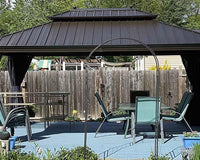
A sound gazebo that only needs seasonal protection calls for a gazebo cover. If the fabric is torn or a panel is cracked but the frame is solid, you need a replacement roof or canopy. Structural damage requires a different repair path. This guide helps you tell these situations apart, measure your gazebo, identify the model, and choose the right product category or support step.

Cover, Replacement Roof, or Structural Repair? Start With the Failure Mode
The right fix depends on what failed: the protective cover, the roof component, or the supporting frame. Use the table below to match the problem with the right category before you shop.
| Observed condition | What it solves | What it does not solve | Next action |
|---|---|---|---|
| Sound frame, worn or missing cover, off-season exposure | Protects the structure while it's not in daily use | A torn canopy, cracked panel, or unstable frame | Buy a protective gazebo cover |
| Torn, faded, loose, or missing fabric; cracked, bent, or leaking rigid panel; frame is sound | Replaces the failed roof component | Damage to posts, beams, braces, or anchors | Match and order a replacement roof panel or canopy |
| Posts, beams, braces, foundations, anchors, or attachment points are damaged or unstable | Structural repair or replacement assessment | A cover or roof part | Follow the structural inspection path |
Use a protective cover for a sound gazebo
A cover protects a gazebo during the off-season or between uses. It does not fix a torn, missing, or damaged roof component. Before buying one, confirm that the frame and roof are in good working order and that you simply want to keep weather and debris off the structure.
Choose a replacement roof or canopy for roof wear
Torn, stretched, loose, faded, or missing fabric points to a canopy replacement when the frame underneath is sound. Cracked, bent, leaking, or missing rigid panels require a different product: a panel that matches your model's construction and layout, not a generic one-size cover.
Move beyond part selection when the frame is damaged
If you're not sure whether the frame is sound, complete the inspection in the next section before measuring or ordering.
Inspect the Frame Before You Order a Roof Part
This safety check determines whether you can keep shopping for a roof component or need to pause. Check the roof component and the frame separately, then decide how to proceed.
Check the roof component
For fabric, look for tears, stretching, looseness, fading, or missing sections. For a rigid roof, note any cracks, bends, leaks, or missing panels. Record these as roof-component issues, but don't stop there. If a hardtop roof is leaking, our hardtop leak troubleshooting guide can help you find where the water is getting in before you assume a panel needs replacing.
Check the frame and connections
Inspect the posts, beams, braces, foundations, anchors, and attachment points separately from the roof or fabric. The gazebo assembly guide distinguishes support posts, beams, braces, and roof panels or trusses as separate assembly elements. Posts and beams support the roof, while braces add stability at the connections. These structural elements are not interchangeable with a cover or roof panel, so damage in these areas requires a different repair path.
Decide whether to continue
If the supporting structure looks sound, continue with measuring and model identification. If posts, beams, braces, foundations, anchors, or attachment points are materially damaged or unstable, stop the ordering process. Get qualified repair guidance or assess full replacement of the structure instead of buying a roof part.
Measure the Gazebo Frame and Roof in Inches
Measure the frame itself, not the old fabric, and record every dimension in inches or feet. This gives you a useful record to compare with a cover, canopy, or roof-panel listing.
Record the frame footprint
Measure the outside width and outside length of the structural frame—not the canopy or the ground footprint of the base. Record each measurement from the frame's outside edge, and label the unit beside every number so it won't be misread later.
Capture roof height and configuration
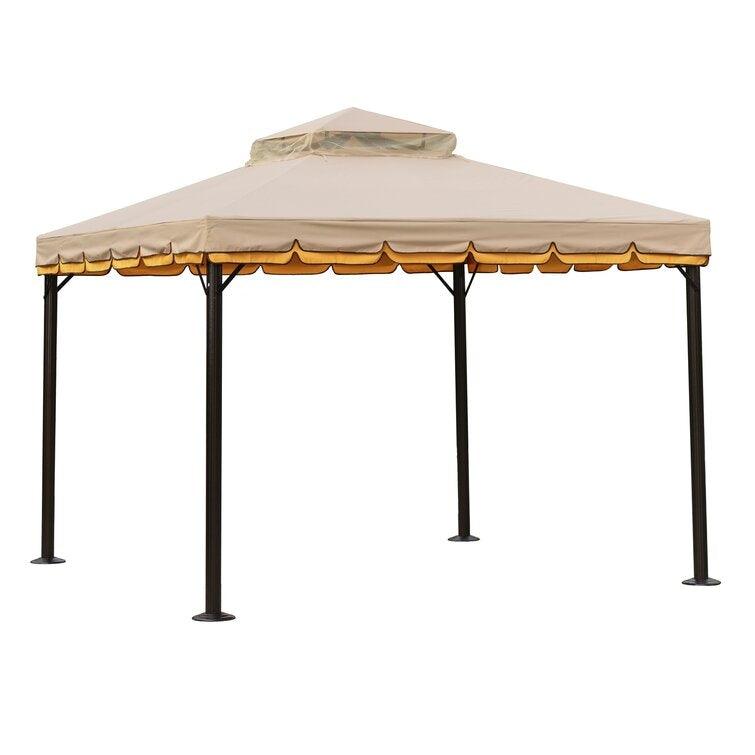
Record the peak height. Then note whether the roof is flat, peaked, vented, single-tier, or two-tier. Also record the corner shape, roof sections, vents, and any unusual geometry. A nominal size such as 10 by 10 or 12 by 12 does not capture these details, and they can determine which replacement part fits.
Write down every attachment detail
Note any straps, hooks, grommets, clips, curtain tracks, or other attachment points on the old part or frame. Photograph the layout and label your measurements so you can compare them directly with a manual, product listing, or support response.
Identify the Model, Roof Configuration, and Part Record
Your measurements are useful only when matched to the correct model and part record. Gather that information before comparing products.
Model-Identification Checklist
- Original records: model name or number, manual, receipt, order history, or original listing
- Configuration: roof construction, number of tiers, vents, panel or canopy layout, corner shape, and attachment method
- Measurements: outside width, outside length, peak height, and clear photos of the roof and attachment points
- Part reference: SKU or replacement-part number, if available
Known Model Versus Unknown or Modified Gazebo
If you have a known model and matching records, compare specific replacement categories after the frame and measurements check out. If the gazebo is unidentified, modified, attached to another structure, or wall-mounted, treat it as a support-verification case rather than a straightforward generic-size purchase. A nominal footprint alone does not prove compatibility, so confirm the match with support before ordering.
Choose the Correct Part or Replacement Path
After diagnosis, use your frame inspection, measurements, and model record to choose an individual part, a replacement-kit path, or support.
If the structure needs full replacement or no verified part record matches it, stop selecting an individual roof part. Route the case to support for a replacement-kit or full-structure assessment. Use that path for a structure-replacement need, not as a generic upgrade.
Use a protection category for a sound structure
If the frame and roof are both sound and you want off-season protection, a cover is the right purchase. It protects the gazebo; it does not fix a canopy or panel that has already failed.
Match a canopy, panel, or accessory to the diagnosis
If you've identified fabric-roof wear on a sound frame, compare your model, roof construction, measurements, and attachment details with our canopy for metal gazebo listing. The current listing states UV protection, rain protection, SKU PJGZ00124, and available sizes of 10' × 10', 10' × 12', 10' × 13', 11' × 11', 12' × 12', and 10' × 20'. These details do not establish a universal fit, so verify the match before ordering. For curtains, netting, mosquito netting, or clips, browse our gazebo replacement parts collection. Check each listing's size and configuration before ordering.
Know when the next step is support
If your gazebo is unidentified, modified, or does not clearly match an available listing, contact support instead of guessing from a generic size.
Use a gazebo cover to protect a sound structure, a verified roof or canopy part for roof wear, and qualified repair guidance or a replacement assessment for structural damage. Inspect, measure, identify, compare, then order or contact support.
FAQ
Do I Need a Cover for My Gazebo?
A cover protects a sound gazebo during storage or off-season exposure. It is not a substitute for fixing a torn canopy or damaged panel, so inspect the frame before buying one.
Can I Replace a Gazebo Roof?
You can often replace a fabric canopy when the frame underneath is sound. A rigid roof panel must match the model, panel layout, and attachment points. If the frame is damaged, stop treating the job as a routine roof-part purchase and have the structure assessed.
How Do I Measure for a Gazebo Cover or Replacement Part?
Measure the frame, not old or stretched fabric. Record the outside width, outside length, peak height, roof shape or tiers, and attachment details in inches or feet. Then compare that record with the model and listing you're considering.
Can I Use a Cover on a Damaged Gazebo Roof?
Don't use a cover to hide or work around a damaged roof or unstable frame. Classify the roof damage first and confirm that the supporting structure is sound. If it isn't, pause and get qualified guidance before covering anything.