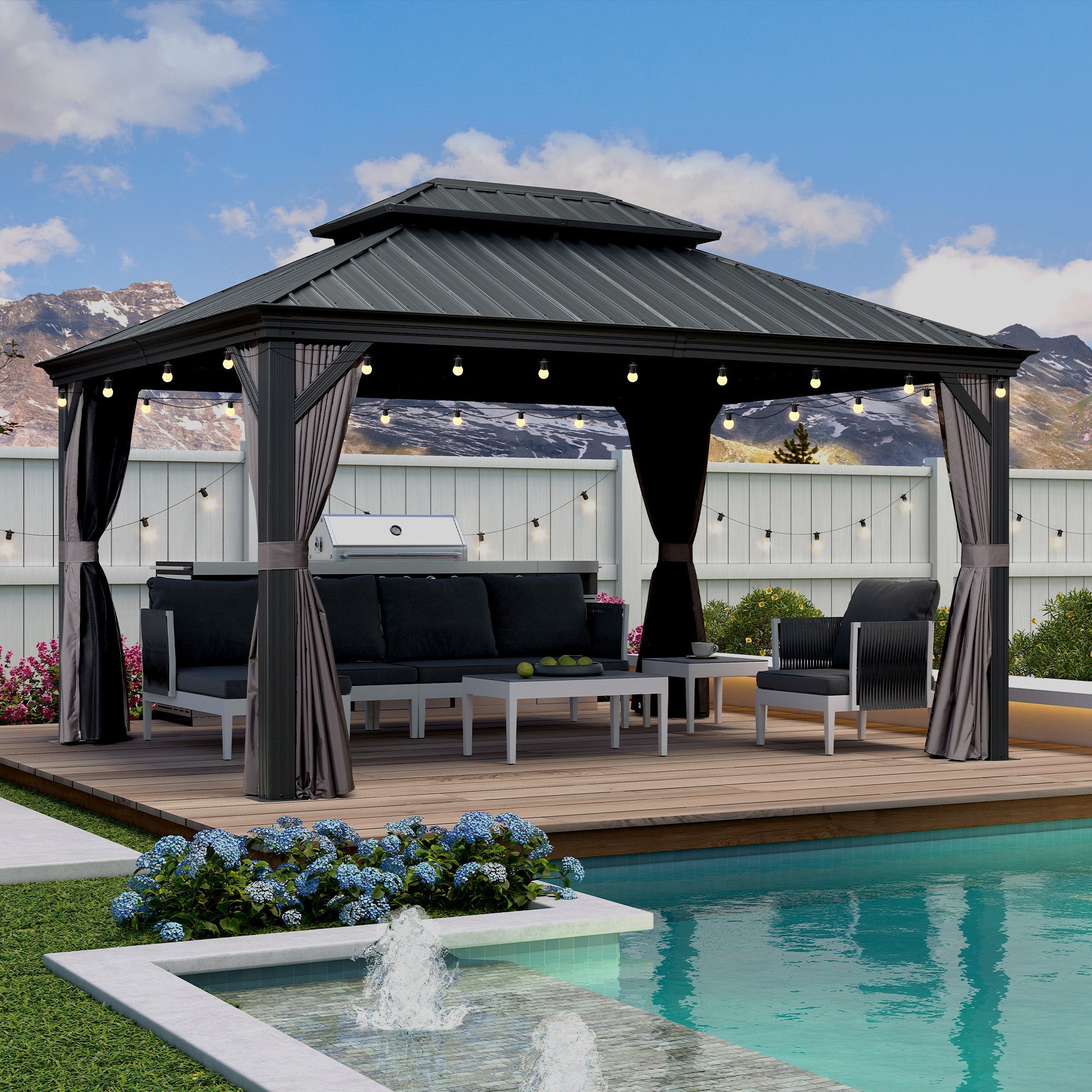
A hardtop gazebo leak is usually easier to solve once you separate normal drainage from true intrusion. If water is running through the designed path and out of the posts, that is not the same as a leak. The real question is where the water appears, whether it starts after wind or heavy rain, and which joint, fastener, or channel it follows.

How Hardtop Gazebo Drainage Is Supposed to Work
Many hardtop gazebos are built to move rainwater through frame channels and then out through the support poles, so the roof does not shed water randomly over every edge. That means some visible runoff can be part of the design, not a failure. The line you want to watch is simple: if water is traveling where the system is meant to send it, that is drainage; if it is getting inside the structure or onto surfaces the system should protect, that is a leak. how the drainage path works
A good first check is to trace the water right after rain or during a controlled hose test. Look at the roof panels, the seams, the gutter or channel path, and the pole exits. If the water only appears at the intended exit points, the system is probably doing its job. If it shows up under a panel edge, around a fastener, or inside the seating area, start treating it as a leak problem rather than normal runoff.

For buyers, this is the first filter: prefer models that explain how water exits the roof, not just models that say "all weather." A clear drainage path is more useful than a vague claim.
Find the Leak Point First
The fastest way to stop a hardtop gazebo leak is to match the drip location to the most likely source. The point where water lands is not always the point where it enters, so do not seal the first spot you see without checking the path above it.
Roof Panel Seams
Linear drips, damp streaks, or repeated wet lines under an overlap usually point to a seam issue. That can come from misalignment, a gap at the joint, or a seal that is no longer holding. Inspect the seam while it is wet, because dried surfaces can hide the track the water followed.
Gutters and Drain Channels
If water spills from one edge, backs up at one end, or pools before it exits, the problem may be overflow or blockage rather than a bad roof panel. Leaves, debris, or a section that sits out of line can send water where it should not go. In many cases, the clue is edge spill rather than center-panel dripping.
Fasteners, Edges, and Flashing
Fasteners deserve a close look because they are a common leak source. The fastener leak clues are usually simple: loose hardware, damaged washers, over-tightened screws, or staining around the screw head. The washer should seal, but if it is crushed or split, tightening more can make the problem worse. Edges, corner trims, and transitions between parts can also leak when alignment is off.
Interior Drips Versus Exterior Runoff
Not every drip outside the roof line is a failure. Some runoff is supposed to leave the structure at the edges or through the posts. A true leak is water reaching the underside of the roof, the inside seating area, or furniture and flooring that should stay dry. That distinction keeps you from repairing a normal drainage point instead of the real intrusion source.
Common Causes Behind Roof Leaks
A hardtop gazebo can look properly assembled and still leak in the right storm conditions. Wind-driven rain can push water into narrow gaps, and capillary action can pull moisture through seams that look fine in light rain. wind-driven rain and capillary intrusion
Here are the most likely cause categories and the clue that usually points to each one:
- Wind-driven rain: The gazebo is fine in a light shower but leaks when rain comes sideways or the storm is stronger.
- Capillary intrusion: Water shows up along a seam or overlap even though the panels appear aligned.
- Blocked drainage: Water spills from one side, backs up in a channel, or exits more slowly than the other side.
- Fastener issues: You see drips around screws, washers, or trim lines rather than in the middle of a panel.
- Seal failure: A leak returns in the same spot after rain, especially at a lap or joint.
- Wear or damage: A bent part, missing piece, or cracked washer creates a repeat drip that does not respond to simple tightening.
The practical split is this: blocked drainage and loose hardware are often owner-fixable, while repeated seam failure or a damaged part may point to a fit or replacement issue. Storm-only leaks are especially useful clues, because they often reveal a weak point that calm weather never exposed.
If you want a broader maintenance pass after the leak is handled, the annual inspection checklist is a useful next step.
Fixes That Usually Stop Leaks
Start with the least invasive repair order. Cleaning and inspection come first, because sealing over debris or tightening blindly can trap water or damage a washer.
- Clean the roof, channels, and seams. Remove leaves, dirt, and any buildup that could block the intended drainage path.
- Recheck the exact leak location. Confirm whether the drip starts at a seam, fastener, edge, or overflow point.
- Inspect alignment. Make sure panels, trims, and corner pieces sit where they should.
- Tighten hardware carefully. The goal is a sealed washer, not a crushed washer.
- Use the right seam product. For metal laps and seams, the metal seam sealant choice matters; the cited guidance favors high-performance butyl tape or tri-polymer sealants over standard silicone for this kind of repair.
- Prep the surface before resealing. Clean, dry surfaces hold repair materials better than dusty or damp ones, so surface prep is part of the fix, not an extra step.
- Retest after the repair. Use rain or a controlled water check to see whether the same spot still leaks.
- Stop if the leak repeats unchanged. If the same seam or fastener still leaks after a careful repair, move to parts or support instead of layering on more sealant.
The repair rule is simple: seam problems get seam repairs, fastener problems get fastener checks, and blocked drainage gets cleared drainage. Generic caulk is not the default answer for every leak.
Prevention Checks for the Next Storm
Once the immediate leak is under control, repeat-prevention comes down to rhythm. Before storm season, clear channels and roof edges, then check visible fasteners and confirm the gazebo sits level enough for water to move through the planned exit path. After a heavy rain, note any fresh stains, drips, or pooling and dry the area so small issues do not turn into corrosion or mildew.
For buyers, the prevention filter is just as important as the fix. Look for clear drainage details, accessible assembly guidance, and support or parts visibility before you buy. A model that explains its drainage path is easier to maintain than one that relies on vague weatherproof language.
When a Leak Needs Replacement or Support
If water keeps showing up in the same place after proper cleaning, tightening, and resealing, the problem may be a fit issue, a damaged part, or a component that needs replacement. Sudden or severe intrusion after correct installation deserves escalation sooner rather than later. Before contacting support, take photos of the leak location, the surrounding hardware, and any fresh staining so you can show the pattern instead of just describing it.
If you are still comparing options, start with drainage design and serviceability rather than marketing copy. A clear exit path and accessible support are better buying signals than a blanket claim about being all-weather. For shoppers narrowing size and layout, 10x10 gazebo options are a practical place to compare models by footprint and drainage setup.
Final Takeaway
Most hardtop gazebo leak problems come down to a small number of checks: drainage path, seam condition, fastener fit, and overflow. Once you know where the water starts, the repair gets much simpler. If you are still deciding on a model, compare drainage details and support access first. If the same leak returns after a careful fix, contact support with photos and notes so the next step is based on evidence, not guesswork.
FAQs
Why Does My Hardtop Gazebo Leak in Heavy Rain?
Heavy rain can expose a weak point that light rain never reaches. Wind-driven rain may push water into seams, and stronger flow can overwhelm a blocked channel or a loose fastener. If the leak only appears in storms, trace the exact drip point first, then check whether the issue is seam, overflow, or fastener related.
Can a Hardtop Gazebo Be Water-Resistant but Not Fully Waterproof?
Yes, and that difference matters. Water-resistant or drainage-designed does not mean every storm stays out, and "waterproof" claims should be treated carefully unless the model details support them. The useful check is not the label alone, but how the roof routes water and whether the design leaves any intended exit points.
What Should I Check First If Water Drips From the Roof?
Start with the drip location, then inspect the seam, fastener line, or edge directly above it. Clear any debris from the drainage path, retest with rain or a hose, and only then reseal the confirmed source. That order avoids patching the wrong spot.
Can a Clogged Gutter Cause a Gazebo Leak?
Yes. A blockage or overflow can push water back toward seams and edges, which can look like a roof leak even when the panel itself is intact. If water spills from one side or backs up before exiting, clean the channel first and retest before you touch the seams.
How Often Should I Inspect Hardtop Gazebo Seals and Fasteners?
A seasonal check is a good baseline, with extra inspection after major storms. Focus on visible washers, screws, seams, and the drainage path before and after heavy weather. If the same spot keeps staining or dripping, inspect it sooner rather than waiting for the next routine check.