Choose gazebo curtains, mesh screens, solid panels, or open sides based on your main use and what your exact gazebo frame can support.

There is no single right answer for every backyard. The best fit depends on how you actually use the gazebo, whether it sits on a deck or a patio slab, and what your exact frame can support. Once you know your dominant use, you can match it to an enclosure level, then confirm fit and weather handling before you order anything.
Which Gazebo Enclosure Is Right for You?
Every enclosure option trades some airflow or access for more privacy, insect control, or permanence. Use the table to see where each option lands before you narrow down to one.
| Enclosure option | Privacy / enclosure level | Airflow | Insect boundary | Rain-side separation | Access / ease of use | Storage and permanence |
|---|---|---|---|---|---|---|
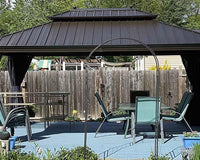
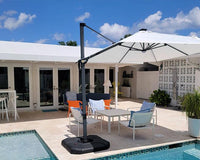
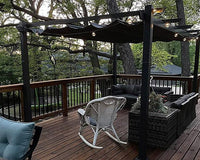
| Open sides | None | Highest | None | None | Easiest, no side material | No storage needed; least permanent |
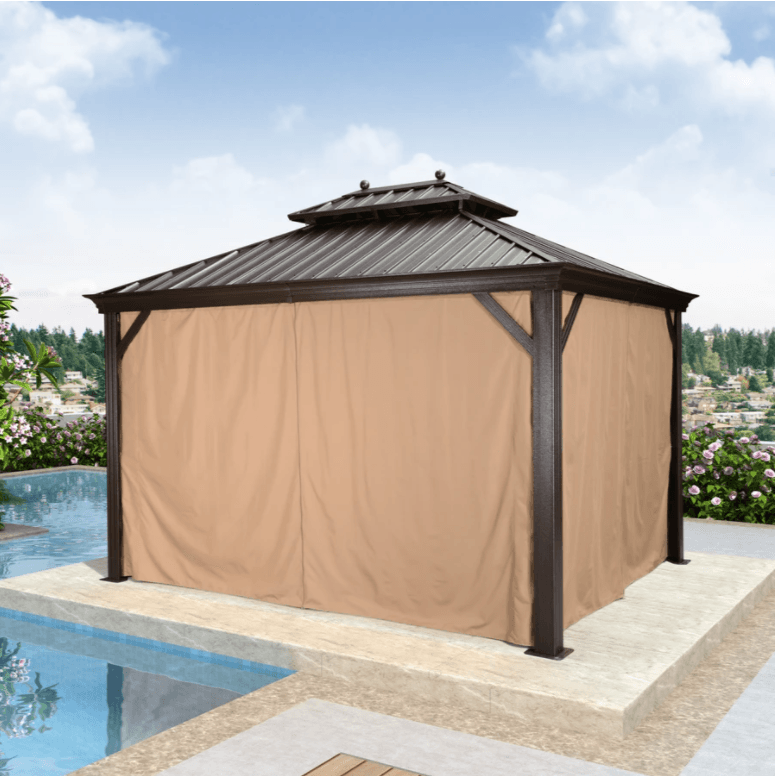
| Gazebo curtains | Adjustable | Moderate, depends on position | Not a substitute for netting | Conditional, per instructions | Open, tie back, or close as needed | Seasonal removal and storage possible |
| Mesh screens | Low to moderate (see-through) | Good, screen allows airflow | Insect-focused boundary | Limited | Retractable or fixed, per product | Often removable for cleaning or storage |
| Solid panels | Highest, fixed | Lower, more enclosed | Depends on seams and fit | Conditional side separation; depends on seams, fit, installation, and instructions | Least flexible once installed | Most permanent, least seasonal flexibility |
Use this quick split once you know your priority:
- Open sides: pick this when airflow, visibility, and easy walk-in access matter more than privacy or bugs.
- Mesh screens: pick this when insects are the real problem but you still want a breezy, open-air feel.
- Curtains: pick this when your privacy needs change by time of day or season and you want to open or close the sides at will.
- Solid panels: pick this only when a fixed, more private enclosure is the goal and your structure is designed to carry them.
Match the Enclosure to Your Main Use
Your dominant use case, not the product photos, should decide which enclosure level you pick. The scenarios below cover the most common reasons people add anything to a gazebo's sides.
For Privacy That Changes During the Day
Curtains work best when you want an open view during the day and more seclusion in the evening. You can tie them back for a family lunch and close them once the neighbors' patio lights come on. If you read our tips for adding privacy to a gazebo, you'll notice curtains are usually the flexible starting point rather than the final answer.
Solid panels only make sense here if fixed separation matters more than flexibility and your frame is rated to carry them. Don't retrofit panels onto a structure that was never designed for that load just because the side dimensions look close enough.
For Mosquitoes and Outdoor Meals
Mesh screens are the right call when insect control is the actual goal and you still want the space to feel open. Public health guidance on mosquito prevention notes that screens on windows and doors help keep mosquitoes outdoors. For a gazebo, treat that as a general screening principle, not a guarantee for every screen setup; an intact, properly fitted boundary still matters.
Curtains alone are not a mosquito solution unless the product specifically combines netting with the fabric. Don't assume a privacy curtain doubles as insect protection.
For Maximum Airflow and Access
Sometimes the best enclosure is no enclosure at all. If the gazebo mainly hosts dinners on hot evenings, or sits over a grill where smoke needs somewhere to go, open sides keep air moving and let people walk in and out freely. Open sides are a legitimate long-term choice, not a placeholder until you "finish" the space.
For Rain Relief or Seasonal Flexibility
Adjustable curtains can help with light, wind-driven rain along the sides, but only when your exact structure and the accessory's own instructions support that use. Don't treat any side covering as a substitute for a solid roof or as proof the gazebo is now weatherproof.
If your main goal is seasonal flexibility, a removable or retractable option beats anything fixed. You can take curtains or screens down for winter storage and put them back up once the patio season starts again.
Check Compatibility and Weather Limits Before Ordering
Confirm fit and weather handling before you compare colors or add anything to your cart. Skipping this step is the most common reason an enclosure accessory ends up unused in a garage.
Verify the Frame and Attachment System
- Write down your gazebo's exact model or SKU, not just a nominal size like 10 by 10 or 12 by 12.
- Measure the frame at the actual attachment points, since posts and beams vary even among similar-looking sizes.
- Match that measurement against the product's stated compatibility or size list.
- Identify the attachment method: rail, hook-and-loop straps, grommets, or another fastener the manufacturer specifies.
Protect Access and Installation Practicality
Check where the doors, main walkway, and furniture sit before you commit to an enclosure. A curtain or screen that blocks the usual entry path, or that catches on outdoor furniture every time someone opens it, will get left open out of habit. If your gazebo sits on a deck, confirm there's enough clearance for the panel or curtain track without interfering with railings or steps.
Never assume a solid-panel retrofit is approved just because the side dimensions look similar to a listed size. Confirm with the structure's manufacturer that the frame is designed to carry that added weight and wind load.
Read the Weather-Use Instructions
No enclosure material, on its own, makes a gazebo storm-proof. Follow the structure and enclosure manufacturer's instructions for using, tying back, removing, and storing panels or curtains in wind, rain, or snow. Our guide on securing gazebo curtains outdoors walks through practical tie-down steps, but the manufacturer's own limits still come first whenever the two disagree.
Plan Access, Upkeep, and Seasonal Storage
Each enclosure level comes with a different amount of ongoing work, separate from how well it fits your main use case.
Open Sides Have the Lowest Ownership Burden
There's no side material to remove, clean, dry, or store because there isn't any. The tradeoff is what you already know: no added privacy, no insect boundary, and no side rain separation.
Curtains and Screens Need Seasonal Handling
Plan on opening, tying back, taking down, and storing curtains or screens when the product instructions or the season calls for it. Before you reinstall either one, make sure it's fully dry and that the attachment points and walkway are clear and ready to use. Give the fabric or mesh a quick check for holes, loose ties, or worn hardware first.
Solid Panels Favor Permanence Over Flexibility
Solid panels trade seasonal removal for routine surface and attachment checks instead. Confirm the fixed setup still leaves you the entry point, ventilation, and future flexibility you actually want, since panels are far less forgiving to reposition or remove later than fabric or mesh.
Review Purple Leaf Options After Choosing the Enclosure Type
Once you've matched a scenario to an enclosure level and confirmed fit, here's where to look next among our current gazebo accessories.
For Specified 10' x 10' or 10' x 12' Purple Leaf Frames
If your frame matches one of the listed compatible SKUs, our 10' x 10' / 10' x 12' privacy curtain blocks UV rays and wind while adding shade and seclusion. Check your gazebo's exact SKU against the listed compatible models before ordering, since this curtain is built for that specific frame family rather than every 10 by 10 gazebo on the market.
For Adjustable Privacy Across Listed Hardtop Sizes
Our hardtop gazebo privacy curtain covers a wider range of listed hardtop dimensions and comes in beige, navy, grey, and black. It's a good review path when adjustable privacy is your goal and one of the listed sizes matches your frame, but confirm the exact size and attachment style before you buy rather than assuming fit from dimensions alone.
For the Listed 12' x 20' Mosquito-Netting Configuration
If you need both insect separation and privacy in one setup, our 12' x 20' mosquito net and curtain is built specifically for that double-roof hardtop configuration. Confirm your exact gazebo model and parts list before ordering, since this combination is designed for that specific 12 x 20 setup rather than as a universal accessory.
Once your enclosure level and exact frame match up, review the linked product page for your size and confirm fit before adding it to your cart.
Choose the least enclosed option that solves your main problem: open sides for airflow and access, mesh for insect-focused use, curtains for adjustable privacy, or solid panels for fixed separation after structure confirmation. We invite you to review the matching Purple Leaf option above only after the exact model, size, and attachment system match your gazebo.
FAQs
Are Gazebo Curtains Worth It?
Curtains are worth it when you want privacy that changes through the day and you're fine with occasional handling, drying, and seasonal storage. If you mainly need insect control or maximum airflow, a mesh screen or open sides usually serves you better than curtains alone.
Should Gazebo Curtains Be Open or Closed?
Open them when you want airflow, visibility, or easy access, and close them when privacy or side separation matters more at that moment. Whichever position you choose, follow the product's weather instructions for tying back or securing the fabric in wind.
Which Enclosure Approach Is Best for a Gazebo?
Open sides suit maximum airflow and access, mesh screens suit insect-focused use, curtains suit privacy needs that change, and solid panels suit a fixed, more private setup once your structure is confirmed to support them. Match the option to your dominant use rather than picking the most enclosed option by default.
How Wind-Resistant Are Gazebo Curtains, Screens, and Solid Panels?
There's no universal wind rating or storm-proof claim that applies across every gazebo and enclosure combination. Check your exact structure and enclosure manufacturer's instructions for attachment, tie-back, removal, and storage before relying on any option in high wind.
How Do You Maintain Gazebo Curtains, Mesh Screens, and Solid Panels?
Curtains generally need periodic cleaning and full drying before storage. Mesh screens need a check for holes or gaps that could let insects through. Solid panels need routine surface and attachment checks rather than seasonal removal. Follow the specific product instructions for each material.