Cast aluminum patio furniture dining sets are the lower-rust-risk starting point for direct salt air, because the base metal does not develop the iron-based red rust that wrought iron can. Wrought iron may still be the better starting point when comparable design mass matters most against wind lift. Neither material is a universal winner, and the exact product's finish, weight, and dimensions can override the material default.
Key Takeaways
- Cast aluminum avoids iron-based red rust, but its finish, joints, and hardware still need to hold up in salt air.
- Wrought iron's greater density can help resist wind lift in a comparably sized design, but exact weight, footprint, and anchoring guidance decide real-world stability.
- No retained evidence ranks either metal as reliably cooler; shade, cushions, tabletop finish, and airflow drive practical comfort more than the frame material.
- Finish quality, exposed hardware, and documented care instructions matter more than the base metal when predicting how a set will hold up near the coast.
- Classify your site's salt exposure, wind exposure, and sun exposure first, then verify the exact product's specifications before you buy.
Cast Aluminum vs Wrought Iron: Which Fits Your Site?
Start with the table below to see where each material tends to have an edge and where the material label stops being enough on its own. These are tendencies for typical dining-set designs, not guaranteed performance for every product.
| Decision factor | Cast aluminum | Wrought iron | What changes the purchase decision |
|---|---|---|---|
| Corrosion starting point | No iron-based red rust | Iron-based; depends on coating | Confirm finish quality and exposed hardware |
| Relative mass and wind lift | Lighter; more prone to lift in comparable designs | Denser; can resist lift in comparable designs | Exact weight, footprint, and anchoring specs |
| Heat comfort evidence | No universal ranking established | No universal ranking established | Shade, cushions, tabletop finish, and airflow |
| Finish dependence | Powder coat and joint quality drive longevity | Coating condition drives rust exposure | Documented coating type and repair process |
| Maintenance focus | Watch chips, joints, and drainage | Watch coating wear and rust spots | Compare care instructions and warranty terms |
A direct marine location with frequent salt spray pushes toward the lower-rust-risk metal first. A wind-exposed rooftop or open deck pushes weight and anchoring guidance to the front of the checklist. A shaded, sheltered patio makes finish quality and comfort details more important than either concern.
Corrosion and Rust in Salt Air
Base metal chemistry sets the starting risk, but finish condition and hardware decide the real outcome for either material. Salt residue, humidity, and wet-dry cycles put pressure on any exposed metal, coated or not.
Cast Aluminum Base Metal
Cast aluminum does not rust the way iron-based metals do, because it lacks the iron content that produces red rust. That is a real advantage for salt-air exposure, but it is not the same as corrosion immunity. Aluminum can still pit, oxidize at scratches, or suffer coating failure where chips expose bare metal, especially near fasteners, welds, or dissimilar-metal contact points. Buyers should treat "avoids red rust" as a starting advantage, not a guarantee that every coated joint or hardware point will hold up indefinitely in direct marine air.
Wrought Iron and Exposed Iron
Wrought iron is iron-based, so any point where the coating thins, chips, or wears through is exposed to the same humidity and salinity that drive corrosion generally. That does not mean every wrought-iron set rusts quickly. It means the coating's quality, thickness, and touch-up process carry more of the long-term outcome than the underlying metal alone. A wrought-iron set with a well-documented, maintained coating can perform acceptably in humid conditions; one with unclear finish specifications is a bigger unknown near the coast.

Weight, Wind Lift, and Stability
Wrought iron's higher density gives it a mass advantage over cast aluminum in a comparably sized design, which can make it more resistant to wind lift. That relative tendency does not tell you whether a specific dining set is stable on your patio, deck, or rooftop.
Why Density Helps, but Does Not Decide the Purchase
A denser material adds resistance to being pushed or lifted by wind, all else equal. But "all else equal" rarely holds between two different products: table size, leg design, chair weight, and how the set is placed all change the real outcome. A heavy wrought-iron set with a large tabletop and no anchoring hardware can still be unstable in an exposed spot, while a lighter aluminum set that is properly secured on level ground can perform fine in moderate wind. For exposed or storm-prone sites, treat the material label as a starting tendency only and verify the patio stability checks that cover assembly, level ground, and hardware condition before placing furniture outdoors.
The Product Checks That Matter
- Exact total weight for the configuration you're buying, since chair count and table size change the number.
- Footprint and tabletop dimensions, because a larger surface area catches more wind.
- Any anchoring or securing instructions the manufacturer provides for outdoor use.
- Stated severe-weather limitations, such as guidance to store or secure furniture during high winds.
- Level, stable ground and correct assembly, since a wobble on uneven pavers changes how the set behaves in gusts.
Heat Retention and Outdoor Dining Comfort
There is no reliable evidence ranking cast aluminum and wrought iron by surface temperature or heat retention for outdoor dining use. Comfort in direct sun depends more on shade, color, cushions, and tabletop construction than on which of these two metals frames the set.
Why the Material Label Is Not Enough
Both metals can get hot in direct, prolonged sun exposure, and neither is documented as reliably cooler than the other for dining furniture. Seating comfort depends heavily on cushion thickness, fabric breathability, and whether the seat is shaded during peak sun hours. Tabletop comfort depends on the surface finish and whether it is glass, stone-look composite, or bare coated metal. Treat frame material as one factor among several, not the deciding one, when comfort in full sun is the priority.
A Better Sunny-Patio Selector
- Direct sun exposure: prioritize a shaded layout or an umbrella-compatible table before worrying about frame metal.
- Seating comfort: check cushion thickness, fabric type, and whether the design allows airflow underneath.
- Tabletop comfort: check the surface finish and construction, since a textured or coated top handles contact heat differently than bare metal.
- Color and placement: a lighter surface color and a partly shaded spot reduce heat buildup regardless of base metal.
For more on which seating materials tend to stay cooler in direct afternoon sun, our related guide on cooler outdoor seating covers color, mesh, and airflow choices that apply to dining chairs as well as stools.
Finish Durability and Maintenance
Finish quality and maintenance habits matter more for long-term coastal performance than the base metal alone, because both materials rely on their coating to resist salt and moisture damage over time.

- Coating disclosure: Favor a set with a clearly named coating type (such as powder coating) over vague "weather-resistant" language, since the coating is what actually meets the salt air.
- Exposed hardware and joints: Check whether fasteners, hinges, and welds are protected or left bare, since these points fail first regardless of frame material.
- Cleaning and drying instructions: Follow the manufacturer's guidance for rinsing off salt residue and letting the set dry fully, rather than assuming any finish is maintenance-free.
- Touch-up and warranty limits: Compare what the warranty excludes for corrosion or coastal exposure, and confirm whether a touch-up product or process is available for small chips.
What to Verify Before Buying a Coastal Dining Set
Classify your site first, then confirm the exact product's specifications before you order, since the right verification depends on which risk dominates your space.
Run the Site Check First
- Classify your exposure: direct salt-air contact (oceanfront, boardwalk-adjacent) versus humid inland air without regular salt spray.
- Classify your placement: sheltered patio versus a wind-exposed deck, balcony, or rooftop.
- Note whether direct sun makes seating and tabletop comfort a bigger concern than corrosion or wind.
Then Verify the Listing
- Confirm the frame material and the named coating or finish system, not just a general "weather-resistant" claim.
- Record the exact configuration's total weight and dimensions, since these change with chair count and table size.
- Look for securing or anchoring guidance if your site is wind-exposed.
- Check cushion fabric, thickness, and tabletop construction if comfort in full sun matters to you.
- Read the care instructions, warranty exclusions, shipping and return terms, and any stated weather limitations.
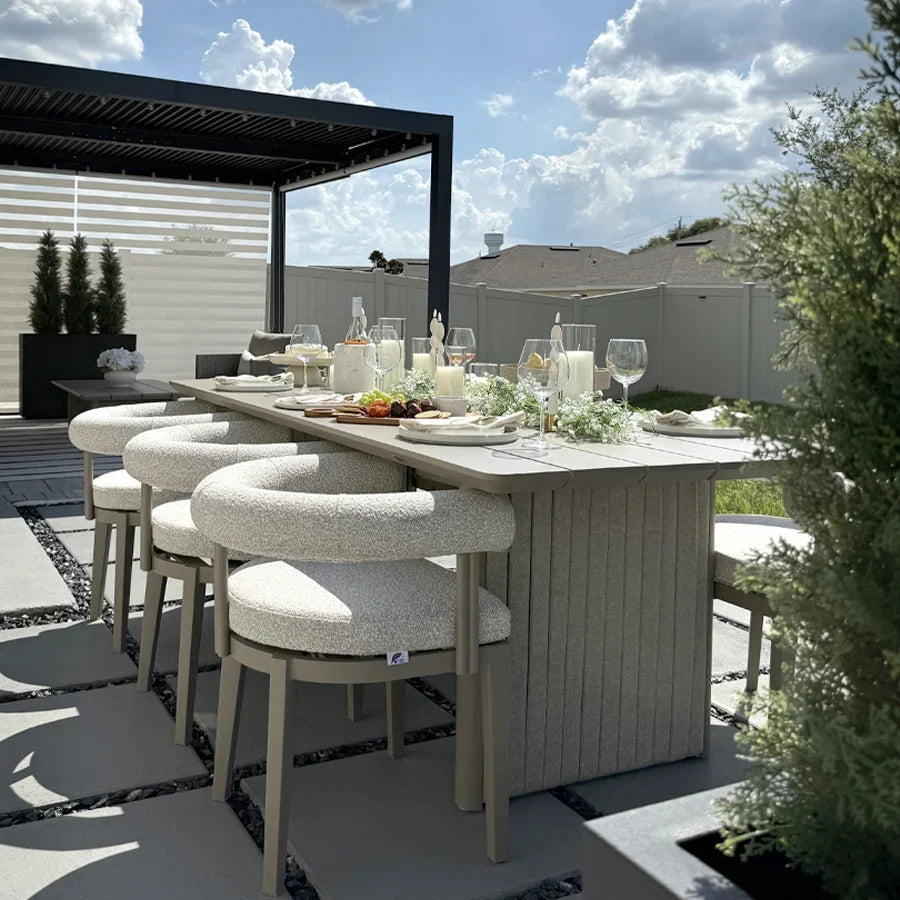
As one documented aluminum example, the PURPLE LEAF Provence set lists a powder-coated aluminum frame, Olefin cushions, and a 1.57-inch tabletop with size options; use its product page the same way you would any candidate, checking dimensions and care details against your own site rather than assuming coastal or wind performance from the listing alone. If you are comparing a wrought-iron alternative, request the same fields (weight, dimensions, coating type, and anchoring guidance) so the comparison is apples to apples.
FAQs
Does cast aluminum rust near the ocean?
Cast aluminum does not develop iron-based red rust the way wrought iron can, which is why it is a common starting point for salt-air furniture. It is not immune to all corrosion or finish damage, though. Check the coating quality, exposed hardware, and joints before assuming a listing will hold up indefinitely in direct salt exposure.
Is wrought iron the safest choice for a windy coastal patio?
Greater mass can reduce a design's tendency to lift in wind, but that is not the same as a safety rating for a specific set. Stability depends on the exact weight, tabletop size, footprint, and whether the manufacturer provides anchoring or securing guidance. For exposed or storm-prone sites, verify those manufacturer limitations before relying on material weight alone.
How should I care for metal patio furniture in salt air?
Follow the product's specific care instructions rather than a generic cleaning routine. Typically this means rinsing off salt residue, letting the set dry fully rather than leaving moisture trapped in joints, inspecting for chips or exposed hardware, and using only the touch-up or cleaning products the manufacturer approves for that finish.
What should I prioritize if my dining set sits in full sun?
Prioritize shade, cushion fabric and thickness, tabletop surface finish, and airflow, since no reliable evidence ranks cast aluminum and wrought iron by heat retention for dining furniture. Compare those documented comfort features across the products you're considering before letting frame material decide the choice.