On a freestanding patio swing with canopy, three separate systems do three separate jobs: canopy tilt aims shade, venting manages airflow, and frame-to-ground anchoring resists wind lift. Tilting the canopy toward the sun does not make the frame more wind-resistant, and a vented canopy is not automatically safer in a gust. The swing's own manual, not the canopy's position, decides how much wind the frame can handle.
Key Takeaways
- Canopy tilt aims shade only; it does not add wind resistance to the frame.
- Venting may change airflow around the canopy, but that effect depends on design and is not a windproofing guarantee.
- Ground anchoring must match your exact swing model and surface, so follow the manual instead of improvising hardware.
- Stop using the canopy and secure or remove it as your manual directs when it becomes unstable or forecast winds exceed its limits.
Start with the three controls: shade, airflow, and restraint
A canopy's roof area catches wind the same way a sail does, and that force does not stay in the fabric. It travels down through the posts into the base connections and whatever the frame sits on, which explains why canopy wind uplift can load post and base connections even on a small backyard structure. Tilting the canopy changes where shade falls, but it does not change that load path.
Venting works on a separate problem: it can let some air pass through the canopy instead of pushing against it, but whether that meaningfully reduces lift depends on the vent's size, placement, and the surrounding frame. Ground anchoring is the only control that actually resists lift, and it only works when it matches your swing's designed attachment points and your installation surface. Treat these as three independent jobs rather than one setting that fixes everything.
Adjust canopy tilt for sun, not as a wind rating
Tilt is a shade tool. Use it to track the sun, then check the frame and restraint separately if wind picks up.
Change shade as the sun moves
- Find where direct sun or glare reaches the seat and note which side of the canopy needs to move.
- Use only the tilt or repositioning method built into your swing, adjusting it gradually rather than forcing it.
- Confirm the canopy is locked or seated in its new position before sitting down, following the fit and feel described in your manual.
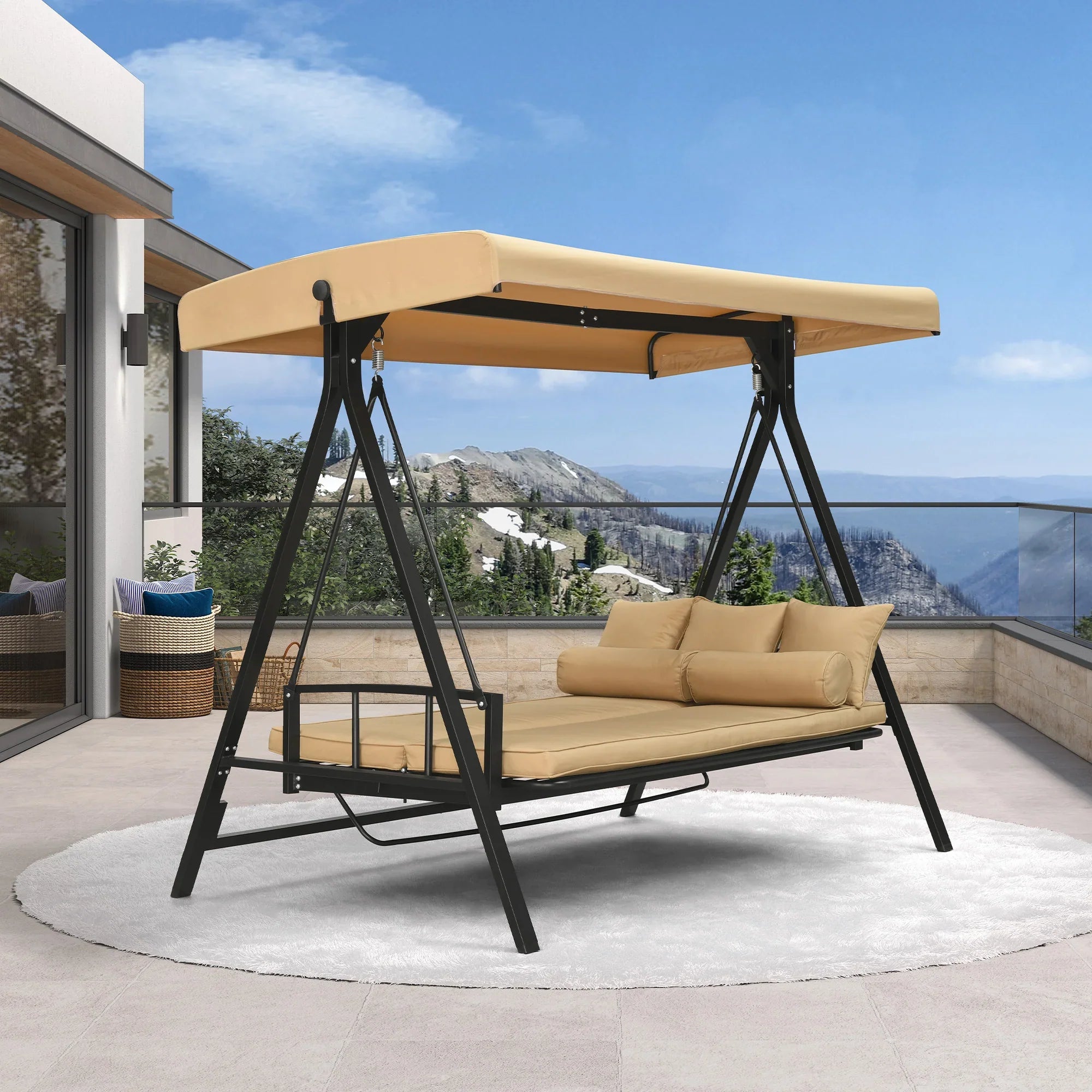
Some freestanding models, including our adjustable tilt canopy swing, let you angle the canopy through a range of positions as the sun moves across the day.
Recheck the frame separately
A better shade angle is not a stronger anchor. If you tilt the canopy and then notice wind, do not compensate by tilting it further one way or another; that changes coverage, not stability. Instead, go back to your model's restraint and operating instructions and confirm the frame is still secured the way it was designed to be.

Treat venting as airflow help, not wind-proofing
A vent or porous panel can change how air moves around a canopy, but it does not establish a safe wind speed for your swing. Independent wind-tunnel research on building roofs found that porous, discontinuous parapet designs reduced measured peak pressure in some configurations, but porous wind mitigation depends heavily on exact configuration and test conditions. That principle does not transfer numeric percentages from building roofs to a canopy patio swing, and it does not mean every canopy labeled "vented" behaves the same way.
In practice, this means you should not treat a vent as a substitute for anchoring or as permission to leave the canopy up in conditions your manual advises against. If your swing has vent panels, use them for airflow comfort and rely on the frame's restraint and stated operating limits for wind decisions.
Choose ground anchoring from the swing manual and surface
Ground anchoring is the control that actually resists wind lift, and it has to match your exact frame and the surface you're installing on. Confirm both before you attach anything.
Match the restraint to the surface
Concrete, a wood deck, packed soil, and pavers are not interchangeable installation conditions, even for the same swing model. Some anchoring hardware needs a solid slab to bite into, other methods need a specific deck structure, and soil-based anchors depend on how the ground is compacted. Use only the anchoring method and hardware your manual lists for your surface; if your surface isn't covered, treat that as a reason to pause and get model-specific guidance rather than substituting a similar-looking method.
Verify the installed connection
- Locate the frame's intended attachment point and confirm the anchor connects there, not to a leg or cross-brace that wasn't designed to carry the load.
- Check that the restraint is seated and aligned the way the assembly instructions show, with no visible gap or twist.
- Inspect for looseness, wobble, or any sign the anchor point itself has shifted, cracked, or pulled since installation.
Prepare for breezy days, storms, and seasonal storage
Ordinary breezes call for a quick look, not a redesign. Check that the canopy is still tilted where you left it, the restraint is still seated, and no connection looks loose before you leave the swing set up.
Sudden gusts change the calculation. Consumer product safety guidance on outdoor canopies advises following the manufacturer's anchor instructions, checking that the anchor is undamaged, staying alert for sudden wind gusts, and closing unstable canopies immediately in windy conditions. That same logic applies here: stop adjusting tilt and follow your model's securing or removal procedure the moment the canopy starts moving in ways it shouldn't.
For forecast high winds or the end of the season, use your manual's specific instructions for securing or removing the canopy rather than guessing at a safe wind speed. If the canopy becomes unstable, or your manual reaches its stated stop-use boundary, that is the point to secure or remove it, not the point to keep tilting or hoping venting will help.
Use this wind-preparation checklist before leaving the swing outside
Run through this quick check before leaving your patio swing unattended to ensure every control does its job. Completing these five steps protects both the frame and your outdoor space against unexpected shifts in wind.
- Set the canopy for shade using only the tilt or repositioning method your swing supports.
- Confirm the frame-to-ground restraint matches your exact model, attachment point, and surface instructions.
- Look over visible anchors, fasteners, canopy hardware, and frame connections for damage or looseness.
- Follow your manual's securing, removal, or stop-use procedure whenever forecast winds are high or gusts turn sudden.
- Don't rely on a vent, a tilt position, a generic tie-down, or a wind number from another product as a stand-in for your manual.
If you encounter loose ground connections or notice the frame shifting, pause and re-tighten or replace the approved restraints before sitting down.
FAQs
Can I use a beach-umbrella wind rating or 30-mph rule for a freestanding patio swing?
No. The 30-mph reference comes from beach-umbrella safety guidance, and it applies specifically to compliant umbrella anchor systems installed in sand, not to a freestanding patio swing on a deck, patio, or lawn. Those are different products, different anchor systems, and different ground conditions, so the number doesn't carry over. Use your swing's own manual to find its permitted operating conditions and its securing or removal instructions.
Can tilting the canopy reduce wind load during strong gusts?
No. Adjusting tilt is designed to aim shade across seating angles, not to relieve aerodynamic pressure from sudden gusts. Tilting an unanchored or unstable canopy into shifting winds can expose different surface angles to uplift, so follow your product manual's instructions to secure or remove the fabric when winds increase.
Does a vented canopy eliminate the need for ground anchoring?
No. While canopy vents allow some trapped air to pass through, they do not turn the structure into a windproof unit or eliminate uplift forces on the frame. Ground anchoring through approved attachment points remains essential to keep the swing base securely held to your patio or deck surface.