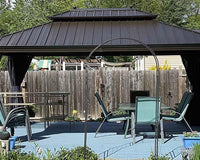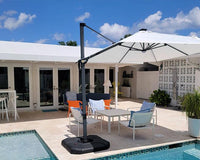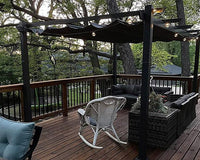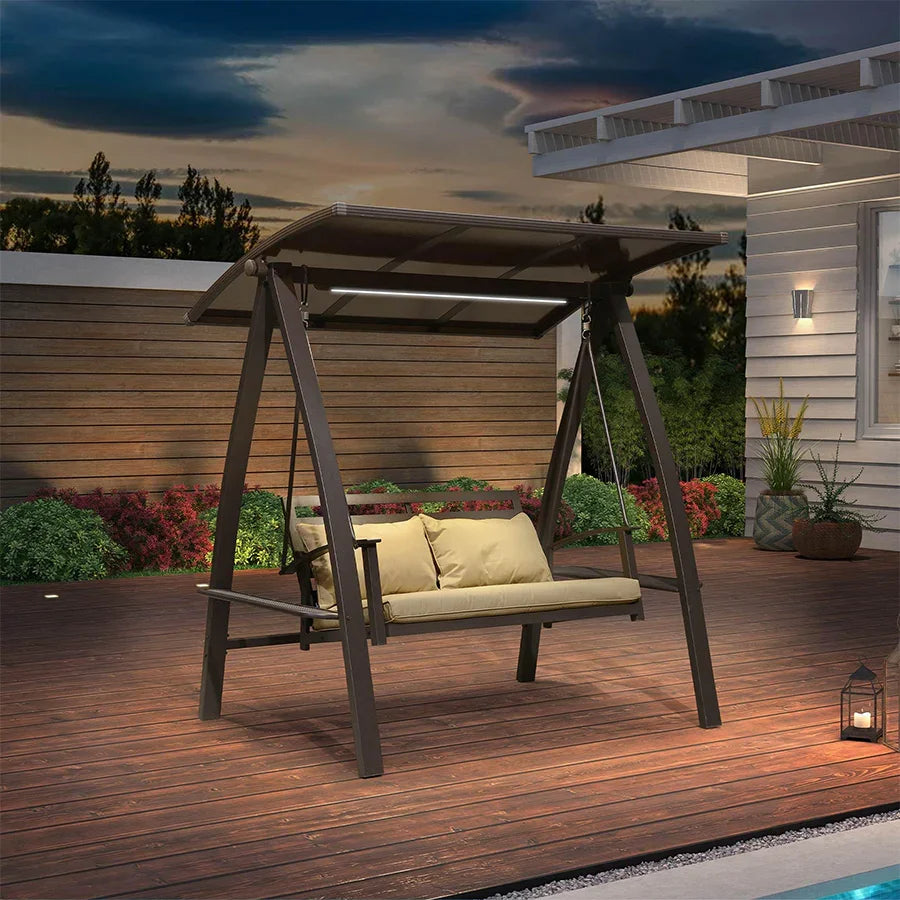
A freestanding porch swing stays safe when you match its anchor to the ground beneath it, not just to the visible surface. Start by identifying whether you're working with grass, pavers, or a deck, then follow the swing's own instructions, level every leg, and connect the frame to material that can actually resist the swing's motion. Skip the swing until that connection is confirmed and the frame passes a gradual stability test. The steps below walk through each surface, because grass, pavers, and decks each demand a different anchoring approach.

Start With the Substrate and the Swing's Instructions
The material under the surface, not the anchor's shape, decides whether an anchoring method will hold. Before you touch a drill or a mallet, read the swing's own instructions and inspect the frame, legs, and fasteners for damage or looseness.

The Consumer Product Safety Commission recommends that you follow the manufacturer's anchoring instructions and place freestanding equipment on level ground before use. That same guidance applies here: level the frame first, then choose the anchor route that matches your actual surface.
| Surface | What must support the attachment | Safest supported route | Verification before use | Key limitation |
|---|---|---|---|---|
| Grass or soil | The soil itself, once confirmed firm and stable | Manufacturer-approved ground anchors, installed after a utility locate | Frame sits level with all legs firmly seated | No universal soil strength or embedment depth applies to every yard |
| Pavers | The base beneath the pavers, not the pavers alone | A verified supporting system approved for the swing | Pavers show no cracking, rocking, or looseness | Paver surfaces are not automatically structural anchor points |
| Deck | Verified structural framing, such as joists or beams | An approved connection into that framing | Framing location and material are confirmed before attaching | Deck boards alone cannot be assumed to resist swing movement |
Use this table to pick your branch, then follow the matching section below for the actual steps.
How to Anchor a Freestanding Swing on Grass or Soil
Ground installation is the one setting where buried or staked hardware may fit, but the correct method still depends on your specific swing and your actual soil.
Use a Soil-Appropriate, Manufacturer-Approved Route
Pull the anchor type and installation steps straight from your swing's instructions instead of a generic ground-anchor chart, since hardware compatibility varies by frame design. Set every leg on firm, level ground before you tighten or tension anything. An anchor is meant to hold a stable setup in place, not to pull an uneven or wobbly frame into position. If the ground slopes or one leg sits higher than the others, regrade or use approved leveling feet first.
Complete the Pre-Dig and Ground Checks
If your chosen method calls for digging, contact 811 or your state's 811 center several business days ahead and wait for utility responses before you break ground. Skipping this step risks hitting a buried line. While you're at it, check the soil itself: soft, saturated, freshly disturbed, or eroded ground can't reliably hold an anchor even when the hardware is correct. Pause installation until the soil feels firm and consistent across the footprint, or ask a landscaping professional to evaluate it.
How to Stabilize a Swing on Pavers
Pavers alone are not a structural anchor point, so plan around whatever sits underneath them, not the pavers themselves.
Treat the Paver and Its Base as Separate Questions
A paver is a visible surface unit, not proof that a structural connection is possible at that spot. Before you plan any attachment, check whether the pavers are loose, cracked, or rocking, and try to determine what base or footing lies beneath them. A well-set paver patio over a compacted base behaves very differently from thin pavers laid over loose sand.
Choose a Verified Support Route or Stop
If a system approved for your specific swing can reach or use verified supporting material below the pavers, that's your route forward. If you can't confirm what's underneath, or the pavers themselves are damaged, don't attach the swing there. Move it to a location with a confirmed base, or bring in a qualified installer who can verify the footing before you proceed. Treating a paver joint or face as a structural anchor is the mistake to avoid here.
How to Secure a Freestanding Swing on a Deck
A deck attachment only works when it reaches real structural framing, not just the boards you're standing on.
Verify the Deck's Actual Structural Support
The walking surface of a deck tells you nothing about whether it can resist a swinging load. Before choosing hardware, identify whether your deck is wood, composite, or another material, and locate the joists, beams, or blocking underneath. According to the American Wood Council's residential deck construction guide, decks rely on their primary structure to resist lateral loads, and that structural distinction matters just as much when you're adding a freestanding swing's motion to the deck. If you're already checking whether an outdoor structure can sit safely on your deck, the same framing questions apply, and this guide on deck support and anchoring walks through how to confirm it.
Use an Approved Connection, Not Surface-Only Fasteners
Once you've confirmed the framing, use a connection method that transfers the swing's movement into that structure, not into deck boards or surface-only screws. Composite decking and unusual framing layouts often need their own verification, so treat your model's instructions and your deck's actual construction as the two facts that decide whether this spot works. If either one is unclear, don't guess. Confirm the framing first or choose a different location.
Check Weight Distribution and Motion Before Use
A level frame with even leg contact is what keeps a freestanding swing from rocking, twisting, or walking across the ground during use.
Confirm Level Contact and Even Support
Before anyone sits down, check that all legs touch the ground or deck evenly and that the frame reads level. If one leg floats or the frame rocks slightly when you press on it, fix the base or the leveling feet before you rely on the anchor to hold things steady. An anchor secures a stable frame; it doesn't create one.
Test Gradually and Recheck the Connection
Start with slow, controlled swinging rather than a full load right away, and watch for rocking, shifting, or any leg losing contact with the ground. The CPSC's general guidance to use proper hardware, tighten every connection, and keep anchors buried or covered applies directly here, since a loose or exposed anchor point is both a stability risk and a trip hazard. After the first use, and again after you relocate the swing, after ground movement from freeze-thaw cycles, or after storms, recheck every fastener and anchor. Routine seasonal care, including how to protect the fabric and frame between uses, is covered in our outdoor swing maintenance guide.
When to Stop and Get Product-Specific or Qualified Help
Stop using the swing whenever you can't confidently verify that the frame is level, the substrate is sound, and the anchor connection matches both.
Use These Conditions as a Stop Signal
Treat any of the following as a reason to pause: a frame that won't sit level, a leg that loses contact during testing, soil you can't confirm is firm, a paver base you can't identify, deck framing you haven't verified, or any visible damage to the frame, anchors, pavers, or deck structure. An anchor that doesn't clearly match your frame or your substrate is a compatibility problem, not something to improvise around with extra hardware.
Choose the Right Next Action
For anything covered in your swing's manual, model-specific hardware questions, or capacity limits, go back to the manufacturer's instructions or contact support. For anything involving deck framing, footings, or a load path you can't confirm yourself, bring in a qualified contractor or structural professional. Do not use the swing until it sits level, every leg is firmly supported, and the anchor method is verified for your actual substrate and your swing's instructions.
FAQs
Can I Use the Same Anchors on Grass and Pavers?
No. Ground anchors made for soil rely on soil resistance, while a paver installation depends on whatever base sits beneath the pavers. Use the route your swing's instructions approve for the surface you actually have, not a method borrowed from a different substrate.
Does Anchoring Make a Swing Windproof?
No single anchoring method is proven to make a swing windproof. Follow your swing's own weather guidance, and pause outdoor use when conditions go beyond what the manufacturer's instructions cover.
Is the Swing's Weight Capacity Also an Anchor Rating?
No. A swing's stated user or weight capacity describes how much load the frame and seating can hold. It says nothing about how much force your anchor, substrate, or deck connection can resist. Verify the frame, the anchor route, and the supporting material separately before use.
References
- U.S. Consumer Product Safety Commission (n.d.). Outdoor Home Playground Safety Handbook.
- American Wood Council (2015). DCA6 Prescriptive Residential Wood Deck Construction Guide Based on 2015 IRC.
- Common Ground Alliance (n.d.). 811 Before You Dig. Every Dig. Every Time..