An outdoor space looks more complete when its style matches the home, the layout, and the way it is used every day. Modern minimalist and rustic charm are both popular choices, but they create very different results. One feels clean and structured. The other feels warm and relaxed. The right choice depends on architecture, materials, maintenance needs, and how the yard is meant to function.
Outdoor Style Selection Guide: Modern Minimalist vs. Rustic Charm
|
Feature |
Modern Minimalist |
Rustic Charm |
|
Core Aesthetic |
Clean lines, geometric symmetry, visual lightness |
Natural textures, layered warmth, grounded comfort |
|
Primary Materials |
Powder-coated Aluminum, glass, smooth performance fabrics |
Woodgrain Aluminum, PE rattan, rope accents, stone |
|
Key Structures |
Hardtop Gazebos, traditional wooden pergolas |
|
|
Color Palette |
Monochrome (Black/White), cool Grays, Taupe |
Espresso, Cream, Forest Green, Earthy Browns |
|
Furniture Profile |
Slim frames, modular sofas, slatted metal tables |
Deep cushions, Wicker Dining Sets, fire-pit tables |
|
Maintenance Level |
Ultra-Low: Easy-to-wipe smooth surfaces |
Moderate: Requires occasional dusting of textures |
|
Best Home Match |
Contemporary builds, Minimalist estates, Urban townhomes |
Traditional villas, Farmhouses, Craftsman cottages |
|
Ideal Setting |
Urban backyards, Rooftop terraces, Poolside decks |
Spacious lawns, Garden alcoves, Wooded lots |
What Defines a Modern Minimalist Outdoor Style?
Modern minimalist outdoor design focuses on order, balance, and function. It usually relies on fewer pieces, cleaner shapes, and a more controlled visual effect. The layout is often easy to read at a glance, with clear zones for dining, seating, and circulation.
Clean lines and simple structure
This style often includes straight edges, slim frames, and geometric forms. Furniture tends to look light rather than bulky. Decorative details are limited, so the overall effect feels calm instead of crowded.
A simple Pergola often works well in this setting because it adds definition without making the yard feel visually heavy. It creates a clear outdoor zone while keeping the design structured and open.
Neutral palettes and restrained finishes
Modern minimalist spaces usually stay within a narrow color range. Black, white, gray, taupe, and natural wood tones are common. These colors work well because they make the space feel cohesive and support a clean architectural look.
Function comes first
In minimalist design, each piece should have a clear role. Seating is chosen for comfort and proportion, not just for decoration. That is why well-scaled Patio Furniture matters so much in a modern layout. It should support the way the space is used without making it feel overfilled.
What Can Be a Rustic Charm Outdoor Style?
Rustic charm outdoor design feels warmer, softer, and more layered. It often uses natural-looking materials, visible textures, and a more relaxed arrangement. Instead of aiming for visual restraint, it creates comfort through depth and warmth.
Natural materials and texture
Rustic spaces often include wood grain, woven surfaces, matte metal, stone, and rope details. These materials help the yard feel grounded and connected to the landscape.
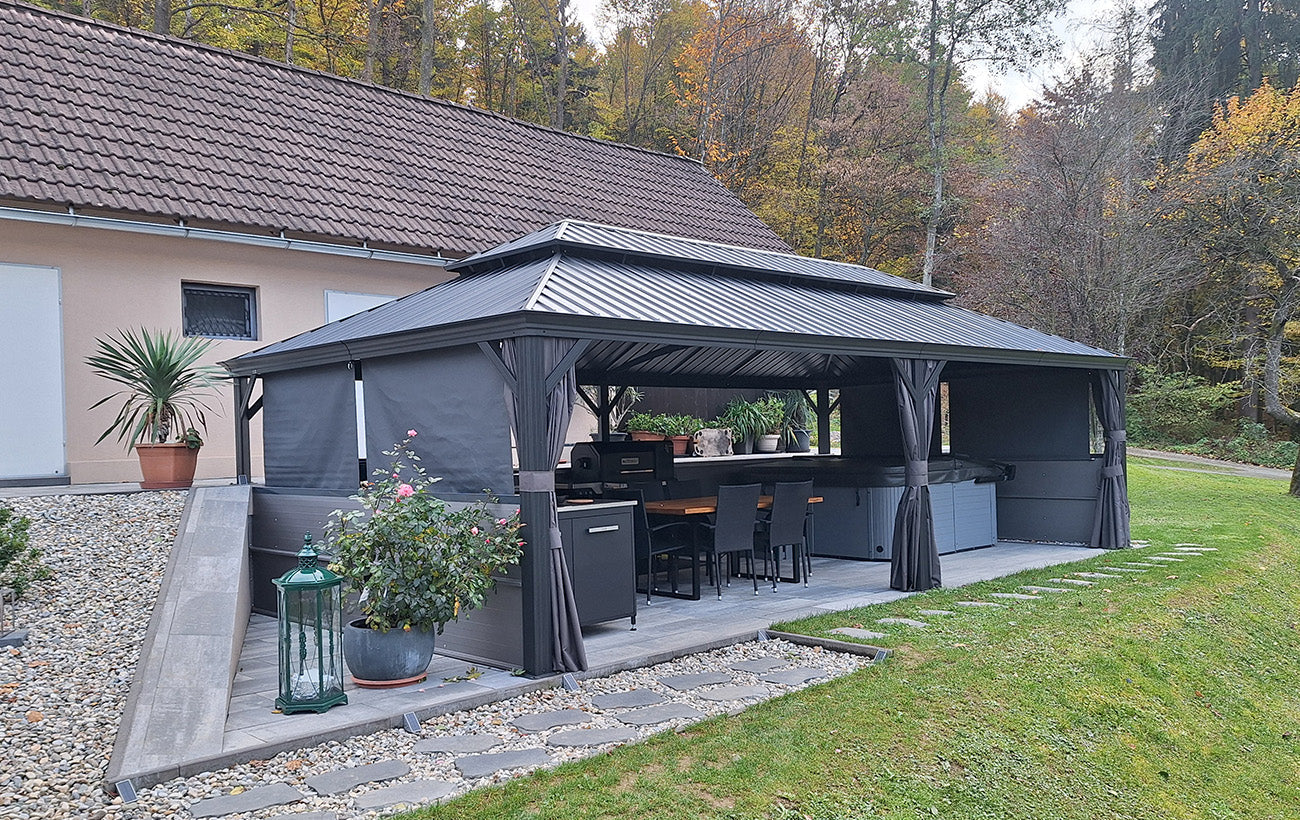
A Hardtop Gazebo often suits this style because it adds a stronger visual presence and works well with outdoor spaces that are meant to feel settled and inviting rather than sleek.
Warm colors and softer contrast
Rustic outdoor design usually uses browns, creams, muted greens, warm grays, and earthy neutrals. These colors pair naturally with planting, stone paths, and traditional home exteriors.
Gathering feels more relaxed
This style often supports slower, more casual use. A textured Dining Set can become the center of the space, especially in backyards designed for family meals, weekend hosting, or long evenings outdoors.

How Do Modern Minimalist and Rustic Styles Look in Patios and Outdoor Seating Areas?
The difference between the two styles becomes much clearer when looking at how they shape a real patio or backyard seating area. The same square footage can feel very different depending on the design direction.
A modern patio layout
A modern outdoor space often looks defined and edited. The seating area may include low-profile Patio Furniture, neutral cushions, and a clear open path between zones. There is usually more visible floor area, which helps the layout feel organized.
A simple Pergola can strengthen this effect by framing the lounge or dining zone with clean structure. The result is a patio that feels composed and easy to use.
A rustic seating space
A rustic seating area usually feels softer and more layered. Materials are more noticeable, and the overall space often looks warmer from the first glance. Seating may be arranged around a coffee table, fire feature, or dining zone in a way that encourages longer use.
A Hardtop Gazebo can work especially well here because it creates shelter and a stronger sense of place. In a rustic backyard, it often feels like a natural part of the outdoor setting rather than a separate feature.
Which Outdoor Style Fits a Modern Home Better?
Modern homes usually pair more naturally with modern minimalist outdoor design. If the exterior includes clean lines, simple siding, large windows, or contemporary trim, a minimalist yard often feels more connected to the house.
Why modern architecture supports minimalist design
Modern homes tend to benefit from visual consistency. Outdoor spaces look stronger when they repeat the same ideas seen in the architecture, such as clean forms, neutral finishes, and uncluttered layouts.
A structured Pergola can reinforce that connection, especially when its finish matches the trim, window frames, or other exterior details. The same is true for streamlined Patio Furniture with simple frames and restrained upholstery.
What often feels less natural
A highly rustic setup can still work with a modern home, but it needs more care. If the furniture is too heavy-looking or the finishes are too traditional, the outdoor space may feel disconnected from the house instead of complementary.
When Does Rustic Charm Work Better for Traditional or Farmhouse Homes?
Rustic charm often feels especially natural with traditional, farmhouse, cottage, and craftsman-style homes. These homes usually already include materials and details that work well with warmer outdoor finishes.
Why traditional architecture supports rustic style
Brick, stone, shutters, warm siding, and visible wood tones often make rustic outdoor design feel like a natural extension of the home. The style does not need to fight the architecture. It tends to build on it.
A Hardtop Gazebo often works especially well in these settings because it brings structure while still fitting the more classic look of the property.
How dining areas fit into the picture
A rustic yard often benefits from a welcoming dining zone. A sturdy Dining Set with texture or warm finishes can make the space feel grounded and useful, especially when meals and gathering are a regular part of outdoor life.

Does Yard Size Affect the Choice Between Minimalist and Rustic Outdoor Design?
Yes, scale matters. Yard size and layout can affect how easily each style works and how comfortable the finished space feels.
Smaller patios and compact yards
Modern minimalist design is often easier to use in smaller areas because it depends on fewer visual elements. A compact patio usually feels more open when the layout is simple and the furniture is clearly placed.
A flexible Umbrella & Base can be especially useful in this kind of setting. It adds shade without requiring a large permanent structure, which helps preserve visual openness.
Larger backyards and layered layouts
Rustic charm often has more room to breathe in larger yards. Bigger spaces can handle more texture, stronger furniture profiles, and multiple zones without feeling cluttered.
A larger backyard may also have enough space for a full Dining Set plus separate lounging areas, which suits the more relaxed and layered nature of rustic design.
Which Materials Work Best for Patio Furniture, Pergolas, and Gazebos?
Materials often define style more clearly than accessories do. The same layout can feel modern or rustic depending on the finishes used.
Materials for minimalist outdoor design
Modern outdoor spaces often use aluminum, powder-coated steel, glass, concrete, and wood with a clean finish. These materials support sharper lines and a more refined look.
This is why minimalist Patio Furniture often features slim frames, smooth surfaces, and simple upholstery. A modern Pergola usually follows the same approach, using clean structure instead of decorative detail.
Materials for rustic outdoor design
Rustic spaces usually look best with visible grain, woven textures, matte metal, rope, and other natural-looking surfaces. These materials add warmth and depth without needing much extra styling.
A rustic Hardtop Gazebo can benefit from finishes that feel substantial rather than sleek. The same principle applies to a Dining Set that is meant to feel more grounded and casual.
How Do Pergolas, Gazebos, and Umbrellas Shape Outdoor Style?
Shade structures do more than provide coverage. They also help define the visual identity of the yard because they are often among the largest elements in the space.
Using a pergola in modern layouts
A Pergola often works well in minimalist spaces because it creates structure while still feeling open. It can define a dining or seating zone without closing off the yard.
When a gazebo suits a rustic backyard
A Hardtop Gazebo usually feels more substantial and sheltered. In a rustic setting, that extra weight can be a strength, especially when the goal is to create a comfortable gathering area with a strong sense of place.
When an umbrella works better
An Umbrella & Base is often the best choice when flexibility matters. It works especially well in smaller yards, patios, or dining areas where movable shade is more practical than a permanent structure. It can also support either style when the shape and finish are chosen carefully.
How Should a Dining Set Reflect Modern or Rustic Outdoor Style?
Dining furniture often becomes the visual center of an outdoor area, so it plays a major role in setting the tone.
Modern outdoor dining spaces
A modern Dining Set usually has clean lines, simple surfaces, and a restrained color palette. It often feels lighter and more structured, which supports a calm and organized layout.

Rustic outdoor dining spaces
A rustic Dining Set usually looks warmer and more relaxed. It may include thicker profiles, textured finishes, or a more traditional shape. These details help the dining area feel inviting without needing excessive decoration.
Why the dining area matters so much
Because it is often highly visible and frequently used, the dining zone tends to influence the rest of the outdoor design. When the table and chairs clearly support one style direction, the entire space feels easier to coordinate.

How Can Bar Stools Support Outdoor Entertaining Areas?
Bar seating can add function without taking up as much room as a larger dining setup. It works especially well in outdoor kitchens, counter-height tables, and casual gathering spots.
In a modern patio, Bar Stools usually look best when they have simple shapes, clean finishes, and a visually light frame. They should feel like part of the same design language as the surrounding seating and dining areas.
In a rustic setting, Bar Stools can bring in texture and warmth. Wood tones, woven details, and softer forms often help them feel more natural within the overall layout.
Bar seating works best when it supports the actual use of the space. It should feel integrated into the entertaining area rather than placed there only for appearance.
Which Outdoor Style Is Easier to Maintain?
Maintenance depends more on the materials and layout than on the style label alone, but some differences are still worth noting.
Minimalist layouts often feel easier to keep visually tidy because they include fewer decorative layers. Smooth surfaces and controlled arrangements also make routine cleaning more straightforward.
Rustic materials can still be practical, especially when they are chosen for outdoor durability. In some cases, textured finishes show everyday wear less obviously than smoother ones.
A well-placed Umbrella & Base can make a seating or dining area more comfortable during hot weather, while a covered structure may reduce direct exposure over time. The best choice depends on how the yard is used and what level of upkeep feels realistic.
How Do You Keep the Outdoor Space Visually Cohesive?
A cohesive outdoor space usually comes from making a few clear decisions and repeating them consistently.
Begin with the largest visual element. That may be the shade structure, the seating zone, or the dining area. Once the main anchor is set, the rest becomes easier to coordinate.
It helps when materials and silhouettes feel related. This does not mean every item has to match exactly, but the shapes, tones, and textures should feel like they belong in the same environment.
An outdoor space usually feels stronger when it follows one clear direction. Too many competing styles can make the layout feel scattered, even if the individual pieces look attractive on their own.
How Do You Choose Between Modern Minimalist and Rustic Charm?
The clearest way to decide is to look at the house, the yard, and the daily use of the space.
A contemporary home usually works more naturally with minimalist outdoor design. A traditional or farmhouse-style home often supports rustic charm more easily.
Compact spaces often benefit from a simpler design language, while larger yards can carry more layering and stronger material contrast.
Some outdoor spaces are meant for quiet seating and visual calm. Others are used for meals, gatherings, and a more relaxed atmosphere. The better style choice is usually the one that supports those daily patterns most naturally.
Conclusion: Finding Your Ideal Outdoor Style
Modern minimalist and rustic charm can both work well outdoors when the style fits the home and the layout supports everyday use. Minimalist design brings structure and clarity. Rustic charm brings warmth and texture. The better choice usually becomes clear once the architecture, materials, yard size, and main outdoor functions are considered together.