
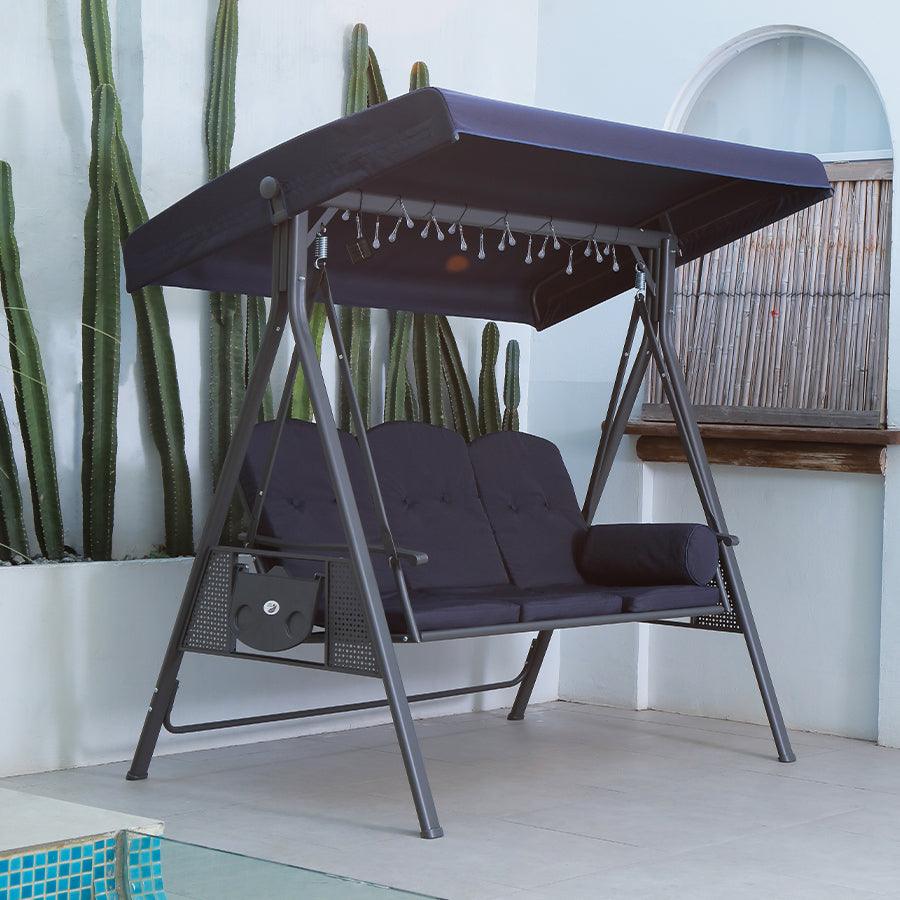
To winterize a porch swing with cushions and a canopy, prepare each part separately. Start with the swing's care directions and labels. Confirm the fabric and frame materials, and note which pieces are designed to come off.
Next, clean your porch swing cushions and dry them fully, following their labels. Handle the canopy fabric under its own directions and keep frame and hardware care separate. Then choose a winter spot that the maker approves for the weather it will face.
Winterize the Swing by Component, Using Its Care Directions
Go through the swing in the order below, using the directions written for each part. Care steps for one component may not suit another, so don't use cushion care on the canopy or fabric care on the frame.
Identify the Model, Materials, and Removable Parts
Your first job is to find out what you actually own. Look for the owner's manual, a care card, or sewn-in tags on the cushions and canopy. Write down the model name, any fabric names on the tags (such as acrylic, polyester, cotton, olefin, or a brand like Sunbrella), and the frame material if it's listed.
Then sort the fabric into two groups: parts that are designed to be removed, and parts that are fixed in place. Go by the directions, not by looks. A zipper or a hook-and-loop strip suggests a part might come off, but it doesn't confirm that removal is approved. If you bought your swing from us and can't find its care directions, contact our support team with your model details before you start taking anything apart.
Cushions: Follow Their Own Care Instructions
Clean the cushions using the instructions for their exact construction and fabric. A casing that zips off may need different care than a whole cushion with a sewn-in insert, so check which one you have before you wash anything.
For removable covers, general outdoor-furniture guidance says to wash them according to the care labels on removable covers. It also says to let both the covers and the cushion inserts dry fully before you store them. Wait until both pieces are dry all the way through before you pack them away.

The fabric decides the rest. For cushions confirmed to be acrylic, polyester, or cotton, Purdue Extension's spot-cleaning method is to sponge them with liquid dishwashing detergent mixed into lukewarm water, then rinse and air-dry. Use it only when the swing's own directions don't call for something else. If your tags say Sunbrella, Sunbrella's upholstery cleaning guide gives separate steps for removable and non-removable fabric. If your cushions are olefin, our guide to cleaning olefin outdoor cushions covers label-safe cleaning and thorough drying.
Removable Canopy Fabric: Treat It Separately
A canopy that's designed to come off needs its own removal, cleaning, and storage steps. Canopy fabric may not match the cushion fabric, so the cushion methods above don't automatically apply to it. Purdue's spot-cleaning method, for example, is written for outdoor cushions, not canopies.
Before you take the canopy down, take a quick photo of how it attaches to the frame. Keep any clips, ties, or small fasteners you remove in a labeled bag so spring reassembly is easier. Then clean, fold, and store the canopy only the way its directions describe. If your manual doesn't cover the canopy fabric at all, ask the swing maker for canopy-specific care before you wash it.
Fixed Canopy Fabric: Keep It in Place Unless Directions Say Otherwise
If the canopy fabric is fixed to the frame, leave it attached. Don't cut stitching, pry frame parts, or loosen hardware to free it unless the directions for your model tell you how.
The same rule covers in-place care. Any cleaning, covering, or winter protection for a fixed canopy should come from directions that address that construction. If your manual treats the canopy and frame as one unit, follow those combined steps. If it says nothing about fixed fabric, check with the maker before you scrub it or wrap it for the season.
Frame and Moving Parts: Use Only Documented Maintenance
Care for the frame separately from the fabric, and use the directions for the actual frame material. General outdoor-furniture guidance recommends checking the maker's care instructions before cleaning, because materials such as teak, plastic, and metal may need different products. It also advises against bleach unless the maker recommends it for that material, and against power washing unless the care instructions allow it, because high pressure can damage some finishes and surfaces.
Moving parts, such as chains, springs, hangers, and pivot points, need the same approach. Use only the cleaner, lubricant, or adjustment that your directions name for that mechanism.
While the swing is empty, give it a few slow pushes. Listen for squeaks, and look for a canopy that sags or pulls unevenly. If you find either problem, our guide to canopy sag and hardware squeaks walks through diagnosis and adjustments. Fixing those issues before winter means you won't be dealing with them in spring. For year-round care beyond the winter prep, see our broader outdoor swing maintenance tips.
Decide Between Covered Storage and Leaving the Swing Outdoors
Base this choice on two things: what your swing's directions allow, and what your chosen spot will actually be exposed to. General outdoor-furniture guidance says to use the maker's storage recommendations to decide whether each piece can stay outdoors or needs indoor storage.
Exposure matters as much as cover. A garage or other sheltered space can protect furniture from rain, snow, and wind, but an unheated space can still drop below freezing. So if your directions say a part should not freeze, an unheated garage or shed doesn't meet that need, and a heated indoor space is the right call. If the maker approves leaving the frame outdoors, follow their covering instructions for it.
You can store different parts in different places. Dry porch swing cushions and a removed canopy can go indoors while the frame stays where the maker allows. If you're short on closet space, see what an outdoor storage box can hold for seasonal patio gear. Choose a box location that matches the exposure limits in your cushion directions.

FAQs
Do Sunbrella cleaning directions work for other outdoor fabrics?
No. Use them only when the tags confirm the fabric is Sunbrella. Sunbrella's guidance is written for its own upholstery, and other fabrics may need different products or methods. For cushions confirmed to be acrylic, polyester, or cotton, Purdue Extension describes a separate spot-cleaning method. For anything else, follow the label or the swing maker's directions.
Can I machine wash a cushion cover just because it has a zipper?
A zipper alone doesn't mean the cover is meant to be removed or machine washed. Sunbrella notes that some removable casings can go in the washing machine. It also says to check with the furniture maker before removing a casing, because cushion construction varies. Check the cover's care label first. If the label doesn't mention machine washing, don't put it in the machine.
Can I take off a fixed canopy so it lasts longer through winter?
Only if your swing's directions explain how to remove it. Fabric that's fixed to the frame may be part of how the canopy holds its shape, and forcing it off can damage the stitching or hardware. If you want it indoors for the season, ask the maker whether removal is approved for your model and which steps to follow.
How can I tell whether my porch swing cushions are dry enough to store?
Check both the cover and the insert, not just the outside fabric. The general guidance is to let covers and inserts dry fully before storage, so a cover that feels dry over a damp insert isn't ready. Unzip a removable cover if its label allows it, and feel the insert in a few spots before you pack the cushions away.


