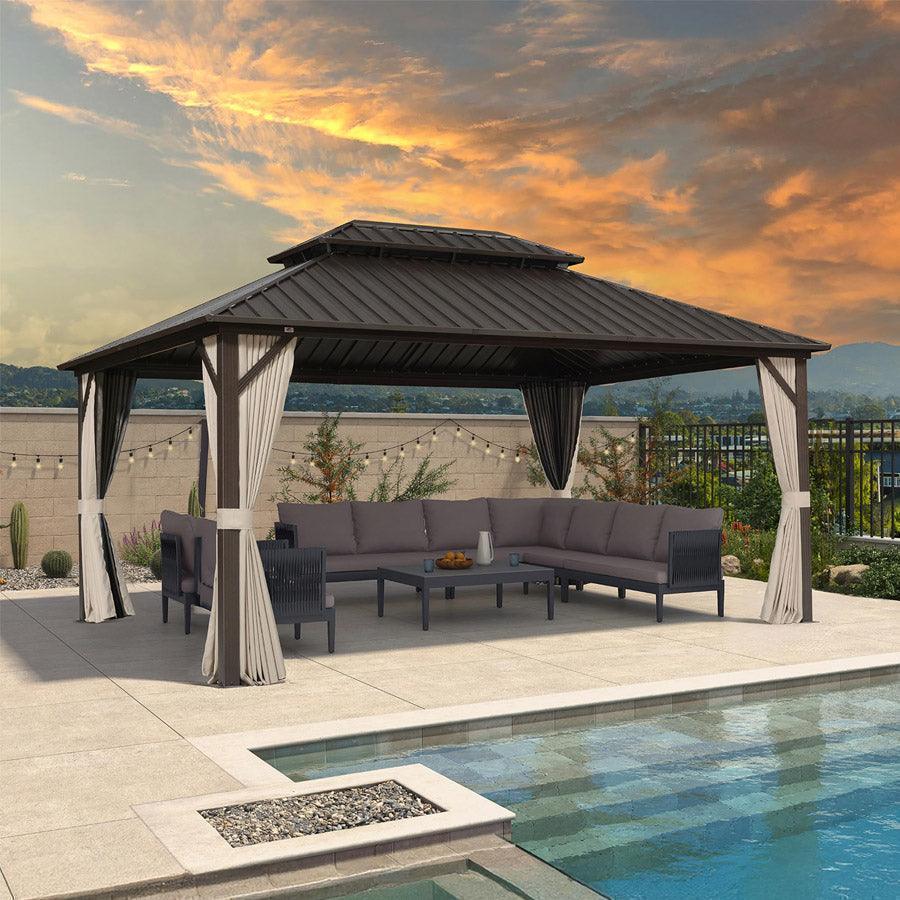
A screened gazebo is worth considering during mosquito season when mosquitoes regularly disrupt outdoor meals or lounging, the space gets frequent use, and the enclosure can stay mostly closed while people are inside. It is not a guarantee against mosquitoes: open doors, gaps, damaged screens, and frequent traffic can reduce the practical benefit. Choose another enclosure when portability or open airflow matters more, and skip one when the annoyance is occasional or the space would go mostly unused.

Should You Buy a Screened Gazebo for Mosquito Season?
The right choice depends less on the word “screened” than on how often mosquitoes disrupt the space and whether your household will actually use and maintain the enclosure. Use this three-way split as a practical decision rule:
- Choose a screened gazebo when outdoor dining or lounging happens frequently, mosquitoes regularly change your plans, and the sides and entrances can stay mostly closed. This option creates a more defined outdoor room, but it requires enough upkeep to keep the boundary intact and the space comfortable.
- Choose another enclosure style when seasonal flexibility, portability, high traffic, or open airflow is the priority. A lighter screen house or another temporary setup may fit better if people move constantly between the house, grill, and yard. The tradeoff is that setup, closing up, or shelter may be less convenient for repeated use.
- Skip the enclosure when mosquito annoyance is occasional, outdoor use is limited, or the household is unlikely to inspect, clean, and handle the screens throughout the season. Buying a structure for a space you rarely use can add more maintenance than comfort.
Before you shop, observe one typical outdoor session. Do people go in and out repeatedly? Can furniture stay clear of the entrances? Would the group tolerate a mostly closed perimeter, or would everyone immediately open the panels for a breeze? Those answers can reveal the main mismatch before you compare formats.

What Should You Check in a Screened Gazebo?
A usable enclosure needs a continuous, intact boundary and an entry routine your household will follow. Inspect the full system before judging the roof, panels, gazebo curtains, or netting on their own.
Screen and Seam Continuity
Inspect the mesh, attachment points, corners, roof-to-screen connections, lower edges, and frame gaps as one boundary. A partial screen or decorative panel is not the same as a continuous enclosure. Look for tears, loose sections, lifted edges, and openings where panels meet the frame.
This is also where you should distinguish a complete enclosure from add-on mosquito netting for a gazebo. Replacement or supplemental material may be useful only if its dimensions and attachment design match the structure. A product label alone cannot establish compatibility, so measure the relevant openings and compare the attachment method before buying.
Doors, Gaps, and Traffic
Frequent opening and closing can matter more than the screen material. Map the normal route between the house, grill, storage area, and yard, then arrange furniture so doors or panels can close without awkward maneuvering. If the main entrance will stay open during every meal, expect less relief than the word “screened” suggests.
Check corners, lower edges, and panel overlaps during the same inspection. Loose or misaligned closures create a practical weakness even when the rest of the enclosure looks complete. The best design for your routine is the one people can close consistently without disrupting how they use the space.
Airflow and Upkeep
Screening trades some openness for fewer insect interruptions. Consider the breeze, shade, visibility, and freedom of movement along with mosquito comfort. If the enclosure feels stuffy or blocks the sightlines people value, they may leave panels open and reduce its usefulness.
Plan regular visual inspections, gentle cleaning, prompt repair or replacement of damaged mesh, and seasonal handling according to the current care instructions. Keep the care routine realistic: an enclosure that is difficult to clean or store may lose value if maintenance is repeatedly postponed.
Screen House vs. Gazebo: Which Is Better for Mosquito Season?
Choose a screen house when seasonal flexibility and a lighter setup matter most. Choose a gazebo when you want a defined, frequently used dining or lounging room and can accept a more permanent footprint and ongoing care. Neither format automatically keeps mosquitoes out; screen continuity, entry habits, and maintenance still determine the result.
| Decision factor | Screen house tendency | Gazebo tendency |
|---|---|---|
| Permanence and setup | Favors seasonal placement, flexible use, and a lighter commitment | Favors a defined outdoor room with a more established footprint |
| Entry and closure | Can work well when setup and pack-up are acceptable; frequent traffic still makes closure difficult | Suits repeated use when entrances can stay mostly closed and furniture does not obstruct them |
| Airflow and maintenance | Easier to remove when the season or use pattern changes, but setup and handling remain part of the routine | Stays available for regular use, while screens, panels, and the structure require ongoing inspection and care |
| Best-fit mosquito-season use | Seasonal gatherings, flexible placement, or a space that does not need to remain in place | Frequent dining or lounging where a defined enclosure justifies its footprint and upkeep |
A portable screen-house format may suit shoppers who value seasonal setup and flexibility, but that tendency does not establish performance for every screen house. For a broader explanation of enclosure categories, see this hardtop versus enclosed gazebo comparison, then apply the same checks for closure, traffic, airflow, and care to the actual structure.
The practical choice is straightforward: buy a screened gazebo when frequent use and manageable closure outweigh the footprint and upkeep; choose a screen house or another flexible enclosure when portability and traffic matter more; skip the enclosure when mosquito disruption is too limited to justify maintaining one.
FAQs
Does a screened gazebo keep mosquitoes out?
A screened gazebo can reduce mosquito contact when its boundary is intact and its entrances stay mostly closed, but it cannot guarantee exclusion. Gaps, damaged mesh, open doors, frequent entry, and conditions outside the enclosure can all reduce the benefit. Inspect the lower edges and entry points during a normal-use walkthrough before relying on the setup.
Are gazebo screens worth it?
They are more likely to be worth the tradeoff when mosquitoes frequently disrupt a space that the household uses often. The value is weaker when outdoor use is occasional, people constantly move in and out, or no one is likely to maintain the screens. Compare the expected use pattern with the care routine before choosing an enclosure.
What is the difference between a screen house and a gazebo?
A screen house generally suits seasonal flexibility and a lighter setup, while a gazebo generally suits a more defined, frequently used outdoor room. The better fit still depends on whether the entrances can close, how much traffic the space receives, the airflow people expect, and the maintenance they are willing to handle.