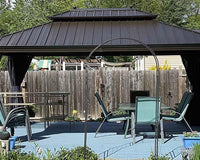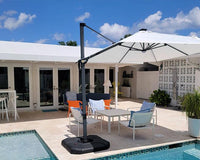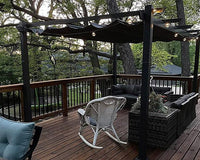
A workable commercial patio umbrella plan connects every seating zone to a placement choice, a handling owner, a storage or securing location, a weather-closure rule, and a maintenance record. Start by mapping the patio, then choose movable, fixed, mixed, or no shade based on service flow and site conditions. This approach supports usable outdoor dining while treating uptime as a planning goal, not a promise.

Map the Patio Before Choosing Commercial Patio Umbrellas
Start with a zone-by-zone patio map. Show where shade is needed, how staff and guests move, and what each unit requires before it can be opened, cleaned, secured, or stored.
- Draw the operating footprint. Mark tables, doors, host and waiting areas, service paths, utilities, storage, sheltered areas, and surfaces where equipment could be placed. Include seasonal overflow areas rather than treating them as an afterthought.
- Mark circulation and dining access. Preserve a continuous route to each outdoor dining area. The accessible-route requirement for outdoor dining areas is a planning checkpoint, not a complete local permit or site-approval decision. The sidewalk dining accessibility guidance adds useful context, while final requirements depend on the restaurant's jurisdiction.
- Assign each zone a provisional shade path. Record movable shade, fixed shade, no shade, or a revised seating plan. Note when shade matters, where service and cleaning access must remain open, and whether the zone is exposed or partially sheltered.
- Assign ownership before purchase. Name the role responsible for opening, moving, securing, inspecting, and reporting defects. Record who can restrict a unit or close the patio when conditions change.
- Record unresolved approvals. Flag local outdoor-dining rules, right-of-way requirements, accessibility review, surface or anchoring review, manufacturer instructions, and any qualified site review that still applies.
Use this compact worksheet for every zone:

| Zone | Shade path and need | Movement and storage | Owner and open item |
|---|---|---|---|
| Core seating | Movable, fixed, no shade, or revised layout; note when coverage is needed | Service clearance, cleaning access, storage or securing location | Opening owner; local or manufacturer item |
| Seasonal or overflow seating | Coverage condition and operating season | Return-to-storage route and securing location | Shift lead; setup restriction |
| Exposed or sheltered area | Weather exposure and closure connection | Relocation or out-of-service area | Manager with closure authority |
The result is a site-specific starting plan, not proof that the installation meets every local or technical requirement.
Choose Movable, Fixed, or Mixed Shade by Workflow
The best starting approach is the one the team can operate consistently in the actual space. Seating changes, storage, cleaning access, surface conditions, installation needs, and authorized handling matter more than a universal label such as "safer" or "stronger."
| Operating situation | Better starting approach | Conditions to verify |
|---|---|---|
| Tables change often or the patio has seasonal overflow | Movable shade | Approved storage, securing method, clear service paths, staff ownership, and a documented relocation procedure |
| Core seating stays in a stable footprint | Fixed shade may fit | Installation access, surface and anchoring conditions, cleaning route, accessibility review, local requirements, and unit instructions |
| Stable core seating plus changing overflow | Mixed shade | Separate owners, storage or securing rules, inspection paths, and distinct closure procedures for each zone |
| Storage is unavailable or handling cannot be assigned | No shade or a revised layout | A shade plan is incomplete until equipment has a controlled operating and storage path |
| Site exposure changes sharply across the patio | Zone-specific approach | Exposed and sheltered areas need procedures based on site assessment and unit documentation |
Movable units are not automatically protected simply because they can be moved, and fixed placement is not automatically suitable for every surface or weather condition. Match the placement decision to the team's documented ability to store, inspect, secure, and operate the equipment.
Run the Same Opening, Service, and Closing Routine
A repeatable routine turns the patio plan into daily work. Assign one role to each stage, with a manager or lead responsible for unresolved defects, restricted units, and changes to the written procedure.
- Before opening, inspect the assigned footprint. Review the canopy, frame, hardware, base or anchoring, surface, clearance, and guest-area obstructions. Keep a visibly damaged, unstable, or unknown-condition unit out of service until the responsible lead decides the next step under the approved procedure.
- During service, keep equipment in its assigned zone. Watch for movement, condition changes, guest and service clearance issues, and weather changes. Stop use when the written procedure requires it or when a new defect or instability appears.
- When conditions change, follow the weather rule. Notify the named decision-maker rather than leaving each server or shift to make a separate judgment. Record which zones or units were closed, relocated, or restricted.
- At closing, clear and secure the patio. Follow the unit instructions, return movable equipment to its approved storage or securing location, remove obstructions from guest areas, and record missing parts, damage, or restrictions before the next shift.
The daily record can be simple: date, zone or unit, responsible person, condition, action taken, restriction, and manager follow-up.
Write a Wind and Severe-Weather Closure Rule
Write the closure rule before the operating season and make it easy for staff to follow. It should prioritize getting people out of hazardous outdoor conditions, name who can stop service, and explain how the decision reaches every shift.
Use one trigger-and-response record for each condition:
- Forecast or alert: The assigned monitor reviews the forecast or alert, tells the decision-maker, and prepares the closure or securing response before conditions deteriorate.
- Observed gusts, sudden movement, or instability: Stop use in the affected zone, keep guests and staff clear, and secure or relocate equipment only through the approved procedure.
- Lightning or severe weather: Close exposed outdoor operations and communicate the decision to staff. OSHA's prewritten severe-weather closure response supports planning around hazardous outdoor conditions, but it does not establish an umbrella wind rating.
- Sheltered versus exposed areas: Use separate procedures only when the site assessment and unit instructions support the distinction. Do not assume that a sheltered zone is automatically suitable for continued use.
- Reopening: The named lead confirms that the weather condition has passed, inspects affected units and surfaces, checks guest and service routes, and records the return-to-service decision.
There is no single wind number that applies to every commercial patio umbrella, base, anchoring method, surface, and exposure. Use the current unit documentation and the site's written procedure for exact closure and securing decisions.
Make Cleaning and Replacement Parts Easy to Execute
Maintenance works best when staff can reach every component safely and record what they find. Set triggers around the operating season, exposure, relocation, severe weather, and reported defects, then use the exact unit documentation for material care and service intervals.
Keep Cleaning and Inspection Access Clear
Create a safe route and working space around the fabric, frame, hardware, base, and anchoring. The access plan should protect guest circulation while giving staff enough room to inspect and clean without improvising.
- Access: Record the inspection route, cleaning position, storage position, and any area that must remain clear during service.
- Condition: Note the fabric, frame, hardware, base or anchoring, surface, movement, and visible damage.
- Action: Record cleaning, adjustment, restriction, or escalation. Use approved care guidance instead of assuming one cleaner suits every material or finish.
- Recordkeeping: Add the date, unit or zone, action, and responsible person to the asset or maintenance record.
For a practical overview of fabric care and cleaning considerations, use this outdoor umbrella maintenance guide as a reference, then follow the instructions for the exact unit.
Identify Parts Before a Failure
Build the parts record while each unit is operating, not during a busy service failure. Capture the unit identifier, component description, compatible model or dimensions, supplier reference, and the condition that triggers replacement.
- Keep identified compatible parts and consumables separate from uncertain or damaged items.
- Match the unit and component before ordering or installing anything.
- Escalate structural, anchoring, or specialized repairs through the approved procedure and applicable requirements.
- Record the result so the next shift does not repeat the same identification work.
This is the practical core of patio umbrella maintenance for restaurants: make access, condition logging, care instructions, and parts identification visible to the people who perform the work.
Review Each Unit Before the Next Busy Season
Give every unit one documented disposition before peak demand: continue, repair, restrict, or replace. Base that decision on condition, stability, repair history, compatible parts, operating fit, and whether staff can follow the approved procedure.
- Continue: The unit remains suitable for its assigned operation, its condition is acceptable, and the operating record is current.
- Repair: The defect is understood, the repair path is approved, and the compatible component or service route is identified.
- Restrict: Condition, stability, uncertainty, or an unresolved repair prevents approved use. Mark the unit clearly and keep it out of the guest area until the restriction is resolved.
- Replace: The operating fit or repair path no longer supports the zone, or the unit cannot be returned to approved use through a documented route.
Before ordering or reopening, update the patio map, closure rule, asset record, parts list, storage plan, and staff assignment. Do not infer product life, parts availability, delivery timing, or uninterrupted service from an inspection alone. For a new restaurant patio shade planning cycle, make that record update the next operational task.
FAQs
Restaurant patio shade decisions should be based on the site map, written operating rules, and current unit documentation. These answers address common choices about placement, weather response, maintenance, and replacement.
What type of patio shade is best for a restaurant?
Start with the patio map. Movable shade fits changing seating or seasonal overflow when storage, securing, and staff handling are defined; fixed shade can fit stable zones when installation, access, surface conditions, anchoring, and local review support it. A mixed plan works when the permanent and movable zones have separate operating rules.
How do restaurants protect patio umbrellas from wind?
Use a written closure and securing procedure with a named decision-maker, forecast and observed-condition checks, staff communication, and a reopening inspection. Follow the exact unit instructions for operating limits, and do not substitute one universal wind number for a site-specific decision.
How often should commercial patio umbrellas be maintained?
Set maintenance triggers around the operating season, local exposure, relocation, severe weather, and reported defects. Use the specific unit instructions for material care and service timing because a universal interval or cleaner is not supported for every umbrella.
When should a restaurant replace a patio umbrella instead of repairing it?
Restrict or replace the unit when its condition, stability, repair history, compatibility, parts path, or approved operating procedure no longer supports continued service. Document the decision before peak demand so purchasing, storage, installation, disposal, and staff training fit the patio calendar.