If the damage is limited to the fabric or a single component, patio umbrella repair—or a matched replacement part—may make sense when the surrounding frame, connections, and support remain straight and secure. If the umbrella leans or shifts, has a cracked or bent structural connection, or shows several related failures, keep it closed and assess replacement. Start by locating the damage, then document the model and connection points before ordering patio umbrella replacement parts.

Decide: Repair a Part or Replace the Patio Umbrella
Start by classifying the damage: fabric-only damage calls for a canopy-fit review, a single failed component may go to parts support when the frame is sound, and structural or multiple-part damage calls for replacement assessment. Do not operate an unstable or significantly damaged umbrella. A concise damage stop-use warning in one product manual says to stop using a damaged umbrella and contact the seller about replacement parts.
| Damage location or symptom | Likely route | Decisive check and next action |
|---|---|---|
| Torn, faded, stained, or sagging canopy | Canopy review | Check that the ribs, stretchers, hub, pole, and attachment points are sound. Record the canopy shape and dimensions before requesting a match. |
| One bent or broken rib or stretcher | Isolated component review | Inspect the pivots, hub, remaining frame, and alignment. If connections are pulled out or several members are bent, stop using the umbrella and assess replacement. |
| Missing handle, slipping crank, or small connector failure | Operating-part review | Check whether the cable path, hub, pole, and frame remain aligned. A cracked hub or mechanism that causes the umbrella to lean is not just a handle problem. |
| Bent pole, damaged mast, split base tube, cracked weld, or unstable base | Replacement assessment | Keep the umbrella closed. Damage that affects support, alignment, or stability should not be treated as cosmetic damage. |
| Scuffs or light finish wear | Cosmetic review | Continue only when the pole, base, joints, and attachment points are straight, secure, and stable. Surface appearance alone does not confirm structural condition. |
This patio umbrella repair checklist is a conservative triage tool: identify the failed area, inspect the connections around it, and decide whether the failure is isolated. Requesting a part makes sense only when the surrounding structure is intact and the replacement can be matched to the umbrella model. When the support structure is compromised or several connected parts have failed, assess replacement instead of pursuing piecemeal repair.

Match the Symptom to the Patio Umbrella Replacement Part
A visibly broken item is not automatically the correct part to order. Use the symptom-to-part matches below as conservative triage guidance, then compare the nearby pivots, attachment points, operating path, and umbrella model. Exact connection points remain model-specific.
Canopy, Ribs, and Stretchers
Tears, fading, stains, or sagging may justify a canopy replacement inquiry when the ribs, stretchers, hub, pole, and fabric attachment points remain sound. Pulled-out attachments, uneven closing, or frame members that no longer align indicate that replacing the fabric alone may not solve the problem.
A single bent or broken rib or stretcher may be a replacement-part candidate when its pivots, hub, remaining frame, and alignment are intact. Multiple bent members, distorted connections, or a canopy that closes unevenly point to broader frame damage. Photograph both ends of the member, the hub, the pivots, and a matching undamaged member before asking for fit confirmation.
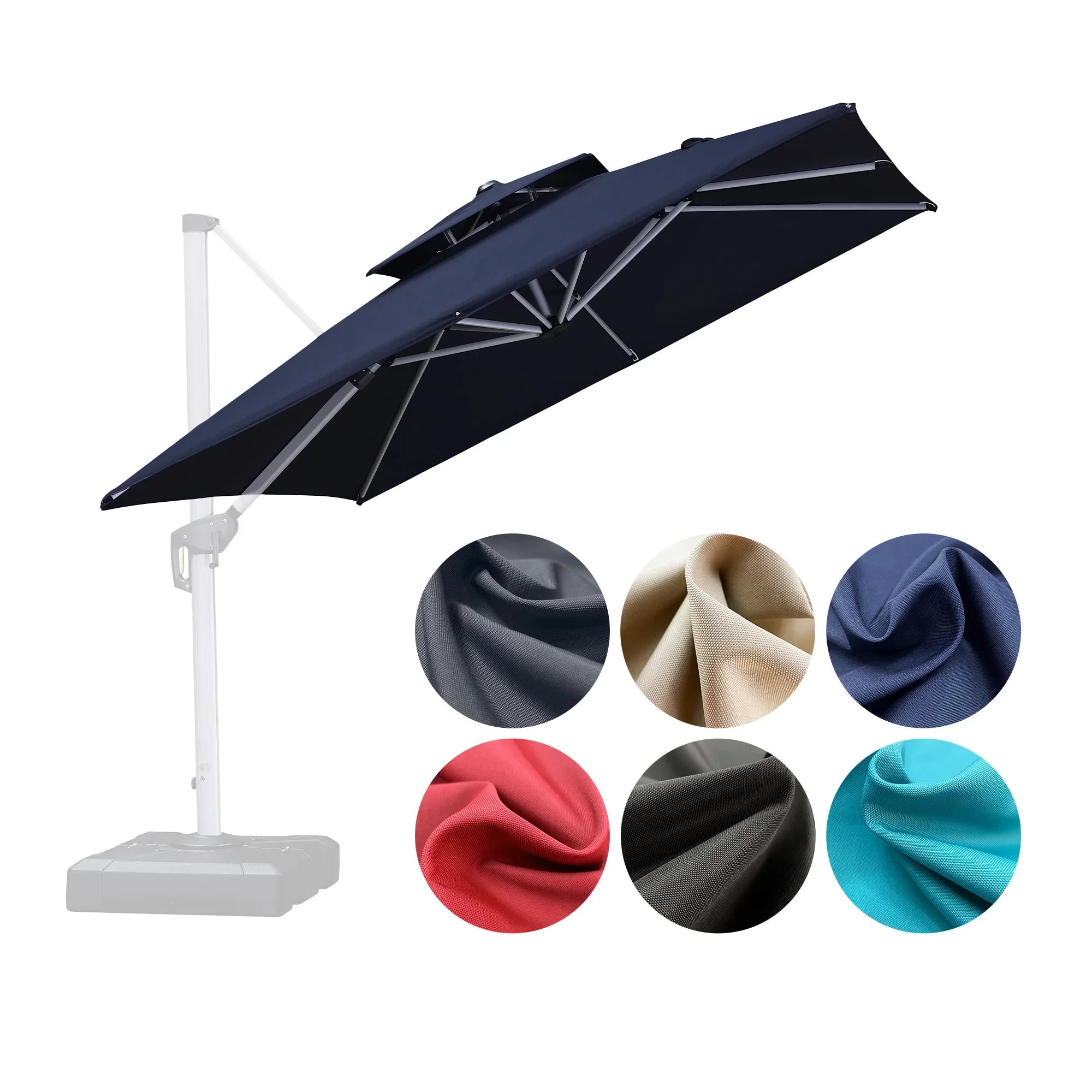
For a Purple LEAF Double Top Square cantilever umbrella, the replacement canopy is polyester fabric only; no frame is included. The listed size options are 9, 10, 11, and 12 feet, but size alone does not establish compatibility. The product is limited to the specified Purple LEAF Double Top Square cantilever umbrella, so confirm the model, shape, construction, and attachment layout first.
Crank, Hub, and Handle
A missing handle, poor crank operation, or failed small connector may justify an operating-part inquiry when the cable path, hub, pole, and frame remain aligned and undamaged. Record whether the crank turns, slips, binds, or stays fixed, and photograph the handle, mechanism, and both connection points.
A cracked hub, damaged attachment point, inaccessible lifting mechanism, or movement that makes the umbrella lean raises a structural concern. Do not treat a damaged hub or distorted mechanism as a simple handle swap, and do not operate the umbrella to test a condition that affects stability.
The replacement handle is a handle part only for Purple LEAF Double Top cantilever umbrellas. The listing says the hand crank is not included and gives separate style and size conditions, so a visual match is not enough. The spring plug is a specified plastic part for attaching fabric on Purple LEAF Double Top cantilever umbrellas, with non-LED and LED variants. It is not presented as a crank or hub replacement. Identify the construction and lighting configuration before requesting either component.
Pole, Base, and Finish
Light scuffs or finish wear can remain cosmetic when the pole, base, joints, and attachment points are straight, secure, and stable. A finish defect does not by itself prove that the umbrella needs replacement, but inspect the underlying material rather than judging by appearance alone.
A bent mast, split base tube, cracked weld, severe corrosion, unstable base, or joint that will not stay tight affects support or alignment. Route that condition toward replacement assessment instead of cosmetic repair. For a cantilever umbrella, inspect the mast and base without wind load, and keep it closed if it leans, shifts, or has a damaged structural connection.
Prepare a Complete Parts Request With Photos and Measurements
A complete parts request is more useful than a photo of the broken item alone. Send the umbrella’s identity, the full assembly, the damaged component, both connection points, relevant measurements, and a short operating history so the seller or manufacturer can review model fit.
- Identify the umbrella type and model. State whether it is a standard market umbrella or a cantilever umbrella. Photograph model labels, tags, serial marks, frame markings, purchase records, and any other identifying information. Record the maker and model exactly as shown.
- Photograph the overall assembly. Take a full view that shows the canopy shape, pole or mast, base, and general construction. For a cantilever umbrella, include the mast and base in the same view when possible.
- Photograph the failed part and its interfaces. Add close-ups of the damaged component, both connection points, nearby fasteners or pivots, the hub or crank area, and every model marking. Include an undamaged matching component when one is available.
- Measure the suspected part and connection. Depending on the component, record the canopy shape and dimensions, rib or stretcher length, pole or base-tube diameter, connection-hole spacing, and accessible fitting dimensions. Place the tape beside the part, not over it, and keep units consistent.
- Record construction and operating symptoms. Note the rib count, single- or double-top construction, LED or non-LED configuration when relevant, opening or tilt style, damaged side or position, and whether the umbrella opens and closes normally. Describe whether the crank turns, slips, binds, or stays fixed.
- Submit the complete packet for review. Attach the photos, measurements, model information, and brief symptom history to your parts request. Measurements support a compatibility review, but no single dimension or visual resemblance proves fit. If you need to source the right replacement part, use the same model-and-interface information rather than shopping by appearance.
Do not take measurements by opening or manipulating an umbrella that is leaning, shifting, cracked, or otherwise unstable. Photograph it closed and contact the seller or manufacturer about the appropriate next step. The original product documentation should control when it specifies a particular replacement part or compatibility method.
Take the Final Action for a Cantilever Umbrella: Parts Support or Replacement
For a cantilever umbrella, submit the complete evidence packet to parts support when the frame is sound and the failure is isolated. Keep the umbrella closed and assess replacement when the mast, hub, base, or several connected components are bent, cracked, severely corroded, unstable, or otherwise affecting support.
A sound frame with fabric-only damage can go through a matched-canopy review. Include the canopy shape, construction, attachment layout, and measurements, and remember that a canopy-only part does not repair a damaged mast, hub, base, rib system, or frame. One isolated handle, spring plug, rib, or stretcher failure can also go through parts support when the surrounding connections remain straight and intact. Submit the evidence packet instead of ordering based solely on a photo.
A cantilever umbrella with structural or multiple-part damage belongs on the replacement route. Keep it closed and secured rather than operating it for further diagnosis. One product-specific cantilever owner’s manual advises closing and securing that product when it is not in use or during strong wind and following its required base-weight instructions. That is product-specific guidance, not a universal wind-speed or base-weight threshold.
If the frame is sound and the failure is isolated, send the completed packet to parts support and ask for model and connection-point confirmation. If support or alignment is compromised, compare a replacement umbrella only after confirming the replacement model’s base and support requirements. This is the practical endpoint for patio umbrella repair: parts support for a confirmed isolated failure, replacement assessment for structural or multiple-part damage.
Frequently Asked Questions
These answers address common decisions that depend on the damaged component and the condition around it.
Can Patio Umbrella Ribs Be Replaced?
Sometimes. A single rib can be a parts-request candidate when the hub, pivots, remaining ribs, and alignment are sound. Photograph both ends and the hub, then provide the model and connection-point details for fit confirmation. Multiple bent ribs or distorted connections point toward replacement assessment instead.
Is It Worth Repairing a Patio Umbrella?
Repair is more defensible when the damage is isolated, the umbrella remains structurally sound, and the exact part can be matched. If it leans or shifts, has a cracked or bent load-bearing connection, or shows multiple related failures, stop using it and assess replacement rather than relying on a repair checklist alone.
Can You Replace Just the Canopy on a Patio Umbrella?
Yes, when the frame and attachment points are sound and the canopy’s type, shape, construction, and attachment layout match. Confirm those details before ordering. The supplied Purple LEAF canopy is limited to the listed Double Top Square cantilever models and is fabric only, so it is not a universal replacement for other umbrellas.