Intense sun can dry out and stiffen the polyethylene strands in resin wicker, but you can slow that process by cutting direct exposure, cleaning gently, and inspecting the weave regularly.
The first sign to watch for is color fading, which is cosmetic. The more urgent sign is a strand that has gone stiff, split, or snapped, since that points to real material breakdown rather than surface wear. Once you know which one you're seeing, the right next step becomes clear: keep fading in check with shade and cleaning, or stop routine care and get product-specific guidance for broken strands.
Key Takeaways
- Color fading is a cosmetic warning sign to monitor; loss of flexibility, splitting, or broken strands is a material problem that needs a different response.
- UV exposure and heat can reduce flexibility in polyethylene and lead to surface cracking, but the rate depends on the resin's formulation and stabilizers.
- Always check your set's care manual before cleaning; a mild soap, soft-tool, no-pressure-washer approach is a reasonable fallback when no other instructions exist.
- A patio pergola or similar shade cuts direct exposure but rarely covers every surface as the sun moves, so uncovered edges still need inspection.
- A breathable, well-fitted cover reduces exposure and dirt buildup, but a poorly fitted or wet cover can trap moisture against the weave.
Check for UV Damage Before Choosing a Care Response
Look at the weave itself, not the product label, before deciding how to respond. The condition you find sets the entire next step.
Cosmetic Fading Versus a Changed Surface
A dry-looking or lightened surface is worth a closer look, but it isn't proof that the strands have weakened. Cleaning off dust or pollen can make the color look more even again, but that doesn't mean the underlying fading has been reversed. Treat a faded surface as an inspection cue: check flexibility before assuming anything is wrong.
Brittleness, Splitting, and Broken Strands
Gently flex a few strands, especially on sun-facing edges. If they feel stiff instead of springy, or if you see hairline cracks, splitting, or a strand that has already snapped, the weave has moved past cosmetic change. At that point, pause routine cleaning on the affected area and treat it as a signs of replacement situation worth a closer look, rather than something a wipe-down will fix.

\n
Why Intense Sun Can Make Resin Wicker Brittle
Resin wicker is typically woven from polyethylene, a plastic that can change under prolonged UV and heat exposure. Understanding the basic mechanism explains why shade and gentle care actually help.
What UV and Heat Can Change
In a NIST study of high-density polyethylene, tensile elongation before failure dropped over time, and that drop happened faster under higher UV intensity and heat. Continued exposure produced a stiffer surface layer than the material underneath, which can lead to surface crack propagation and eventual embrittlement of the whole strand. That's why a strand that has lost its bend is a more serious signal than one that has only lightened in color.
Why Products Do Not All Weather Identically
Polyethylene weathering performance depends on the specific formulation and the stabilizers mixed into it, including UV-blocking additives designed to slow photo-oxidation. That means one resin-wicker product's UV-resistance claim doesn't automatically apply to another. It also means the safest approach is to treat your own set's exposure history and manual instructions as the guide, rather than assuming every all-weather label performs the same way.

Use a Manual-First Cleaning and Inspection Routine
Your set's own care instructions should decide the cleaner, tool, and drying method you use. When those instructions aren't available, a conservative baseline limits the risk of doing more harm than good.
Check the Care Instructions First
Look for the cleaning and maintenance guidance that came with your dining set before picking a cleaner or tool. Manufacturer instructions can specify approved cleaners, water pressure limits, and drying steps that are more specific than general advice, and following them protects both the finish and any warranty terms tied to proper care.
Clean Gently, Dry Fully, and Inspect
Without more specific instructions, a cautious starting routine is to brush off loose debris, then wipe the weave with a soft, nonabrasive cloth using mild soap and warm water. Avoid pressure washers and harsh chemicals, since force and strong solvents can accelerate surface wear on already sun-exposed strands. Let the set air dry fully before adding a cover, and finish by flexing a few strands in the most exposed areas to catch new stiffness or cracking early.
Use a Patio Pergola or Other Shade to Reduce Direct Exposure
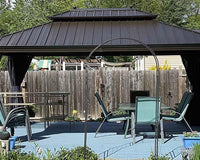
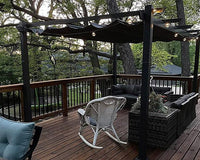
A patio pergola over your dining set cuts down direct sun hours, which reduces cumulative UV and heat exposure on the weave. It won't block every ray, so treat it as exposure reduction rather than full protection.
Use the Pergola as Partial Exposure Control
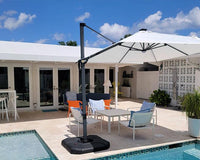
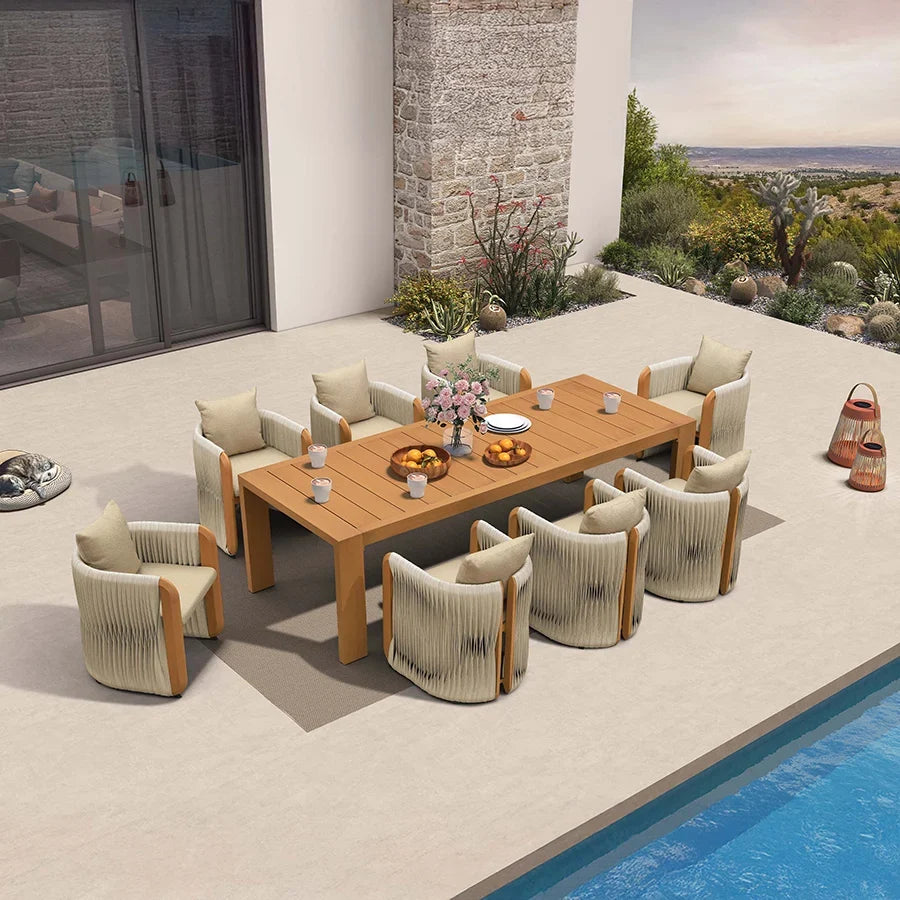
Positioning a six-person dining set under a patio pergola, umbrella, or similar structure limits how many hours of direct sun the weave absorbs each day. Even partial overhead coverage during peak afternoon sun can meaningfully lower the total exposure compared with a fully open patio.
Check the Surfaces the Shade Misses
Sun angle changes through the day and across seasons, so chair backs, table edges, and the outer rows of a wide dining set can still catch direct light even under a pergola. Rather than assuming the whole set is shaded, periodically check the surfaces closest to the open sides and rotate or reposition pieces if one area consistently takes more sun than the rest.
Choose and Use a Breathable Cover Without Trapping Moisture
A cover reduces UV exposure and keeps dust and debris off the weave when the set isn't in use, but only if it fits well and lets air move underneath. The wrong fit can trap moisture, which creates a different problem than the sun does.
Match the Cover to the Set
Check the cover's dimensions and shape against your actual table and chairs, including any cushions or umbrella holes, before relying on it. A cover that's too loose can flap and rub against the weave in wind, and one that's too tight can compress and trap moisture against the surface.
Protect Airflow and Manage Moisture
Breathable fabric is a useful design feature because it lets trapped humidity escape instead of sitting against the resin strands. Still, follow your cover and furniture manufacturer's instructions for removing the cover after rain, letting both the cover and the set dry fully, and storing the cover when it's not attached, since exact moisture and wet-weather limits vary by product.
Seasonal Maintenance Checklist for an Outdoor Dining Set
Turning the steps above into a seasonal rhythm keeps care manageable instead of reactive. Work through this list at the points below rather than on a fixed calendar.
- At the start of intense-sun season, flex a sample of strands on sun-facing surfaces to confirm they're still pliable before heavy use begins.
- After several weeks of prolonged heat or after a storm, brush off debris and check for new stiffness, cracking, or discoloration in exposed areas.
- Before adding a cover or moving the set into storage, clean and dry the weave fully so no moisture gets sealed underneath.
- While the cover is in place, check periodically for pooling water, wind abrasion at the edges, or a fit that has loosened over time.
- At the end of the season, do a full visual and tactile pass over every chair and the table edges, and note any area that has moved from fading into brittleness.
When Strands Are Brittle, Splitting, or Breaking
What you do next depends on whether the change is only in color or has reached the material itself. Keep those two situations on separate tracks.
If the Change Is Fading Only
If the weave has lightened but every strand still flexes normally, continue with shade, a properly fitted cover, and the gentle cleaning routine above. Keep monitoring rather than assuming the color change is finished or that it will reverse on its own.
If Strands Are Brittle, Split, or Broken
Once strands have lost their flexibility, cracked, or snapped, stop treating the area with routine cleaning, since ordinary care won't restore lost flexibility or repair a break. Reduce further sun exposure on that section, document what you're seeing, and check the manufacturer's repair or warranty guidance for your specific set. For strands that have started to unravel rather than crack, our repair options for unraveling wicker guide covers a DIY fix, though it applies to loosened weaving rather than UV-embrittled material that has already cracked.
FAQs
Is faded resin wicker automatically ready for replacement?
No. Fading alone doesn't establish that a set needs replacing. Check whether the strands still flex normally, hold their shape, and support the weave before making that call, and treat splitting or breaks, not color alone, as the signal to seek product-specific advice.
Does UV-resistant resin wicker still need shade and regular care?
Yes. A UV-resistant or all-weather label describes how a specific product was formulated, not a guarantee against every effect of sun and heat. Continue using shade to reduce direct exposure, and keep inspecting and cleaning the weave according to its manual, since the label doesn't remove the need for care.
How long can all-weather resin wicker last in intense sun?
There's no universal number of years that applies across products, since formulation, stabilizers, hours of direct exposure, and how consistently a set is shaded and cleaned all affect the outcome. Instead of relying on an expected lifespan, judge the set by its current condition, and act on flexibility loss or splitting whenever it appears rather than waiting for a specific age.