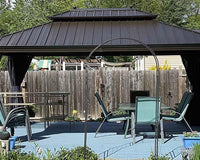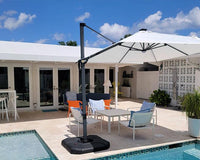
Yes, most outdoor dining sets with an umbrella hole still need a separate umbrella base. The hole simply lines up the pole with the tabletop; it does not anchor the umbrella or protect the table from wind-driven torque. Add a compatible under-table base, and use a collar ring or reducer when the pole moves inside the hole.
Key Takeaways
- A table hole aligns the pole but isn't itself a stabilizing system; pair it with a compatible under-table base.
- Measure the pole and hole diameters before buying a silicone collar or reducer, and skip any part that binds or stays loose.
- Choose an under-table base by matching mounting design, clearance, and documented capacity, not by weight alone.
- The collar controls side-to-side play at the tabletop while the base carries weight underneath; neither replaces the other.
- Inspect the full setup before gusty weather and close the umbrella immediately if it becomes unstable.
Why an Umbrella Hole Is Not the Whole Support System
A table hole positions the umbrella pole, but it can't hold the pole steady or absorb wind load on its own. Treat the hole as a pass-through opening, then plan for the base and any fit adjustments as separate decisions.
What the Table Hole Actually Does
The hole in your dining table exists to let the pole pass through the surface and keep it roughly centered. It does not attach to the pole, support its weight, or set any kind of wind limit for the umbrella. Any lower support, mounting hardware, or wind performance comes from the umbrella-and-base system installed beneath the table, not from the opening itself.
The Early Fit Decision
Plan on using a compatible under-table base for a through-table umbrella unless the manufacturer documents a different complete support method. Wind performance is evaluated for the complete umbrella-and-base design, so a base built for one pole and canopy size can't be assumed to work with another. If you measure play between the pole and the hole, or the instructions call for one, add a compatible collar ring or reducer too. This guide covers table umbrellas specifically; a pergola shade doesn't rely on a tabletop hole at all, so its support needs are a separate question.
How to Measure and Fit a Silicone Collar Ring or Reducer
A silicone collar or reducer only works when its dimensions match your pole and table hole. Measure both openings before buying one, then check the collar's own specifications against the fit you need.
Measure the Pole and Table Opening
Start by measuring the umbrella pole's outside diameter and the table hole's inside diameter at the exact point where the pole passes through. Note any taper on the pole, a metal sleeve inside the hole, a raised lip around the opening, or unusual tabletop thickness, since any of these can change how a collar seats. Write both measurements down in inches so you can compare them directly to a collar's listed dimensions instead of guessing from the umbrella's overall size. Our table umbrella sizing guide covers the same measuring points if you're also confirming canopy size.

Match the Reducer to the Fit Goal
A collar or reducer needs to slide over the pole without binding while its outer edge sits flush inside the table opening. Choose a documented part sized for both diameters, and skip anything that leaves visible side-to-side play, deforms once installed, or needs force to seat. A properly matched collar can reduce rattling and cut down on concentrated contact between the pole and the tabletop edge, but that's a fit improvement, not a wind rating or a guarantee against table damage.
How to Select and Position an Under-Table Base
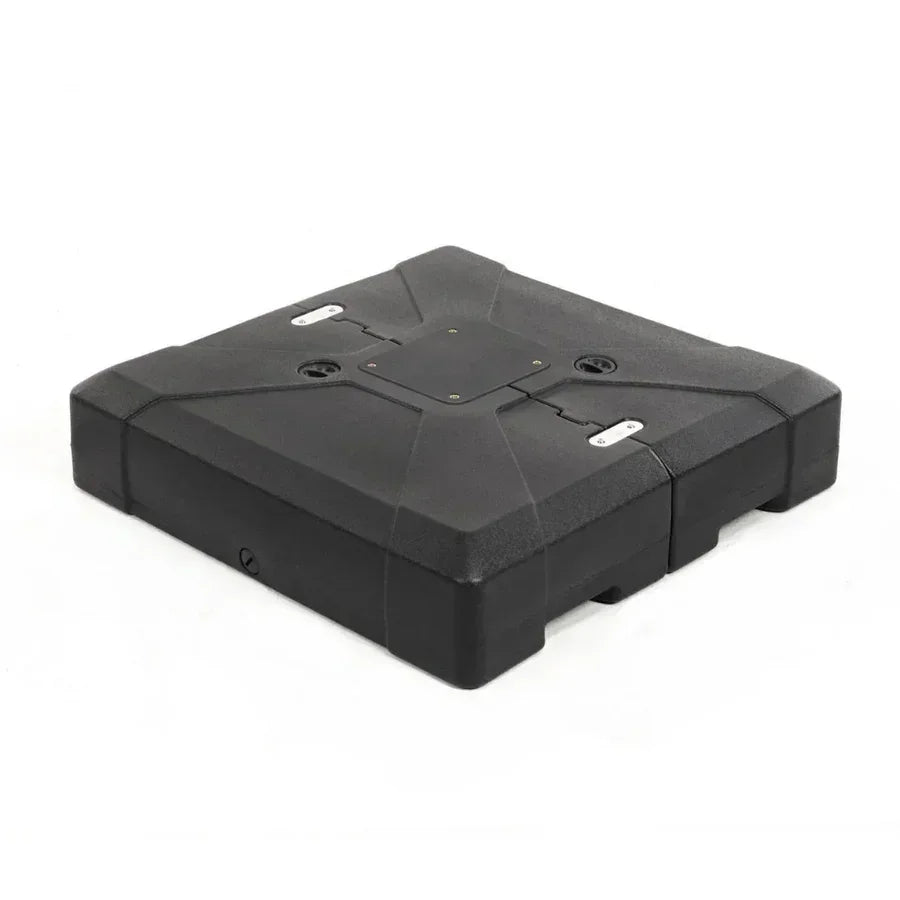
An under-table base earns its place only after it matches your umbrella's mounting hardware, fits the space beneath your table, and carries a capacity documented for that exact setup. A weighted under-table base helps only when the weight and mounting actually match your umbrella.
Confirm the Space Below the Table
Check the base's footprint against the room beneath your table, including legs, cross braces, and any stretchers that could stop it from centering under the hole. Confirm you can still reach fill ports or fasteners once the base is in place, and make sure it sits flat without rocking or pressing against furniture parts it wasn't designed to touch. If the base can't stay centered under the pole, it can't do its job no matter how much it weighs.
Match the Documented Support Configuration
Compare your umbrella's pole diameter or mounting hardware, canopy size, and the base's stated capacity or fill method before buying. Some of our own cantilever base listings document tiered capacities, such as 220, 280, or 330 pounds paired with specific umbrella-size ranges, but those figures apply to the cantilever mounting they were tested with and don't transfer to a through-table installation. Treat a cantilever base as a different product category unless its documentation explicitly covers a dining-table setup. You can browse umbrella accessories to compare base styles, but confirm the mounting design and capacity against your own table before choosing one.
How the Collar and Base Work Together
The collar and base solve two different movement problems, and both need to fit correctly for the setup to feel stable. Neither part can cover for a mismatch in the other.
Two Different Jobs in One Setup
A correctly matched collar takes up the lateral gap where the pole crosses the tabletop, so the pole stops sliding side to side inside the hole. The under-table base carries the lower support load and needs its own design match to the umbrella and table arrangement. Together they address the two points where an umbrella pole can move, but each one is only doing its own job, not backing up the other.

When the Combination Is Not Enough
Persistent looseness, a collar that binds or compresses, damaged hardware, table movement during use, or a base and umbrella pairing without matching documentation are all reasons to stop and recheck the setup. A collar cannot replace a base, and a heavier base cannot correct a pole that doesn't fit its hole. If any of these signs show up after installation, treat it as a fit problem to solve, not a detail to work around.
Wind Preparation and Maintenance Checks
Check the entire setup before wind picks up, not just the umbrella itself. A stable base and a tight collar don't matter if a gust catches an open canopy.
- Canopy fabric, ribs, and vents for tears, bent frames, or loose fasteners
- Pole movement inside the collar and table hole
- Base position, fill level, and any fastening hardware
- Tabletop and underside for cracks, gouges, or shifted furniture
- Clearance beneath the table so the base stays seated
Secure and inspect the umbrella according to its manufacturer instructions before a forecasted breeze, and close unstable canopies promptly rather than waiting to see if they settle down. The National Weather Service's Beaufort chart notes that umbrella use gets difficult around 25 to 31 mph, but that's general weather context rather than a tested limit for any specific patio umbrella. Follow your product's own instructions, and close sooner if gusts increase or the canopy starts to move on its own. For more detail on thresholds by canopy type, see our wind closing guidance.
FAQs
Does a heavier umbrella base make any table umbrella safe in wind?
No. Extra weight can help resist tipping, but it doesn't create a universal safe wind limit for every umbrella and table pairing. Follow the manufacturer's instructions for your specific setup, and close the canopy as soon as it becomes unstable rather than trusting base weight alone to keep it open.
Can I use a cantilever umbrella base under a dining table?
Not automatically. A cantilever base is built for a side-mounted pole, so its footprint, clearance, and load path can differ from what a through-table umbrella needs. Use one beneath a dining table only when the manufacturer's documentation confirms it supports that configuration.
Can I use any silicone ring if the umbrella pole fits through it?
No. The ring's inner diameter has to match the pole, and its outer diameter and profile have to seat correctly in the table hole, following the product's own installation instructions. Skip a ring that requires force to install, and don't stack multiple rings to fill a gap they weren't sized for.
What should I do if the umbrella still rattles after adding a collar?
Stop using the umbrella in windy conditions and recheck your measurements first. Confirm the collar hasn't compressed or worn down, verify the base is still centered with tight hardware, and replace or resize the collar if looseness remains after those checks.