To prevent mildew and UV fade on outdoor daybed canopy fabric in humid weather, follow a five-step care sequence rather than relying on a single protective product. Identify the fabric care instructions, clear off loose salt and soil, clean with the mildest permitted method, dry thoroughly with open airflow, and manage sun exposure with shade or a documented cover. Trapping moisture under covers before fibers dry is what accelerates fungal staining and material breakdown.
The Coastal Fabric-Care Sequence to Use First
This five-step order works for both retractable canopy fabric and daybed cushions, giving each stage one clear action.
The Five Actions That Come First
- Identify the fiber, weave, backing, and any care label or manual before doing anything else.
- Remove loose salt, dust, pollen, and organic debris with a soft brush or light dusting motion, not hard scrubbing.
- Clean with only the least aggressive method the documentation allows.
- Dry every treated piece completely with open airflow, not in an enclosed space.
- Choose shade, a documented compatible cover, or dry storage based on how damp the fabric still is and how long it will stay exposed.
The First Check Before Any Wet Treatment
Before applying any cleaner or wet method, find the care label or the exact product manual. Iowa State University Extension recommends dusting outdoor furniture first, followed by washing with mild detergent and thorough drying whenever the material allows it. If you cannot confirm what the fabric allows, stay with dry-soil removal and airflow until you can check compatibility.
What to Do After Rain, Fog, or Heavy Dew
Right after wet weather, treat standing water, damp fabric, and salt residue as three separate jobs instead of one rushed cleanup task. Handle the moisture first, then the residue, and confirm the fabric is completely dry before closing or covering anything.
The Post-Rain Sequence
- Remove standing water and, where the design allows, separate wet cushions from the frame or canopy.
- Once the surface is manageable to handle, clear loose salt, soil, and organic debris.
- Give the fabric shaded, open airflow instead of enclosing it while it is still damp.
- Confirm the fabric is completely dry before you cover it, retract a canopy, or move it into storage.
Retractable Canopy and Cushion Differences
A retractable canopy often has a specific open, retracted, or drainage position built into its design, so check the product manual for that model before you retract it after rain. Cushions hold water differently than a thin canopy fabric does, so separate them for drying whenever the furniture design permits it. For canopies with a retraction mechanism, our guide on rain and retractable awnings walks through water pooling and drainage in more detail.
How to Choose a Cleaner for Olefin or Polyester Fabric
Pick a cleaning method based on the manufacturer care label or manual, not on the fiber name alone. Olefin and polyester share useful outdoor traits, but weave, backing, and finish determine what the fabric can safely tolerate.

Cleaner Compatibility Ladder
| Approach | When it may fit | Boundary or next action |
|---|---|---|
| Mild detergent and water | Label or manual confirms wet cleaning is allowed | Rinse fully and dry with open airflow before reuse or covering |
| Water-only or dry-soil removal | Documentation limits treatment, or the issue is only loose debris | Brush or rinse gently; skip detergent until compatibility is confirmed |
| Bleach, solvents, fungicides, waterproofing sprays, disinfectants, pressure washing | Not a default choice for any fabric | Use only with explicit written approval from the exact product's care instructions |
Why Olefin Versus Polyester Is Not Enough
Fiber content is a starting point, not a full care plan. New Mexico State University Extension notes that fiber content and care must be evaluated alongside construction and finish when deciding how to clean upholstered pieces. Our Olefin fabric basics guide covers what that fiber typically offers, but a specific weave or finish can still change what is safe. Our outdoor daybed with an adjustable canopy, for example, uses an 80% Olefin and 20% polyester woven fabric; that composition tells you the general fiber mix, but you should still confirm the exact cleaning method against that listing's care guidance before treating it.
How to Wash, Rinse, and Dry Coastal Fabric
Once you confirm the permitted cleaning method, wash in a repeatable low-aggression order: dust, clean, rinse, and dry thoroughly with open airflow before returning fabric to use. This sequence protects finishes while preventing residue buildup.
A Low-Aggression Wash and Dry Sequence
- Dust or brush off loose soil before introducing any liquid.
- Apply only the permitted mild cleaning method from the compatibility ladder above.
- Rinse according to the instructions so no residue stays trapped in the weave.
- Space the fabric out and dry it completely with airflow before the next use or before covering it.
When Routine Care Is No Longer the Right Tool
If a stain is old, the fabric feels unstable, or staining persists after permitted cleaning, stop there instead of reaching for a stronger chemical or harder scrubbing. That is the point to check the exact product manual or contact a qualified textile-cleaning professional rather than experiment further.
How to Reduce UV Exposure Without Trapping Humidity
Managing mildew and UV fade on daybed canopy fabric in coastal climates requires balancing moisture evaporation with sun protection. Cut direct sun exposure first to limit cumulative light damage, but keep damp fabric ventilated so trapped moisture cannot spur mold growth.
Reduce Direct Sun First
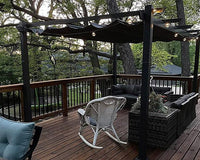
Conservation guidance from the National Park Service describes UV and visible-light damage to upholstery fabric as cumulative and irreversible, which is why reducing direct exposure matters even before any staining appears. If you have a retractable canopy, adjust its position according to the product's operating instructions rather than guessing. A pergola with a louvered roof is one example of a structure that can add overhead shade while still leaving room for airflow, though choosing that kind of structure is a separate project from fabric care. Our retractable pergola shade cover reports a 95% UV block rate on that specific 180 g/sq. m polyester panel, but that figure applies only to that listed product, not to canopy fabric in general.
Keep Shade From Becoming a Damp Enclosure
- Do not close a cover over fabric that is still visibly damp.
- Keep air moving during drying, and check covered furniture again after wet weather to confirm it stayed dry.
- Do not assume a fabric is breathable, mildew-resistant, or UV-rated just because it is labeled for outdoor use; confirm those properties in the product's own documentation.
When to Cover, Store, or Escalate Care
Whether to ventilate, cover, or move fabric into dry storage depends on how wet the material is and how long adverse weather will last. Choosing the right response prevents trapped condensation and protects fabric longevity.
Cover Versus Dry Storage
- Use open ventilation when the fabric is still exposed to damp air but you can check on it regularly.
- Use a documented, compatible cover only once the fabric is fully dry.
- Move removable components into dry indoor storage when a storm or an extended wet stretch makes outdoor drying unreliable, following the product's storage instructions.
The Escalation Boundary
The National Park Service also notes that removing old stains from fabric is a job for a textile conservator rather than a stronger cleaning attempt, since aggressive DIY treatment on an unstable or old-stained fabric can make the damage worse. If your fabric fits that description or the care instructions are missing, that is the signal to stop and get exact guidance instead of pushing harder with routine methods.
A Practical Coastal Fabric Maintenance Schedule
Following a consistent routine is the most reliable way to prevent mildew and UV fade on outdoor daybed canopy fabric across changing coastal seasons. A trigger-based schedule works better than a fixed calendar because salt, humidity, and sun exposure fluctuate constantly.
Trigger-Based Maintenance Schedule
| Trigger | Action | Completion check |
|---|---|---|
| After rain, fog, or heavy dew | Remove standing water, clear residue, ventilate | Fabric is fully dry before covering or retracting |
| Recurring inspection during the season | Check for salt film, soil, or early staining | No residue left sitting in the weave |
| Visible salt, soil, or spills | Clean with the permitted method from the ladder above | Rinsed and dried with open airflow |
| Season change or extended storage | Clean as directed, then confirm storage method | Fabric dry, residue-free, and compatible cover or storage confirmed |
Adjust the Schedule to Exposure
Check more often when drying is slow, salt exposure is heavy, or the fabric sits in direct sun most of the day. A tighter schedule cannot substitute for a compatible cleaner or missing care instructions, so confirm those first before increasing how often you clean.

FAQs
Can I leave a cover on outdoor daybed fabric during humid coastal weather?
A cover by itself does not prevent mildew. Use one only once the fabric is fully dry and the cover's ventilation and compatibility are documented for that fabric; otherwise, favor open airflow or dry storage until conditions improve.
What should I do if mildew staining remains after routine cleaning?
Stop increasing chemical strength or scrubbing pressure. Document the stain and the fabric, then check the exact product manual or contact a qualified textile-cleaning professional, since persistent or old staining is outside the range of routine DIY care.
Is pressure washing or bleach safe for outdoor Olefin or polyester fabric?
Treat both as off-limits by default. Pressure washing, bleach, solvents, fungicides, and waterproofing sprays should only be used if the exact care documentation for that fabric expressly permits it; otherwise, stick with the least aggressive permitted method.
What if I cannot find the fabric care label?
Identify the exact model and fabric, then contact the manufacturer or check the product listing for current care instructions. Until you have that confirmation, limit care to dry-soil removal and airflow rather than guessing at a wet or chemical treatment.