Choosing modern outdoor furniture for a splash zone comes down to two separate decisions, not one. First, check the frame material, such as powder-coated aluminum or resin wicker, for how it holds up against chlorine, saltwater, and rust. Then evaluate the seating surface, whether Textilene, Olefin, or a padded cushion, for water drainage and drying speed.
No single material fits every pool area. The right combination depends on pool water chemistry, splash frequency, and whether the chair sits under a backyard gazebo or in direct sun. Always verify the exact frame finish and fabric construction before purchasing.
The right poolside chaise material is a frame-and-surface decision
A chaise lounge consists of two distinct components with different functional roles: a frame that resists corrosion and a seating surface that manages water. Evaluating each component separately prevents common material mismatches.

Start with the frame
The frame carries the primary structural risk near a pool. Aluminum and resin wicker respond differently to chlorine, saltwater, and standing moisture, but the finish, joints, and hardware on your exact chair matter as much as the base material. A powder-coated aluminum frame with an uneven finish or exposed joint can pit sooner than a well-finished frame made from the same alloy. Check the coating type, joint welds, and hardware material before assuming aluminum alone settles the corrosion question.
Then inspect the seating surface
The seating surface decides how fast the chair dries after a swimmer gets out. An open sling, mesh, or handwoven rope drains quickly, while a padded cushion can trap moisture in its foam core even if the outer surface feels dry. Ask whether the cushion cover is removable and whether the core uses open-cell or closed-cell foam, since that detail affects drying time more than the fabric name printed on the tag.
Comparison table: what the material label does and does not tell you
This table separates evidence-supported material characteristics from details that depend on specific assembly, helping you evaluate options for chlorine and saltwater exposure at a glance. Fiber or alloy names alone do not establish complete poolside performance.
| Dimension | Powder-coated aluminum | Resin wicker | Textilene | Olefin |
|---|---|---|---|---|
| Corrosion/rust risk | Rust-resistant, but pitting is possible at coating defects or joints | Not a metal; no rust risk, though frame quality still varies | Not established generically; depends on exact grade | Not established generically; depends on exact grade |
| Chemical discoloration | Coating can fade or chalk with heavy chlorine and UV exposure over years | Resin can fade with prolonged sun and chemical splash | Construction-dependent; verify manufacturer chemical guidance | Construction-dependent; verify manufacturer chemical guidance |
| Water retention | Low; solid frame does not absorb water | Low for resin itself; hollow weave can trap water | Low in an open sling; higher if backed or padded | Higher when used in padded cushions; lower in open weave |
| Drying behavior | Dries quickly; check joints for trapped moisture | Dries quickly on surface; check weave gaps | Fast when constructed as an open mesh sling | Slower when assembled as a cushion cover |
| Comfort | Firm; usually paired with a separate cushion | Moderate flex; often paired with a cushion | Firm sling feel with minimal padding | Soft, padded feel typical of cushions |
| Maintenance | Rinse and dry regularly; inspect coating and joints | Wipe down; position away from intense sun when possible | Wipe or hose down; follow the care tag | Follow care tag; spot-clean padded covers |
The pattern above matters more than any single cell. Metal frames raise corrosion questions, fiber and fabric surfaces raise water-retention and drying questions, and neither is answered by the material name alone. The next two sections separate those two decisions in more detail.

Aluminum vs resin wicker: frame choice in chlorine and saltwater splash zones
For modern outdoor furniture placed near a pool, powder-coated aluminum and resin wicker experience distinct wear patterns. Neither option is completely maintenance-free, so specific coating quality and frame construction determine long-term durability.
Powder-coated aluminum
Aluminum resists rust because it does not corrode the way steel does, but it is not immune to damage near a pool. Research on aluminum alloys in marine environments shows that under stagnant or low-flow conditions, aluminum can experience chloride pitting corrosion at coating defects or exposed joints, even though the metal broadly resists seawater corrosion when galvanic contact is avoided. A separate study on aluminum surface treatments found that coating inhibition performance declined as chloride exposure time increased. In practice, a powder-coated aluminum frame is a dependable choice for a chlorinated or saltwater pool only when you confirm coating quality, joint welds, and hardware durability.
Resin wicker
Resin wicker is a synthetic weave rather than natural rattan, behaving more like a woven polymer than a natural fiber. Extension outdoor furniture maintenance guidance describes plastic resin as durable and weather-resistant, while wicker structures generally hold up outdoors but benefit from shade and periodic care because intense sun and moisture exposure affect surface finish over time. That makes resin wicker a practical frame choice for a chaise placed under a backyard gazebo or covered patio, provided you dry cushions and inspect the weave for trapped water. Matching the frame to local sun, humidity, and salt exposure is covered in our climate-based furniture selection guide.
Textilene vs Olefin: choosing the seating surface
Textilene and Olefin represent broad fabric categories rather than uniform finished products. Weave density, backing layers, and cushion assembly dictate actual drying rates and chemical resilience.
Textilene: verify the exact grade and assembly
Textilene is a woven, vinyl-coated polyester used in slings, and its performance varies widely by grade and weave openness. Available research on this fabric family does not establish generic chlorine resistance, water retention, or drying speed for every Textilene product, so treat the name as a starting point rather than a performance guarantee. Before buying, confirm whether your chair uses an open sling, a solid-backed sling, or Textilene sewn over a cushion core, since an open weave drains and dries far faster than a backed or padded version.
Olefin: verify fiber, weave, and cushion behavior
Olefin is a synthetic fiber frequently used as a cover fabric on padded outdoor cushions rather than as an open sling. Product listings that pair Olefin fabric with padded cushions describe that material pairing, but they do not guarantee rapid drying or specific chlorine and saltwater resistance for the entire assembly. Confirm the cushion core material, whether the cover is removable and washable, and how water exits the cushion. For background on how this fiber is typically used, see our Olefin fabric basics article.
Choose the combination by poolside scenario
Selecting modern outdoor furniture for a pool area works best when you match the frame and surface combination to your actual splash exposure. Each scenario pairs a practical recommendation with one decision-changing verification step.
- Frequent splash exposure: Prioritize an open, draining sling, mesh, or rope seat over a padded cushion. Confirm how water exits the weave and how quickly frame joints dry.
- Chlorinated pool: Either frame material can work if the finish is intact. Verify the coating or resin care instructions, then plan to rinse chlorine residue after regular use.
- Saltwater or coastal pool: Aluminum provides a resilient frame if the coating, joints, and fasteners are rated for chloride exposure. Verify hardware composition before purchasing to avoid mixed-metal galvanic contact.
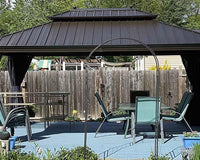
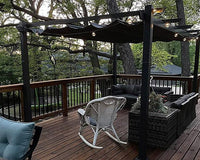
- Shaded or covered placement: Resin wicker fits well under a backyard gazebo or pergola because shade limits UV degradation, though wet cushions and hidden moisture in the weave still need routine drying.
- Lower-maintenance priority: Favor the simplest documented assembly, such as an open sling on an aluminum frame, because fewer padded layers mean fewer places for moisture to accumulate.
Verify the exact chaise construction before you buy
When evaluating modern outdoor furniture before purchase, verify specific manufacturing details rather than relying solely on generic material names. Documented product specifications provide clear construction evidence.
Verify the frame and surface
- Frame material, alloy grade, and coating or finish type
- Joint and weld quality, plus fastener hardware material
- Seating surface construction: open sling, mesh, rope, or padded cushion
- Cushion core composition and whether the cover is removable and washable
- Drainage paths and component drying characteristics
- Chemical-care instructions, cleaning restrictions, and warranty terms
- Weight capacity and overall dimensions for your intended space
Use product pages as construction records, not material guarantees
A product listing is useful for confirming exact construction details rather than proving unstated chemical resistance ratings. The PURPLE LEAF aluminum pool chaise is documented with a rust-resistant aluminum frame, weather-resistant PE rattan weave, two removable cushions, a designated pool-use scenario, and a 440-pound weight capacity. Those specifications confirm assembly and materials, but they do not replace standard post-swim rinsing and regular inspections once the chair is placed near pool water.
Poolside maintenance: rinse, dry, clean, and inspect
A short routine after each pool session preserves modern outdoor furniture by limiting residue buildup on any frame or fabric. Follow these steps in order, then consult specific product care instructions for chemical thresholds.
- Rinse off chlorine or salt residue with fresh water as soon as practical after swimming.
- Clean with mild detergent and water rather than harsh chemical solvents, following the manufacturer care guidelines.
- Dry the frame, seating surface, and cushions completely, paying extra attention to joints, seams, and cushion undersides.
- Inspect the coating, welds, hardware, and fabric seams for trapped moisture, discoloration, or early surface wear.
- Follow all model-specific care instructions; regular rinsing and drying reduce chemical accumulation but do not guarantee an indefinite lifespan.
FAQs
Does chlorine damage aluminum pool furniture frames?
Chlorine residue left on the frame combined with surface scratches or exposed joints can cause localized pitting over time. Rinsing chlorine residue with fresh water after swimming and inspecting the powder coating regularly helps prevent finish degradation.
Is resin wicker safe to use right next to a saltwater pool?
Resin wicker does not rust because it is synthetic rather than metallic, but salt residue and intense sunlight can gradually fade the weave. Rinsing the resin and keeping it in partial shade, such as under a gazebo or awning, extends its appearance.
Why does my cushion stay wet longer than the chair frame?
The chair frame dries rapidly because solid aluminum and synthetic resin do not absorb water. A padded cushion can hold moisture inside its foam core even when the surface fabric feels dry, making removable covers and breathable cores essential for fast drying.
Are Textilene and Olefin fabrics interchangeable for poolside use?
Textilene is most commonly manufactured as an open, breathable sling that lets water drain through, whereas Olefin is frequently used as an upholstery cover over foam cushions. Because their drying times and drainage properties depend on the cushion assembly, they should be evaluated based on chair construction rather than fiber name alone.
Sources
- Iowa State University Extension and Outreach. Maintenance of Outdoor Furniture.
- U.S. Department of Energy OSTI. Seawater Aluminum Corrosion Study.
- National Center for Biotechnology Information. Aluminum Alloy Coating Research.