No single side panel wins on every hot afternoon. Gazebo screens, gazebo curtains, open sides, and mixed setups each solve a different comfort problem, and the right pick depends on what bothers you first: bugs, glare, stale air, or nosy neighbors. Instead of assuming one option is best, start by naming the discomfort you notice most on a typical afternoon, then match that problem to a panel type before you shop.

Choose the Side-Panel Setup by the Problem You Feel First
The fastest way to choose is to work backward from your biggest complaint, not from a product label. Each configuration trades one comfort gain for one comfort cost.

- Gazebo screens: pick these when bugs are the main issue and you still want some air movement. Trade-off: mesh density and screened area limit how much breeze gets through.
- Gazebo curtains: pick these when moving sun, glare, or privacy at certain hours is the problem. Trade-off: closed curtains cut ventilation, so you have to open them again later.
- Open sides: pick these when a steady cross-breeze matters more than anything else. Trade-off: no barrier against insects, glare, or view from the yard.
- Mixed panels: pick this when one side gets afternoon sun and another needs airflow or privacy. Trade-off: more setup and hardware to manage than a single panel type.
Screens Versus Curtains: Compare the Comfort Tradeoffs
Screens and curtains solve different problems even though both attach to the same frame. The table below compares them against open sides across the factors that actually change daily comfort.
| Factor | Gazebo screens | Gazebo curtains | Open sides |
|---|---|---|---|
| Airflow | Depends on mesh opening size and screened area; a fine or dirty mesh can noticeably restrict airflow | Reversible: raise or tie back for a breeze, lower for coverage, but airflow drops while closed | Fewest barriers, best natural airflow |
| Sun and glare | Softens the view but was not built to control glare on its own | Can be adjusted to follow changing afternoon shade, since movable curtains can be repositioned as the sun shifts | No protection from low-angle side sun |
| Privacy | Consistent visual barrier while installed | Adjustable by time of day; close for privacy, open for a view | None |
| Insect protection | A logical first option when the mesh and gaps are suitable; greenhouse screening guidance notes that opening size affects airflow and exclusion, but it does not test residential gazebo performance | Not an insect barrier unless the product documentation specifically names an insect-mesh layer | None |
| Operation | Usually fixed once installed | Movable: open, close, or tie back as needed | Nothing to operate |
| Maintenance | Rinse mesh gently to clear dust, dirt, and pollen | Clean, dry, and store fabric per care instructions | None |
Treat an ordinary curtain as a shade and privacy panel, not a bug barrier, unless its listing states an insect-mesh layer. That single distinction avoids the most common shopping mistake in this comparison.
Match the Setup to Sun Angle, Climate, and Privacy
Your specific afternoon conditions, not a general rule, should decide between screens, curtains, and open sides. Match your dominant condition to the setup below, then accept its one tradeoff.
When Late-Afternoon Glare Is the Problem
If one side of your patio gets direct sun late in the day, prioritize that side first. As a hot-climate shading principle, operable exterior shading can close during direct sun and reopen afterward, but this window guidance is not a measurement of gazebo performance. A curtain on that side, adjusted as the sun moves, usually beats a fixed screen here. Seating position matters too: shifting chairs away from the glare-facing side can reduce how much coverage you actually need.
When Humid Air and Breezes Matter Most
On humid patios, protect the cross-breeze before anything else. Keep at least one usable air path open, and avoid closing curtains on both sides at once. Open sides work well when insects and privacy are secondary concerns. If you want a barrier without losing much air movement, look for a more open screen weave, but treat "how open" as a fit question you check on the product listing, not a guaranteed rating.
When Insects or Evening Privacy Take Priority
For bug-heavy evenings, start with screening on the sides that need coverage. Use a fuller screen arrangement when insects affect the whole seating area, or choose a single-side screen or mixed setup when the problem is localized. If you only need to block one sightline, such as a neighbor's window at dusk, a partial curtain on that single side can solve the problem without enclosing the whole structure.
Check the Frame, Material, and Attachment Points Before You Buy
Verify fit before you order any screen or curtain, because the panel only works if it matches your existing structure. Run through this list before checkout:
- Measure your actual frame span and panel area; do not rely on the gazebo's marketing size alone.
- Identify the attachment points: rails, hooks, tracks, zippers, or fasteners already on your structure.
- Check door and opening clearance so the new panel does not block a walkway or entrance.
- Confirm the frame material accepts your chosen attachment method. An aluminum gazebo, a cedar pergola kit, or a wood pergola kit each takes hardware differently, and custom structures from local gazebo builders may use nonstandard rails.
- Note whether your structure is a lightweight, portable garden gazebo or a permanent build; lightweight frames may need extra anchoring once panels add wind load.
- Decide whether you want partial, side-specific, or fuller enclosure, since more coverage changes access and airflow as much as it changes privacy.
Do not order a retrofit panel until the frame dimensions, attachment method, and opening clearance match the product's own installation instructions.
Install and Care for Panels Without Losing Airflow
Good installation protects the airflow you chose, and simple maintenance keeps screens and curtains doing their job through the season.
Set Up the Airflow Path First
Before you attach anything, decide which openings must stay usable for a breeze. Test that curtains raise, lower, or tie back without snagging the frame or blocking that path. Greenhouse ventilation guidance on usable openings and adjustable curtains offers a planning principle, not a tested residential gazebo result. For your gazebo, check that the actual openings remain usable after installation. Check that retainers and attachment points hold the panel securely so it does not billow or pull loose in wind.
Inspect and Clean Before the Next Use
Look for gaps, loose edges, damaged mesh, and dirt or pollen buildup before a bug-heavy evening or a windy stretch. Rinse screen mesh gently with water rather than scrubbing it, since clogged openings cut both airflow and visibility. Follow the curtain fabric's own care and storage instructions, and let materials dry fully before folding them away.
Shop the Next Step for Your Comfort Goal
Your next move depends on which problem you just identified.
For Insect-Focused Comfort
If insect separation across the seating area is the goal, start with our screened-gazebo guide, which compares enclosure continuity, traffic flow, and upkeep before you commit to a full screen house.
For a New Gazebo With Curtain and Netting Features
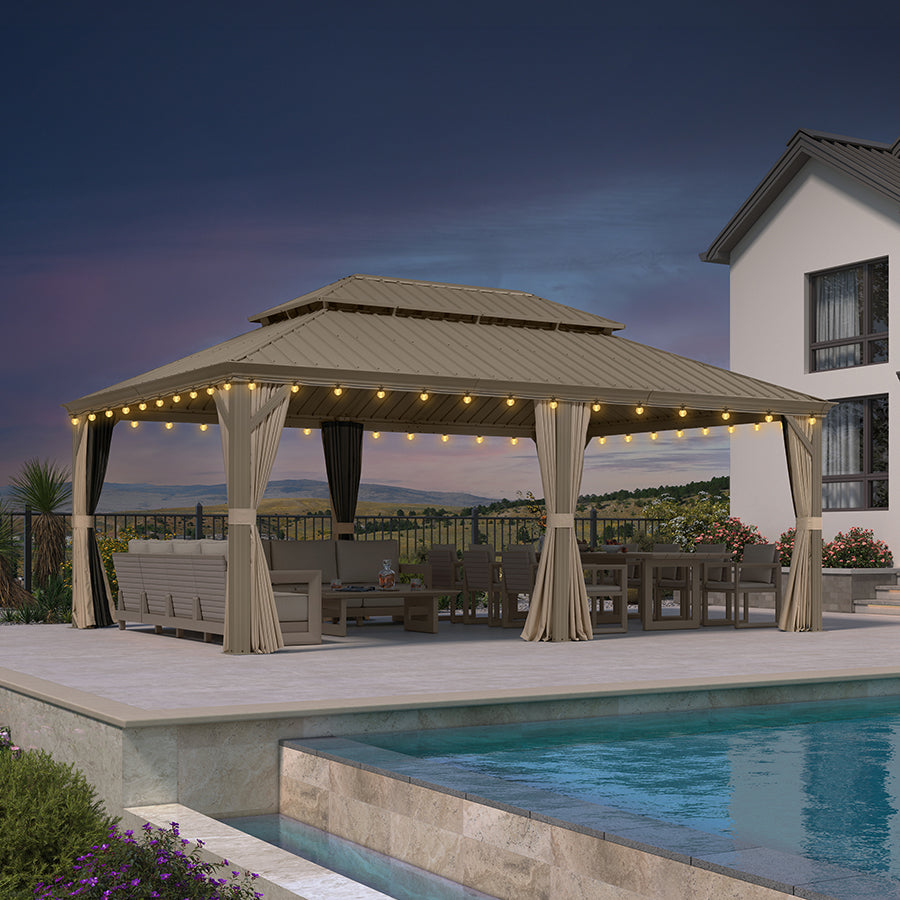
If you are planning a new structure rather than retrofitting an old one, our gazebo with curtains and netting pairs a champagne-finished aluminum frame and galvanized hardtop roof with included upgrade curtains and thickened 260 GSM insect netting, so you get both panel types from one purchase. If you already own a gazebo, confirm your existing frame's compatibility before treating any curtain or netting product as a drop-in retrofit.
For Shoppers Still Comparing Gazebo Sizes
If you are still deciding on footprint and configuration, browse our 10' x 10' gazebo options to compare layouts before you lock in a specific screen or curtain choice. Use this step for size and configuration research, not as proof that a given panel fits any particular model.
Use open sides when hot, breezy conditions make ventilation the priority. Choose screens when insects are the main problem and some airflow must remain. Choose curtains when sun or privacy changes through the afternoon. In mixed conditions, cover only the sides that need it, then confirm dimensions and attachment points before ordering.
FAQs
Are Gazebo Screens Better Than Curtains for Insect Protection?
Screens are the better starting point when insect exclusion is the main goal, as long as the mesh stays intact and gaps around doors and edges stay closed. Ordinary curtains should not be treated as insect barriers unless the product listing specifically describes an insect-mesh layer.
Do Gazebo Screens Block Airflow on Hot Afternoons?
It depends on the mesh opening size, the total screened area, and how clean the mesh is. A fine or clogged screen can noticeably cut airflow, while an open weave preserves more of it. There is no universal yes or no answer, so check the actual product and keep intended openings clear.
What Should I Do With Gazebo Curtains in Windy Conditions?
Follow the manufacturer's instructions and secure any retainer or attachment hardware before relying on the curtain in wind. Curtains do not carry a universal wind rating, so inspect the hardware and openings first and close or tie back panels if the attachment feels loose.
How Do I Clean Gazebo Screens and Curtains?
Rinse screen mesh gently with water to clear dust, dirt, and pollen before openings get clogged. For curtains, follow the fabric's own care, drying, and storage instructions rather than using a one-size-fits-all cleaning method.