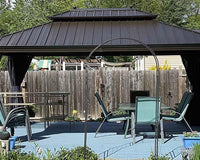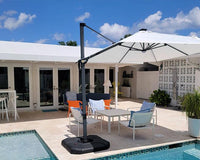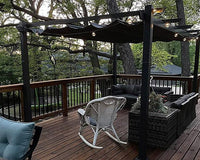
A gazebo for sale is worth comparing only after you’ve matched its assembled footprint, post locations, installation surface, access route, and key support documents to your property. Start with measurements and site constraints, then review the roof and runoff path, anchoring, delivery, assembly, replacement parts, warranty, and returns. If a listing leaves out a dimension or model-specific term that could affect your decision, request it in writing before adding the gazebo to your cart.

Measure the Installation Area Before Comparing Gazebo Listings
Start with a measurable fit check: compare the exact assembled width, depth, height, post positions, overhang, usable circulation space, and access route with your yard. A nominal size or attractive photo won’t tell you whether the structure will block a door, crowd furniture, or limit maintenance access.
Record the usable installation area in feet, and mark furniture, door swings, grills, property lines, branches, utilities, and the route needed to assemble and maintain the structure. Include the intended setup, such as dining, seating, entertaining, or poolside shade. The space still needs to work after the posts and furniture are in place.

Then compare your notes with the model’s assembled-dimensions diagram. Look specifically for:
- Overall assembled width, depth, and height—not just the advertised footprint.
- Post or leg positions, roof overhang, and any stated level-surface or anchoring requirements.
- Overhead obstructions, circulation around furniture, and access for cleaning or repairs.
- Gate, driveway, stair, and pathway dimensions that could affect delivery and assembly.
A listing passes this first screen only when the diagram and requirements match the site and intended use. If it doesn’t show assembled dimensions, post positions, or required clearances, treat fit as unresolved. Ask for the model-specific diagram or a written answer, save it with the listing, and compare features only after you receive that response.
Verify the Roof Construction Matches the Site and Upkeep Plan
Choose a hardtop or soft-top based on how permanent you want the structure to be, how much seasonal handling and upkeep you’re willing to do, the site’s exposure, the documented materials, and your budget. Neither construction type is universally better, so the listing must provide enough detail for a model-specific comparison.
For each outdoor gazebo listing, identify the roof and frame materials, any corrosion-protection language, ventilation or double-roof design, care instructions, and information about replacement roof components. Separate documented construction from marketing adjectives. Words such as “durable,” “weather-resistant,” and “all-weather” should prompt you to find the manual, material details, limitations, and maintenance requirements—not be treated as proof of service life or weather performance.
A hardtop may suit a buyer seeking a more permanent setup when its documented care and site requirements are acceptable. A soft-top may suit a buyer who values seasonal handling or a different upkeep plan. Those are selection considerations, not performance guarantees. If the listing doesn’t clearly identify the construction, care requirements, or limitations, ask the seller for the exact specifications before settling on a roof type.
Trace Where Rainwater Will Go
A roof passes the water-handling check only when you can trace a documented slope, gutter, channel, outlet, or other runoff path and see where the water will land on your property. The roof’s appearance alone doesn’t prove leak-free performance or show whether runoff will affect a doorway, seating area, walkway, foundation, or neighboring space.
Start at the roof and follow the water path to its outlet or ground-level destination. Look for a drainage diagram, outlet location, channel-cleaning instructions, or maintenance details in the exact model listing or manual. Mark the likely landing point on your site plan, then compare it with doors, furniture, walkways, foundations, and existing drainage conditions.
If the listing makes a broad weather claim but doesn’t show how water exits, request the model-specific manual or drainage details. Don’t assume that a gutter, channel, or double-roof feature guarantees a particular result at your site. Resolve the outlet and maintenance requirements before comparing appearance or accessories.
Confirm Anchoring and Surface Requirements
The gazebo passes this check only when its specified anchor method, hardware, anchor locations, level-surface requirement, and preparation instructions match the proposed base. Compare the instructions with the actual concrete, pavers, deck, soil, or other surface rather than inferring suitability from a heavier-looking frame.
Read the exact instructions for anchor locations, included hardware, tools, labor, foundation or level-surface requirements, and stated wind or weather limitations. Also check local planning and zoning resources and, separately, any HOA rules before installing a permanent outdoor structure. Requirements vary by jurisdiction, so check locally rather than assuming a universal permit rule.
For example, a retailer-hosted manual for one gazebo model includes anchoring instructions and warranty exclusions: it recommends anchoring that model to a deck or concrete as shown and excludes wind or improper-anchoring damage from that product’s warranty. This is a model-specific example, not a rule for every gazebo.
Before ordering, record the proposed base, anchor hardware and locations, preparation work, installer or labor needs, and the relevant warranty exclusions. If the manual doesn’t explain how the structure fits your surface, request model-specific instructions instead of substituting a generic anchoring method.
Clear the Delivery and Assembly Path Before Checkout
A suitable listing still needs a workable destination and assembly plan. Confirm the exact delivery and unloading terms for your address, then compare the shipment route and assembly requirements with the property before paying.
- Delivery location and access: Confirm the drop-off point, freight appointment process, unloading responsibility, and whether the route includes gates, narrow turns, stairs, slopes, or other restrictions.
- Packages and unloading: Request the package count and dimensions. Check whether the current terms describe curbside, threshold, or another delivery arrangement, and don’t assume unloading is included.
- Assembly labor and tools: Confirm the expected number of adults, special tools, foundation preparation, and whether paid assembly is available or required. Don’t assume assembly is included.
- Inspection and damage reporting: Ask when and how to inspect the packages, along with the deadline and process for reporting shipping damage. Save the current instructions and seller response with the order record.
The delivery and assembly path passes only when the destination-specific terms and physical route are clear. If an oversized package, unloading obligation, or damage deadline is vague, ask the seller to clarify it in writing before checkout.
Test Replacement Parts, Warranty, and Returns Before You Pay
The final ownership check is whether the exact listing documents a workable parts, warranty, and return process. General marketing copy or a broad support page can’t establish model-specific coverage, so save the current terms and pause when a critical question remains unanswered.
| Check | Question to answer before checkout | Warning sign |
|---|---|---|
| Replacement parts | Can the seller identify the exact model’s parts and explain how to order them? | No model, serial, component, or ordering process is provided. |
| Warranty coverage | What is covered, what is excluded, and who pays applicable labor or shipping costs? | Coverage depends on unclear conditions or the seller won’t answer in writing. |
| Returns | What are the window, oversized-item charges, opened-package rules, damage process, and repacking duties? | Return costs or responsibilities are missing for an opened or assembled structure. |
Check Replacement Parts and Warranty Coverage
Ask how the seller identifies and orders parts for the exact model, whether a model or serial number is required, and which components are covered. Review exclusions, proof-of-purchase rules, claim steps, maintenance obligations, and any labor or shipping limits. If the seller can’t answer a model-specific question, treat the parts or coverage term as unresolved rather than assuming it isn’t available.
Read Return Terms for an Oversized, Opened Item
Check the return window, restocking and return-shipping charges, opened-package and damage rules, oversized-item exceptions, refund timing, and responsibility for disassembly, repacking, and transport. These terms can change the risk of a large online purchase even when the gazebo appears to fit.
Save the listing, dimension diagram, assembly instructions, warranty, parts information, delivery terms, and return policy. Request written answers to any unresolved model-specific question, then add the gazebo for sale to your cart only when the remaining purchase risk is acceptable. For later ownership checks, keep an annual gazebo maintenance checklist with your records, but don’t use it as proof of the selected model’s warranty or parts coverage.
FAQ
What Should I Measure Before Buying a Gazebo Online?
Record the assembled width, depth, and height, then map post positions, overhang, furniture, circulation, maintenance access, and the delivery route. Use the exact listing diagram to resolve missing dimensions before checkout.
Is a Hardtop Gazebo Better for a Backyard?
Not universally. Match hardtop or soft-top construction to the permanence you want, seasonal handling, upkeep, site exposure, documented materials, and budget. If the listing doesn’t explain those model-specific details, request them before choosing.
What Should I Check Before Ordering a Large Gazebo for Delivery?
Confirm the drop-off location, package count and dimensions, unloading responsibility, access through gates and turns, assembly labor and tools, and the deadline for reporting damage. Get destination-specific answers in writing when the listing is vague.
What Should a Gazebo Warranty and Replacement-Parts Policy Include?
Look for exact-model parts identification, covered components, exclusions, proof-of-purchase rules, claim steps, maintenance obligations, and labor or shipping limits. If the seller can’t answer for the selected model, pause the order until the terms are documented.