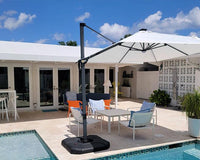
Fall patio comfort starts with the condition that ends a session—not with a favorite structure or accessory. Use screens first when bugs are the main problem, lights when earlier darkness cuts use short, and an overhead-coverage comparison when rain is the barrier. Curtains can add flexible privacy or partial enclosure, while cooler temperatures call for a separate expectation check: these categories do not automatically warm outdoor air.

Match the problem that ends patio use to the narrowest first move for fall patio comfort
The best first move is the narrowest category that addresses the problem you see repeatedly. Before choosing one, note where people sit, when use stops, which direction the patio faces, where water drains, and whether power or attachment points are available. A site map covering the seating footprint, access, drainage, utilities, and exposure can show whether a seemingly suitable change actually fits the space.
| Symptom that ends use | First category to evaluate | What it may not solve, plus the first check |
|---|---|---|
| Bugs around the seating zone | Screens first; curtains if flexible opening and privacy matter | Neither guarantees an insect-free patio. Check openings, traffic, doors, views, airflow, nearby water-holding spots, and attachment points. |
| Earlier darkness | Lights | Lighting does not replace insect screening, side protection, or overhead rain coverage. Map seating, dining, and walking paths, then check power and mounting options. |
| Rain over the seating area | A louvered pergola or hardtop gazebo | Neither should be treated as complete weather protection. Compare the footprint, exposure, access, surface, anchoring approach, and runoff path. |
| Privacy from a particular direction | Curtains for flexible coverage; screens for a more consistently defined boundary | Privacy treatment changes only the sightline it covers. Check seated and standing views, opening clearance, and attachment points. |
| Wind at a specific opening | Diagnose the exposed side before choosing a screen, curtain, or structure | A roof does not close off side exposure, and no generic barrier is right for every site. Check wind direction, nearby walls or landscaping, access, drainage, and anchoring conditions. |
| Cooler outdoor air | Separate temperature from exposure before adding an enclosure category | A screen, light, pergola, or gazebo should not be assumed to warm outdoor air. Check whether rain, darkness, insects, or exposure is the actual issue first. |
Treat this matrix as a category selector, not a product ranking. Complete the site check for a row before moving from a general idea to a specific installation or accessory.

If bugs end patio use first, test whether the seating zone can be screened
Screening is the closest category match when insects around the main seating area are the reason people leave. Curtains may work better in a covered space when you want to open and close the sides for different activities or combine flexible privacy with partial enclosure. Neither option guarantees an insect-free space; openings, gaps, traffic, access, and consistent use affect how continuous the boundary remains.
Before choosing, inspect containers, gutters, vegetation, walls, and other nearby conditions that can create sheltered areas or hold water. Check nearby water sources and sheltered seating conditions, along with airflow around the seating zone. These observations do not replace screening when bugs are the main problem, but they can show whether discomfort is concentrated near one part of the patio.
Then test the enclosure fit. Can the main seating zone be screened without blocking a door, narrowing a walkway, limiting necessary access, or cutting off a useful view? Are there suitable attachment points, and can people pass through without leaving the most-used opening exposed? Make screening the first move when the zone can be enclosed with manageable openings. If circulation or attachment conditions make that impractical, reassess whether flexible curtains, privacy treatment, or an overhead change addresses the more immediate limitation.
If earlier darkness ends use first, make lighting the first upgrade
Lights are the most direct category to evaluate when the patio remains comfortable but becomes difficult to use after sunset. Plan for the activities that continue into fall, such as sitting, dining, and walking, rather than choosing based on brightness alone.
Start by marking the seating and walking paths. Check the nearest power source, cord routing, weather exposure, hanging or mounting points, glare, and conflicts with an existing or future structure. A light that helps one seating position may create glare for another, so view the placement from the chairs and from the approach to the patio before committing to a layout. To compare options, you can review outdoor string lights, but the destination does not establish a brightness, coverage, power, or weather rating for every option.
Lighting solves the darkness problem only. It does not replace screening when insects end use, side protection when wind is uncomfortable, or overhead coverage when rain is the barrier. If the patio is already unusable before dusk because of bugs or exposure, lighting should be a secondary change rather than the first purchase.
If rain ends use first, compare adjustable and consistently roofed overhead coverage
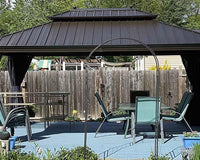
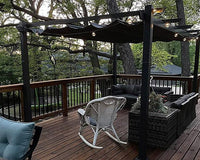
When rain over the seating area ends a session, compare a louvered pergola with a hardtop gazebo based on the type of overhead coverage you want. A louvered pergola is the category to evaluate when adjustable open or covered conditions are central to the plan. A hardtop gazebo is the category to evaluate when a more consistently roofed, defined outdoor room is the main requirement and the footprint fits.
This is a planning distinction, not a general weather-performance guarantee. Roof design, openings, exposure, drainage, installation conditions, and local requirements affect the result. A roofed structure also changes how water moves across the site. Before choosing, trace roof runoff to a safe drainage path rather than assuming the existing patio or landscape can receive it without a problem.
Compare the proposed footprint with the seating plan and preserve clear access around it. Review the surface and anchoring approach, nearby utilities, side exposure, and the location of doors and walkways. Check local planning or zoning requirements for the site instead of relying on a universal permit, setback, or building-code assumption. If those checks do not pass, pause the structure decision rather than treating an accessory as a substitute for a site-specific assessment.
If privacy is the issue, choose between flexible curtains and a more defined screen
Choose curtains when privacy needs change by time, direction, or activity and you want to open the sides when privacy is unnecessary. Choose screens when a more consistently defined boundary is also useful for controlling bugs. This choice concerns sightlines and enclosure style, not automatic protection from wind, rain, darkness, or cooler temperatures.
Check the view from both seated and standing positions during the hours the patio is used. Identify the direction of unwanted views, then measure the clearance needed to open and close the treatment without interfering with chairs, doors, or walkways. Confirm attachment points before deciding how many sides need coverage. A single side may solve a specific sightline; covering more sides changes access and airflow, so do not assume that more coverage is always the better fit.
If wind makes the patio uncomfortable, identify the exposed side before adding a barrier
Start with the side or opening that makes seating uncomfortable. Then assess whether a screen, curtain, or structure can address that boundary without creating a poor layout or uncertain attachment condition. Wind is a site-specific exposure question, not a reason to assume that one generic accessory will block it.
Observe wind direction at the seating area and note nearby walls, fences, or landscaping that change exposure. Check whether a proposed barrier interferes with doors or walkways, where water drains, and how the attachment or anchoring approach fits the surface. A roof can provide overhead coverage without closing the sides, while a screen or curtain is not automatically appropriate for every wind condition or installation context.
Do not add or use a side enclosure as a workaround for severe wind or uncertain anchoring. Pause until the installation and use conditions are confirmed, then reassess whether the exposed side, the seating layout, or a different comfort problem should determine the next category.
If cooler temperatures end use first, separate temperature from exposure
First distinguish falling air temperature from rain, darkness, insects, and exposure. A pergola or gazebo may address overhead exposure and help define an outdoor room, while screens or curtains may change the enclosure, but none should be assumed to warm the air by itself.
If temperature is the true stopping point, treat any future heating plan as a separate decision rather than expecting a screen, light, pergola, or gazebo to provide warm-air comfort. This article stays at the category level and does not prescribe heating equipment or placement. For the current planning decision, check the usable footprint, openings, airflow, drainage, surface condition, and how any future equipment would coexist with the structure.
That distinction keeps an outdoor room fall setup realistic. If the actual problem is an exposed seat, an earlier sunset, or insects near one opening, address that narrower condition first. If the air itself is too cool, an enclosure category may not be the right first answer.
Phase the plan by the condition that stops patio use most often
A phased plan can extend use without requiring every improvement at once. Treat the sequence below as a practical planning heuristic, then reassess during real fall use rather than expecting a guaranteed result through a specific date or weather condition.
- Observe the first stopping condition. Use the patio during the hours and conditions when you normally want it. Record what ends each session first: darkness, bugs, rain, privacy, wind, or cooler air. Look for a repeated pattern instead of reacting to one unusual evening.
- Evaluate the narrowest matching category after its site checks. Choose lights for a dusk problem, screens or curtains for insects or flexible privacy, or an overhead-coverage comparison for rain and exposure. Confirm the relevant layout, access, drainage, power, attachment, anchoring, sightline, or exposure conditions before selecting an option.
- Reassess before adding a second category. Test the first change during actual fall use and record the next unresolved symptom. Add another category only when its site checks pass and it addresses a distinct remaining problem, such as adding lighting after enclosure changes leave darkness as the new limit.
This fall patio comfort plan starts with identifying the condition that ends your patio sessions most often and evaluating its matching category. Before adding anything else, reassess the separate condition that still ends use after the first change.
Frequently Asked Questions
How can I make my patio more comfortable in the fall?
Start by identifying the first condition that ends each session. Evaluate the narrowest matching category, complete its site checks, and reassess during actual fall use before adding a second feature for a distinct remaining problem.
How do screens help with bugs on a patio?
Screens can create a more continuous boundary around a seating zone, but their usefulness depends on openings, traffic, access, gaps, and attachment conditions. Curtains may fit better when partial enclosure and flexible opening are more important than a consistently defined boundary.
What improves comfort on cooler fall evenings?
Separate cooler air from rain, darkness, insects, and exposure. A pergola or gazebo may address overhead coverage, and screens or curtains may change the enclosure, but none should be assumed to warm outdoor air.
Is a pergola or gazebo better for extending patio use into fall?
Evaluate a louvered pergola when adjustable overhead coverage is central to the plan. Evaluate a hardtop gazebo when a more consistently roofed outdoor room is the priority, then check footprint, runoff, surface, anchoring approach, exposure, and access.