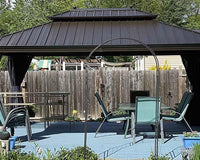
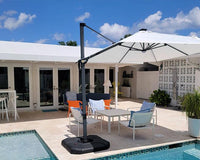
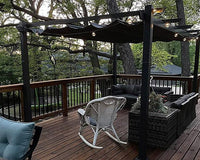
A usable fall gazebo setup supports fall outdoor living in layers, not with one upgrade. Before guests arrive, check the evening’s wind, dampness, available daylight, and temperature trend. Then address the biggest source of discomfort first: move people out of the most exposed area, keep the occupied zone dry and stable, add useful lighting, and offer adjustable warm layers. Consider supplemental heat only after confirming that the exact equipment is permitted for the gazebo configuration. If conditions make movement, visibility, stability, or comfort difficult, move the gathering indoors.

Set Up the Gazebo for Fall Outdoor Living on a Chilly Evening
For practical fall outdoor living, use the least-permanent change that addresses the evening’s biggest problem. This order is a planning guideline for an existing patio gazebo, not a promise of warmer air or weatherproofing.
- Check the conditions before preparing the space. Look at the wind direction, dampness on the patio or furniture, available light after sunset, and how the evening is expected to change. This will show whether seating placement, dryness, lighting, or personal warmth should come first.
- Reduce exposure around the occupied area. Move chairs and the table toward the less-exposed side when practical, while keeping entrances and walkways open. If the main problem is a draft, this is a more useful first step than adding decorative accessories.
- Arrange seating on a dry, stable base. Keep chair legs, feet, and the main walking route away from wet areas and cold, unstable surfaces. Use only a suitable outdoor mat or floor covering that stays secure and is compatible with the gazebo and patio.
- Add useful lighting and adjustable warm layers. Place outdoor-suitable lighting where people need to move or converse, then set out sweaters, fleece, coats, blankets, and warm socks. Personal layers let guests adjust their comfort without rebuilding the entire space.
- Treat heat as a separate, later decision. Do not assume that a covered gazebo is an approved heater location. Check the exact equipment instructions before use, and stop if the required setting, clearance, ventilation, placement, or operation cannot be maintained.
These steps can extend outdoor use for a specific fall evening. They do not turn an open gazebo into an enclosed room or guarantee protection from severe weather.

Arrange the Occupied Area Around Wind and Dampness
The best patio gazebo layout for a chilly evening is based on actual exposure rather than a permanent furniture arrangement. Keep the occupied zone comfortable without blocking the route in or out.
Move Seating Out of the Direct Wind Path
Place chairs and the table on the less-exposed side when practical, leaving a clear path through the entrance and around the seating. Do not let furniture, curtains, mats, or cords narrow the route people use to enter, leave, or move around the table.
Wind direction can change during a gathering, so treat the seating area as adjustable. If the draft shifts, move the occupied zone instead of continually adding loose pieces. The goal is to reduce people’s exposure, not to claim that a particular placement blocks a defined wind speed.
Use Removable Side Protection and a Dry Base
Compatible curtains or another removable side treatment can reduce the feeling of an exposed opening when the gazebo design and conditions permit. Keep the panels adjustable so they can be opened, removed, or dried as conditions change. For more ideas on setting up a fall gazebo, see these removable side protection ideas, but treat side panels as comfort accessories rather than seals against driven rain or strong wind.
Keep the primary seating area and walking route dry and stable. A suitable outdoor mat or floor covering may help separate feet and chair legs from damp or cold surfaces, but it must stay flat and secure. Before guests arrive, test the route with the accessories in place and remove anything that shifts, collects moisture, or interferes with circulation.
Make the Gazebo Comfortable After Sunset
After sunset, how to use a gazebo in fall depends as much on visibility and personal comfort as on the air around the structure. Set up lighting and warm layers before the gathering begins so neither requires a last-minute change.
Place Lighting for Movement and Conversation
Use outdoor-suitable lighting near entrances, steps, table settings, and walkways. Favor useful visibility and comfortable conversation over decorative light alone, and avoid placing fixtures where cords, mounts, or glare interfere with movement.
Check the light’s intended location and mounting method before installing it. A light described for a patio umbrella, tent, or general outdoor use is not automatically documented as gazebo-compatible. Verify the product instructions and the gazebo’s available mounting points rather than assuming that a convenient attachment will be secure or suitable.
Prepare Warm Layers Guests Can Adjust
Set out sweaters, fleece, coats, blankets, and warm socks before sunset. Keep enough options for people who become colder while sitting still and for those who remain comfortable with a lighter layer. Personal clothing and blankets address individual comfort without requiring the whole group to use the same solution.
Store seasonal textiles when the gathering ends, especially if they have been exposed to damp air or moisture. Lighting and clothing can improve comfort in cold weather, but neither replaces draft reduction, dry flooring, or a decision to move indoors when conditions worsen.
Decide Whether Supplemental Heat Fits the Setting
Supplemental heat may fit a fall gazebo setup only when the exact equipment instructions permit the actual configuration and all operating conditions can be maintained. It is a later option after seating, side protection, dry flooring, lighting, and warm layers—not the default answer to every chilly evening.
Before using a heater or outdoor fireplace, read the current listing and manufacturer’s instructions for the permitted location, enclosure limits, clearances, ventilation, placement, operation, inspection, and storage. NFPA guidance directs users to those equipment-specific instructions rather than a universal gazebo rule. An outdoor rating alone does not prove that a heater is approved beneath a particular gazebo.
Keep fabrics, curtains, furniture, and people outside the equipment’s required clearance. Portable heaters should stand on a stable, level surface where they cannot be knocked over, and they should not be left running unattended. For an electric portable heater, CPSC heater safety guidance advises using an appropriate wall outlet rather than a power strip and keeping the cord out from under rugs or carpeting.
Do not use the equipment if the instructions do not permit the gazebo setting, the required clearance or ventilation cannot be maintained, stable placement is unavailable, or the equipment cannot be operated as directed. Do not transfer one heater’s enclosure, wind, or clearance limits to another model.
Know When Comfort Layers Are No Longer Enough
Comfort layers solve specific problems, but they do not provide structural weatherproofing. Use this condition-based guide to decide whether to add a small layer, adjust the setup, shorten the gathering, or move indoors. The labels are practical planning categories, not universal temperature or wind thresholds.
| Evening condition | Useful comfort response | Boundary or next action |
|---|---|---|
| Mild | Use the least-permanent change, such as a comfortable seating layout, useful lighting, or a light personal layer. | Keep the setup simple and watch how conditions change after sunset. |
| Chilly | Reduce exposure around the occupied zone, add compatible removable side protection, keep the floor dry, and offer adjustable clothing. | Add only the layers that address the actual discomfort; do not treat them as an enclosure. |
| Damp | Protect seating and the main walking route with a dry, stable outdoor surface, and keep removable textiles dry. | Shorten or relocate the gathering if moisture spreads or the occupied area is no longer comfortable. |
| Windy | Move the occupied zone toward the less-exposed side and keep circulation clear. Adjust or remove loose curtains, mats, and other accessories. | Stop using the gazebo when wind makes the accessories, movement, or seating difficult to manage. |
| No longer suitable | Gather coats and move people to an indoor space rather than adding more accessories. | Move indoors when cold, dampness, darkness, wind, changing conditions, or loss of stability and visibility overwhelm the setup. |
This is the practical stopping point for plans to extend outdoor patio season in October: make the least-permanent adjustment that works, then relocate when the space is no longer straightforward to use comfortably. Curtains, lights, mats, blankets, and heat do not convert an open gazebo into an all-weather room.
Questions About Fall Gazebo Comfort
The right setup depends on the evening’s conditions and how the gazebo is configured. A few simple adjustments can make the space easier to use, while worsening conditions call for a shorter gathering or a move indoors.
How Do I Make a Gazebo Warmer in the Fall?
Start by reducing the draft around the occupied zone and keeping seating and flooring dry. Add sweaters, coats, blankets, or other adjustable personal layers next. Consider a heater only after its current instructions permit the exact gazebo setting and its operating requirements can be followed.
How Can I Use My Patio in October?
Plan each gathering around wind, dampness, daylight, and the temperature trend rather than the calendar alone. Prepare dry seating and useful lighting before sunset, and decide in advance whether you will shorten the meal or move indoors if conditions worsen.
What Can I Add to a Gazebo for Cold Weather?
Useful additions include compatible removable side protection, a dry outdoor floor covering, outdoor-suitable lighting, and warm layers. Keep heating conditional, and remember that these removable comfort measures do not create structural weatherproofing or an enclosed room.