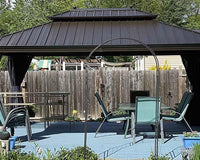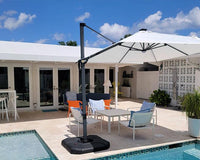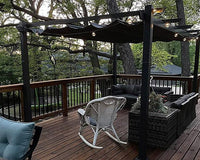
Installing deck shade on an elevated deck requires transferring high-wind uplift into verified framing beneath the deck boards. Before drilling, confirm that structural joists, beams, or posts align directly with the structure's approved attachment points. If the framing cannot be verified, stop and consult a professional installer rather than fastening solely to surface boards.
This is a conditional decision path, not a single anchor design. The right answer depends on your deck's actual framing, the shade structure you're installing, and site-specific wind exposure.
The safe answer: anchor into verified framing, not deck boards
Securing deck shade requires anchoring directly into confirmed structural framing rather than surface boards. Surface decking alone cannot withstand the uplift and shear forces created by high winds.
The decision in one sentence
Any shade structure heavy enough to catch wind must transfer that force through a verified structural path: joists, beams, posts, ledger, or footings, not the visible decking alone. Before fastening anything, get the structure's current connection instructions and compare them against what you can actually confirm underneath your deck.
What the evidence can and cannot prove
The AWC deck guide supports mapping a deck's framing and support system separately from its decking, and it calls for identifying structural members and their connections before building on or into a deck.
- Supported: distinguishing surface decking from the framing and support system that actually carries structural loads.
- Unresolved by this evidence alone: shade-structure capacity, a universal anchor detail, or whether your local code allows a specific installation.
Measure the deck and shade structure before selecting an anchor point
Before comparing anchor options, record what your deck and your chosen structure actually look like. Treat anything you can't verify as unresolved rather than usable.
Record the deck conditions
- Deck height above grade and the overall support arrangement, including how the deck attaches to the house or stands on its own posts.
- Locations of accessible joists, beams, posts, ledger connections, and footings near each spot you're considering for an anchor.
- Condition and accessibility of the proposed anchor area, including whether you can see or reach the framing without removing decking.
Record the shade-structure conditions
- Structure type (tensioned fabric sail, framed pergola, or similar) and its overall footprint and height.
- Each proposed base or anchor point the structure requires, according to its layout.
- What the current manual says about connectors, required framing conditions, and any weather-related operating instructions.
This same framing-versus-decking distinction is worth reviewing again if you're weighing whether a gazebo can go on your deck, since the deck framing checks are the same regardless of structure style.
Trace the load path through the elevated deck
A reliable anchor point transfers wind forces continuously from the shade frame down through the joists, beams, and deck posts. Checking this continuous path ensures the deck framing can absorb uplift without prying boards loose.

Surface decking is not the support path
Decking is one component of a deck, not proof that a location can carry high-wind shade loads. A screw or bolt that only reaches the surface board tells you nothing about what's holding that board up.
Classify each proposed location
Give every candidate anchor point one of three results before moving forward:
- Reject: the location only reaches deck boards or an unidentified surface attachment.
- Unresolved: framing seems to be nearby, but you can't confirm member size, condition, or how it connects to the rest of the deck.
- Eligible for manufacturer comparison: the structural member and its connection to the deck's support system are both identified and appear sound.
For a pergola on a wooden deck, our aluminum pergola storm-protection guide explains that posts should connect to the deck frame, the joists or beams beneath the floorboards, rather than to the surface boards alone. Use that as a framing-location check, not as proof that any particular model is approved for your deck or that the connection can handle a given wind load.
Compare the force path of fabric and framed shade structures
Tensioned fabric sails and rigid pergolas distribute wind forces through fundamentally different mechanical paths. Each structure type requires its own distinct attachment verification and operating precautions.
Tensioned fabric systems
A tensioned fabric shade sail routes force through its own set of anchor points, each defined by the manufacturer's diagrams. Don't borrow a framed pergola's base-connection detail for a fabric system; the tension paths and hardware are different, and only the fabric structure's own instructions describe its intended attachment.
Framed pergolas and similar structures
A framed structure, like a pergola, carries load through its base connections and whatever framing sits below each support post. Evaluate that connection separately from any weather-response instructions the manual gives, such as retracting a canopy or opening louvers, since operating a structure safely in wind is a different question from whether its base is anchored correctly.
Match the anchor detail to the current manufacturer instructions
Always verify that your deck's substructure satisfies the manufacturer's exact base-plate and fastener requirements before securing deck shade. Never rely on generic ground-mounting hardware for an elevated deck setup.
Build the manufacturer-evidence match
Before drilling or fastening, the current manual or manufacturer support page needs to answer three things:
- Where and how the manufacturer says to attach the structure, including the approved connection location and configuration.
- What fastener or connector specifications and framing conditions are required at that point.
- What installation sequence, clearances, and extreme-weather or removal instructions apply.
If your deck matches every point above, you have a documented basis to proceed. If any point is missing or doesn't match what you measured, the attachment stays unresolved until you get model-specific guidance.
A product example with a clear limit
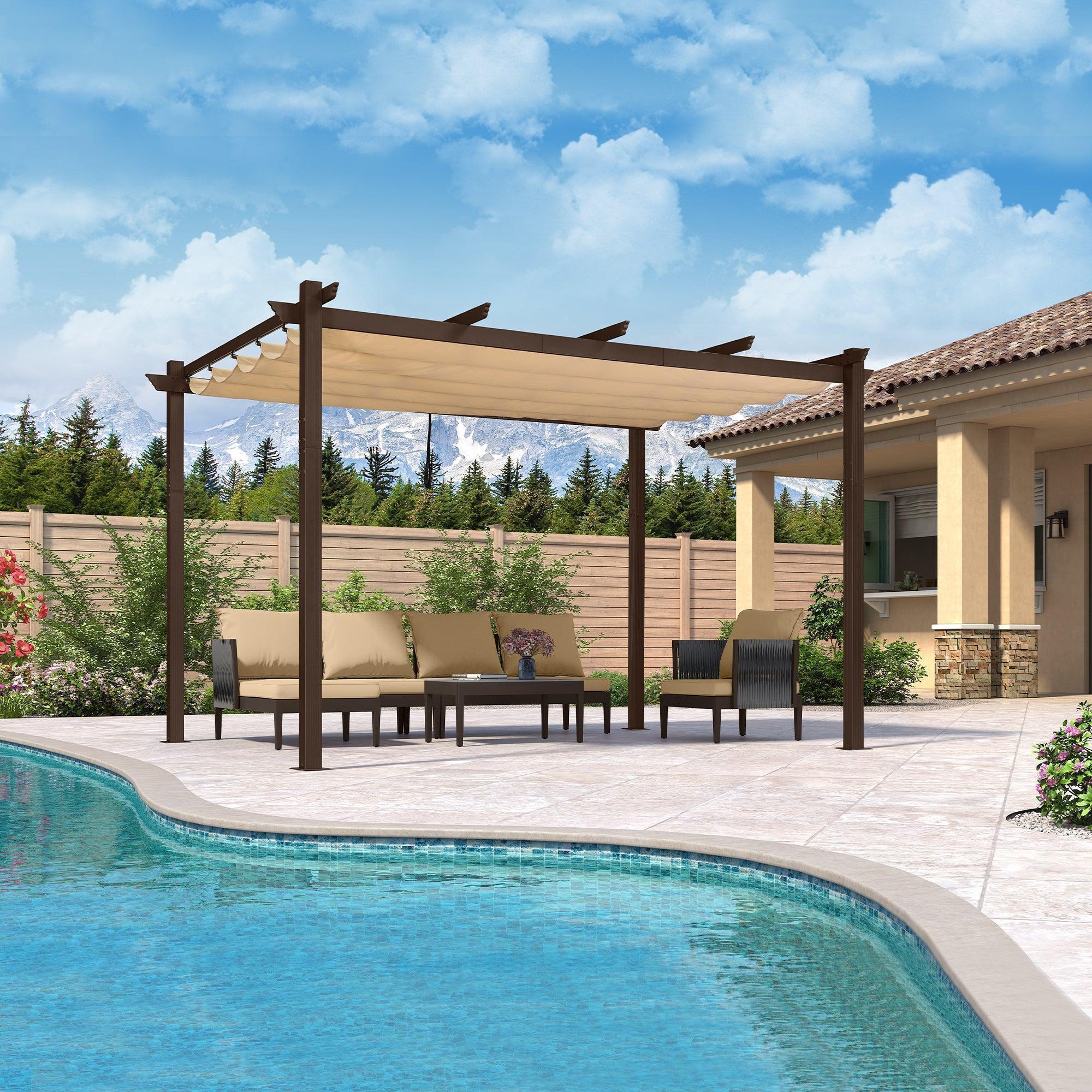
Our retractable pergola listing describes hardware meant to secure into the ground and states a 30 mph wind rating. Those facts describe a ground installation; they don't establish that the same hardware or rating applies to an elevated-deck anchor, so an elevated installation still needs its own model-specific deck instructions before you proceed.

Check high-wind conditions and extreme-weather operation
Elevated decks experience higher wind exposure and localized gusts than ground-level installations. Proper high-wind safety combines solid structural anchoring with prompt extreme-weather adjustments.
Why one wind number is not enough
A single advertised wind speed doesn't capture everything that matters on an elevated deck. Wind design guidance accounts for local wind speed, exposure, elevation, structure geometry, and localized gusts together, and the effect being checked changes which of those factors matters most, according to the AWC's wind design guidance. Treat any single product wind rating as one input, not the full picture for your site.
Record the operating response
Follow the current model's instructions for opening, retracting, raising, or removing parts before severe weather, and keep that separate from the deck-connection decision:
- Follow the manufacturer's stated trigger conditions for adjusting or securing the structure, rather than a general guess about wind speed.
- For structures like our louvered pergola, the current instructions call for opening the louvers and raising or removing shade screens during high wind, snow, or other extreme weather.
- Treat that operating instruction as a weather-response step, not as proof that the deck anchor itself can handle a given load. For more anchoring approaches by structure and surface type, see our guide to wind anchoring methods.
Make the pre-installation go/no-go decision
Proceed with installation only when every proposed post location connects to verified framing that matches manufacturer requirements. If any structural detail or code clearance remains unresolved, hold off on fastening.
Complete the release check
Before you fasten anything, confirm each of these:
- Deck measurements and every proposed anchor location are recorded.
- The framing and connections at each proposed location are verified and appear sound.
- The structure's current manufacturer connection and weather instructions match the measured deck condition.
- Connector specifications, clearances, applicable local requirements, and a plan for post-installation inspection are all addressed.
Know when to stop
Stop before fastening if the load path, deck condition, manufacturer connection detail, or applicable local guidance stays unresolved after this check. The FEMA severe-wind mitigation guidance recommends inspecting attached structures for firm attachment and sound condition and consulting qualified design or construction professionals before making changes. When any piece of your evidence is missing, that qualified review is the next step, not an optional extra.
FAQs
Can I anchor a shade structure to my deck's railing?
Not automatically. A railing you can see is not the same as a verified support connection, and the AWC guide's framing-versus-decking distinction applies to railings too: what matters is whether the railing's underlying posts and connections are sound and whether the shade structure's current instructions specifically approve a railing attachment. If that verification isn't available, don't fasten to the railing, and get a qualified deck review or professional installation check instead, consistent with FEMA's recommendation to confirm sound structural condition before relying on an attachment point.
Can I secure a shade structure using only surface deck screws?
No. Fastening solely into deck boards creates a severe failure risk under high wind uplift, as standard surface fasteners and floorboards are not designed to resist vertical pullout forces. Solid attachment requires bolting directly through structural framing members such as joists or blocking beneath the decking.
Does a manufacturer's wind rating mean the structure is safe for an elevated deck?
Not by itself. A product's advertised wind rating typically reflects ground-level conditions and assumes proper base anchoring into concrete or soil. Elevated installations experience greater wind speeds, height exposure, and localized gusts, so an elevated attachment still requires verifying the deck frame's structural load path.