If lower recurring upkeep and a consistent finished look matter most, start by considering an aluminum pergola. If visible grain, natural variation, and traditional character matter more than hands-on care, a wood pergola may be the better fit. Climate exposure, drainage, finish, installation, and the specific system can change the outcome, so there is no universal winner.

Which Aluminum Pergola or Wood Pergola Fits Your Yard Best?
When comparing an aluminum pergola with a wood pergola, start with the tradeoff that would bother you most after installation: recurring maintenance or giving up natural wood character. Aluminum is usually the better starting point for homeowners who want a more uniform appearance and fewer finish-related tasks. Wood is usually the better starting point for those who want authentic grain and are comfortable with ongoing protection and condition checks.
| Decision factor | Aluminum tends to fit when | Wood tends to fit when |
|---|---|---|
| Appearance | You prefer a consistent finished color and clean, uniform lines. | You want visible grain, variation, and traditional warmth. |
| Weather and upkeep | Exposure-related maintenance is a concern and you prefer simpler routine surface care, subject to the exact finish and system. | You can manage moisture and will follow the required finish or treatment instructions. |
| Repairs | You prefer replacing compatible components or using the system's specified finishes and parts. | You value familiar carpentry methods and accept that repairs may include wood-specific protection work. |
| Long-term value | The quoted upfront cost makes sense for your ownership horizon and lower expected maintenance burden. | Natural character or a lower initial quote matters more, and ongoing care fits your routine. |
This matrix is a starting point, not a guarantee of structural performance or durability. Before committing, compare the exact species or alloy, finish, roof design, drainage, anchoring, installation requirements, local conditions, and available replacement parts. Choose the material that matches your highest-priority tradeoff, then compare complete systems rather than material labels alone.

Choose the Look That Works With Your Home
Wood is usually the better visual starting point when real grain and natural variation are essential to your yard's character. Aluminum is usually the better choice when you want a more uniform finished appearance. Neither material determines the entire design: finish, color, roof form, furniture, landscaping, siding, and trim can all change the result.
A wood pergola can complement a traditional, rustic, or natural landscape when variation is part of the appeal. That same variation may feel less suitable if your patio uses crisp, coordinated finishes and minimal visual texture. Aluminum can support a more controlled appearance, but the final effect still depends on its color, surface finish, proportions, and roof design.
Before choosing based on appearance alone, compare samples or finish images with the materials already around the installation area. Look at them beside siding, trim, decking, pavers, outdoor furniture, and nearby plants. Check the sample in daylight and from the seating area where the pergola will be seen most often. If the exact finish or color is not available as a physical sample, request the closest available representation and treat it as a visual guide—not a guarantee of how the installed structure will look.
The practical appearance rule is simple: choose wood when material character is the feature you want to notice; choose aluminum when visual consistency and a coordinated finished look matter more. Then test that preference against maintenance and exposure before making the final decision.
Match an Aluminum Pergola or Wood Pergola to Your Climate and Routine
The aluminum option may be the simpler starting point for a wet, humid, or coastal yard when lower corrosion-related maintenance and less finish care are priorities. A wood pergola can still work in those settings when water is managed and you accept regular condition checks and finish care. Exact cleaning, treatment, drainage, and inspection instructions belong to the selected system, not to a universal calendar.
Persistent moisture makes exterior wood more vulnerable to fungal decay. The risk depends on conditions, wood type, design, and maintenance, as explained in the USDA Wood Handbook's guidance on exterior wood. Rain exposure, poor drainage, water trapped at joints, limited airflow, and shaded, damp areas can all make moisture control more important. Choosing wood therefore involves more than selecting a species or color: review how the design sheds water and which finish or treatment the supplier specifies.
Aluminum forms a protective oxide layer that can limit further corrosion in many conditions. The Aluminum Association's corrosion-resistance explanation provides general background, but an outdoor structure's performance still depends on the alloy, environment, finish, fasteners, and installation details. That supports a conditional case for aluminum in exposed settings—not a promise that it is rustproof or maintenance-free. Cleaning, visual inspections, and attention to the specified finish and hardware can still be part of ownership.
Use your routine as the deciding factor:
- Start with aluminum if you dislike recurring refinishing, your yard has meaningful rain or salt-air exposure, and a uniform finished look works for your home.
- Start with wood if natural grain is nonnegotiable, the structure can be kept reasonably dry, and you are prepared to follow the exact finish or treatment instructions.
- For either material, ask for care instructions covering cleaning, finish protection, drainage, fasteners, and exposure. Do not assume a generic maintenance schedule applies to the system you are buying.
Sun, snow, freeze-thaw conditions, humidity, salt air, and shelter can affect the care decision in different ways. A sheltered inland installation may have a different ownership burden from an exposed coastal patio, even when the material is identical. The best fit is the material whose required care you will realistically perform.
Compare Repairs, Installation, and Value Over Time
Repairability depends on the system, so neither material is a universal winner. Wood repairs may align with familiar carpentry work but can also require matching the surrounding material and restoring its moisture protection. Aluminum repairs may depend on compatible components, matching the finish, hardware, or specialized work. Ask how individual parts are replaced before assuming a small failure requires replacing a larger assembly.
Wood protection involves water-shedding design, suitable material selection, finish or treatment, and maintenance. The USDA's wood-protection guidance supports examining those factors; it does not establish a fixed lifespan, repair cost, or refinishing interval. Review the guidance alongside the selected supplier's instructions when comparing a wood option with an aluminum quote.
Judge value by the complete ownership picture, not the sticker price alone. For each system, record the purchase price, site preparation, anchoring, installation, care supplies or labor, likely repair approach, replacement-part access, shipping, returns, warranty terms, and the owner's time for upkeep. Compare those inputs over the period you expect to own the pergola. Do not turn the worksheet into a made-up break-even calculation when the quotes and care requirements are unknown.
Material alone also cannot determine whether an installation is suitable for your site. Before ordering, verify the exact system's anchoring and attachment method, drainage approach, installation instructions, and any local wind, snow, permit, or code requirements that apply to your property. Local authorities, the product documentation, or a qualified professional should resolve site-specific requirements; a general material comparison cannot do that work.
Use this short shopping sequence:
- Write down your appearance priority, exposure conditions, realistic maintenance tolerance, and intended ownership horizon.
- Get complete quotes that separate the structure from site work, anchoring, installation, shipping, and other charges.
- Compare the exact care instructions, repair and replacement-part process, warranty, returns, and local installation requirements.
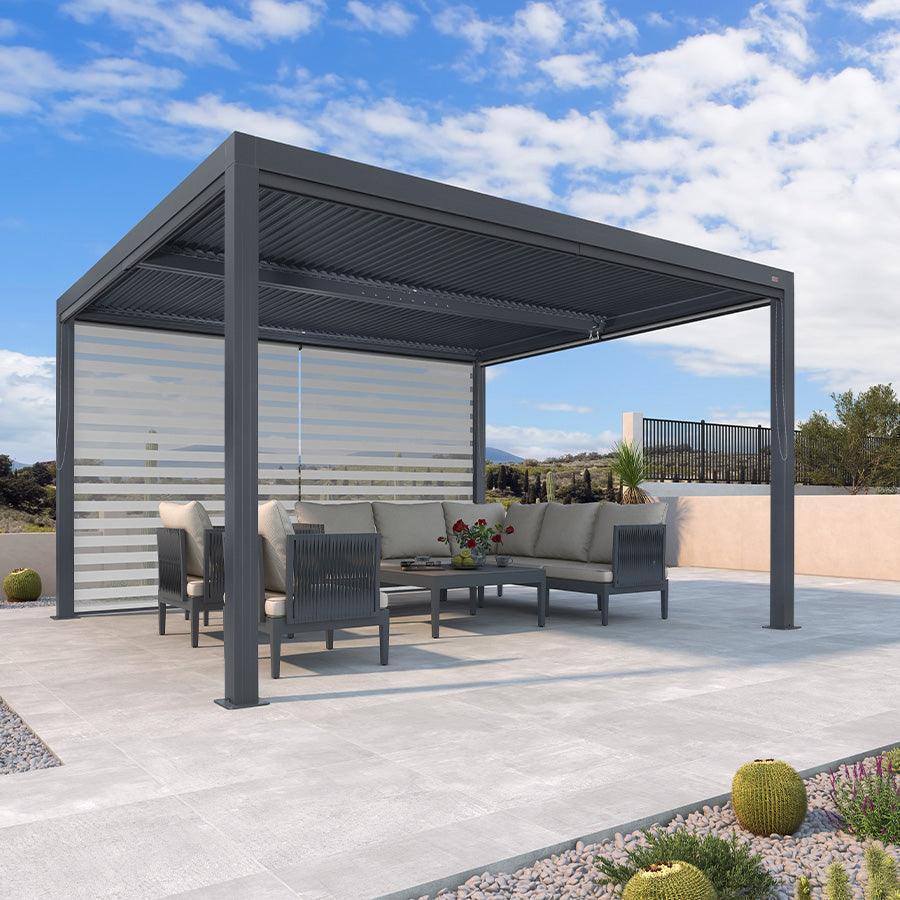
- If aluminum remains the better fit after those checks, browse aluminum pergola kits as a category starting point, then evaluate each option against your site and quote.
In practical terms, aluminum may justify a higher quoted cost when its lower expected maintenance burden fits your priorities and ownership horizon. Wood may be the better fit when natural character or a lower initial quote matters more and you are willing to manage moisture and finish care.
Frequently Asked Questions
These answers address the three tradeoffs most likely to change a homeowner's final material choice.
Which is more durable, an aluminum pergola or a wood pergola?
Neither is a universal durability winner. The available guidance supports only conditional conclusions based on moisture control, design, protective finish or treatment, anchoring, exposure, and maintenance. Compare the exact system and site conditions rather than relying on a category-wide lifespan or durability ranking.
Is an aluminum pergola easier to maintain than a wood pergola?
It may be, when the aluminum system's instructions center on routine cleaning and inspection rather than the finish or treatment work required by the wood system. Wood care varies with species, finish, exposure, drainage, and condition, while aluminum still needs attention to its finish, fasteners, and surrounding environment. Request the exact care instructions before estimating the time or supplies either option will require.
Is an aluminum pergola worth the cost compared with wood?
It is worth the additional quoted cost only when its expected maintenance burden fits your priorities and ownership horizon after purchase and installation costs are included. Wood may offer better value when natural character or lower initial spending matters more and ongoing care is acceptable. Compare complete quotes, site work, care requirements, repair access, replacement parts, shipping, returns, and warranty terms instead of assuming one material always costs less or saves more.